Modern & Contemporary Art Exhibitions in Kyiv
Discover contemporary and modern art exhibitions in Kyiv. Our exhibition guide helps you explore museums, galleries, and artist-run spaces showcasing modern and contemporary art. Whether you're an art enthusiast or a curious visitor, stay informed about what's happening in the art scene in Kyiv.
Browse by venue
On now in Kyiv
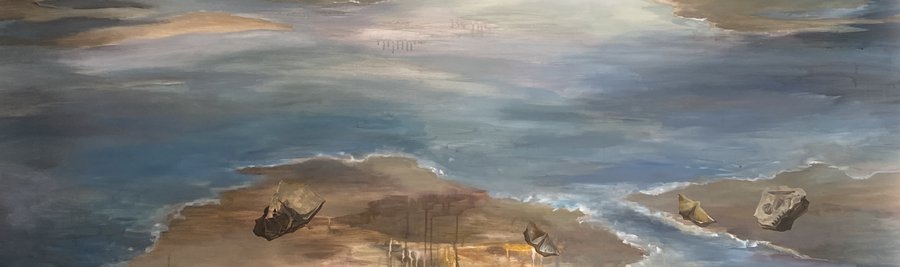
- The children were playing hide-and-seek when they found a cave. And there, among thousand-year-old boulders, they came across some shells that had long since turned to stone. “How old do you think they are? Are they older than Mom? Are they alive? Are we?” The project began with the artist musing on what sort of feelings a paleontological discovery might evoke. There is something special about the moment of discovery itself, an unintentional encounter, and a fascination with something ancient being hidden beneath the earth. The exhibition transports inside a mystification, a fairytale world where such an encounter can occur anywhere: amid an untamed landscape, above or below ground, in outlying Troyeshchyna or in historical Kudryavka. Many of the most important discoveries in the history of paleosciences, such as the Lascaux Cave in France, were made by non-specialists, oftentimes by children. In Karina’s works, the child’s gaze, curious and thirsty for knowledge, turns any place into a space for play, exploration, and discovery. The children’s figures also allude to the story of Mary Anning, an outstanding self-taught paleontologist who began collecting fossils as a child. In her work, Karina Synytsia often draws on Ukrainian monumental art to highlight its significance. In Discovery!, however, monumental sculptures — in particular Ernest Kotkov’s Vodohrai fountain in Troyeshchyna — serve as a backdrop: to the artist their rounded forms and winding contours resemble landscapes from the distant past, where life teemed among seas and cliffs, long before mass
Karina Synytsia: Discovery
Until 17 Oct 2026
MYSTETSKYI ARSENAL
Museum / institution
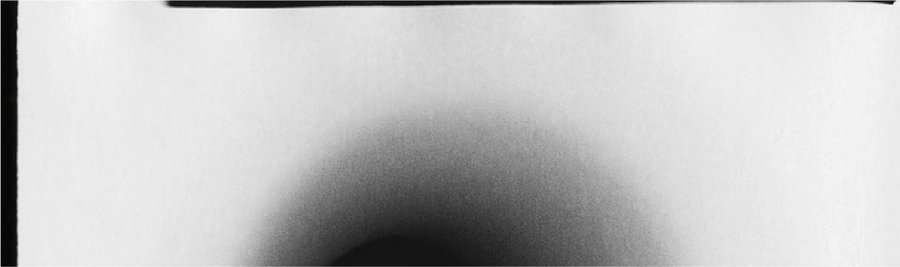
- As part of the Month of Lithuanian Photography in Kyiv, the Laboratory of Contemporary Art Mala Gallery will present the Lost Time exhibition, curated by Darius Vaichekauskas. With the development of technology, means of reflection and transmission of reality, photography moves away from a purely technical function and into a sphere of post-photography. Consequently, photography becomes a source of philosophical meanings and interpretations. Post-photography is characterized by constant manipulation of the image (editing, drawing, deconstruction). It forces us to reconsider the phenomenon of "photography", which has virtually ceased to exist as a "real-time referent". The group exhibition of contemporary Lithuanian photography shows several approaches and interpretations of the post-photography subject. Aurelia Maknite, Darius Vaichekauskas, Vytautas Kumža, Valentin Odnovjun, Deauville Dagene, and Juozapas Kalnius explore completely different photographic strategies. Vytautas Kumža focuses on the first stage of photo development, which he finds much more interesting than rendering or post-processing images. Valentin Odnovjun, in his Process series, shows photographs of discarded photo paper pieces found in the photo laboratory at the Patarei prison in Tallinn, Estonia. Deauville Dagene presents photographs that give the impression of a witness of place and time. However, they are filled with memory.
Lost Time — Exhibition of Contemporary Lithuanian Photography
Until 25 Oct 2026
MYSTETSKYI ARSENAL
Museum / institution
Coming soon in Kyiv
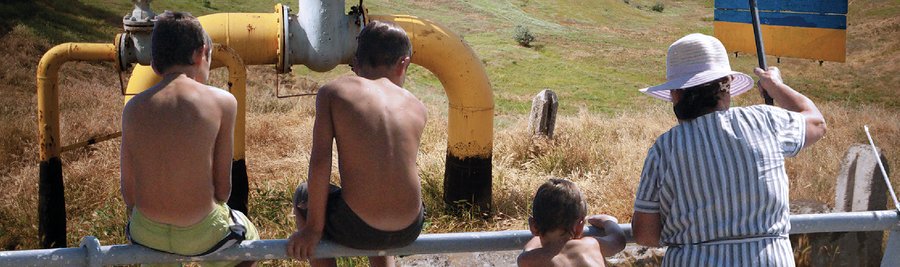
- The exhibition Kherson. The Steppe Holds is the space of resilience, love, loss, cherishing a memory, and the project about the Ukrainian South. It is based on the films Ukrainian Sheriffs, The Editorial Office, and Volcano. This is a tribute to the Kherson region — the homeland of the exhibition’s authors, Roman Bondarchuk and Darya Averchenko. At the heart of the exhibition are unique archives, video, and photographic materials filmed in the Kherson region by the filmmakers and their crews before the full-scale invasion, some of which are being shown publicly for the first time. These materials have taken on new significance in the wake of the region’s and the country’s profound losses and ongoing challenges. The three films form the thematic cores of the exhibition, presented in the space of the Old Arsenal: Ukrainian Sheriffs explores the role of local communities and self-governance; The Editorial Office delves into the tension between truth and post-truth in the political landscape of contemporary Ukraine; Volcano is a reflection on returning to oneself and the world amid the dystopian reality of the Ukrainian South. Today, each of Roman and Darya’s films and all the archival materials for them is a space of memory about something that no longer exists or almost does not exist; something that may not return or may return in a completely different form. The exhibition unfolds across five halls of the Arsenal and also includes a room dedicated to the archival materials of Kherson photojournalist Andriy Matrosov, as well as documentation from the “Ukrainian War Archive”, which records Russian war crimes. The final space of the exhibition invites personal reflection on what has been seen and felt. "For us, these are the memories of our youth, a testimony to what this land once was, to what we lost because of the Russian invasion, and what we continue to lose. These are places where our relatives and friends chose to stay, despite the war. Places where children’s umbilical cords are buried. The things that matter most, the ones we long to rebuild. And the places we return to every night in our dreams. We are deeply grateful for the opportunity to transform our archives into a cohesive artistic work together with the Mystetskyi Arsenal team", Darya Averchenko, on her and Roman Bondarchuk’s decision to create the exhibition. "At this moment in time, it is especially important for Mystetskyi Arsenal to continue engaging with the concepts that matter most to our society. And one of them is the territorial integrity of Ukraine. We invite visitors to reconsider the Kherson region as a space of deep personal and collective meaning. We believe that this documentary and mystical journey carries a special significance today", says Anna Pohribna, Deputy Director for Programming at Mystetskyi Arsenal. Visitors to the exhibition will experience an immersive encounter with the Kherson region seen through the lens of a camera and through the personal memories of its inhabitants, and also key figures in contemporary Ukrainian cinema. The exhibition space will bring together site-specific installations designed by exhibition architect Oleksandr Burlaka, along with video and photo projects, artistic films by the curatorial team, and more than thirty multimedia works inspired by the featured films. "This exhibition is an attempt to view the South not as a marginalized region, but as a vital point for understanding contemporary Ukraine. This research is like the steppe itself: quiet, vast, windy, and yet full of voices. We must rethink the South not only as a geography of losses, but as a space of strength, imagination, community, and renewal. For me, as someone born in the South, this project is deeply personal. It is a work of grief. And a work of hope", says Yana Barinova, Director Ukraine Programme at ERSTE Foundation. According to the curator Kateryna Botanova, the exhibition is an invitation to stay with the Kherson region, which is no longer there and will definitely be there, to think about how natural and cultural landscapes shape our society, how we can remember our losses, and where we can get strength for the future. This time, Mystetskyi Arsenal will present not a historical exhibition, but the history of Kherson region of independent Ukraine.
Kherson. The Steppe Holds (Curatorial Text)
22 Oct 2026 – 23 Feb 2027
MYSTETSKYI ARSENAL
Museum / institution
Past Exhibitions
Recent past exhibitions
- Voloshyn Gallery presents a group exhibition by a young generation of Ukrainian artists: Between the Breaths of the Walls Doors Open Inward. A project explores the condition of existing within absurdity as a new, enforced norm. Contemporary existence in Ukraine is increasingly described through the category of paradox: a person inhabits a space that is simultaneously a refuge and a zone of risk. They perform actions that have lost their original meaning for the sake of preserving a sense of the mundane. The group exhibition project Between the Breaths of the Walls Doors Open Inward examines precisely this condition, existing within absurdity as a new, enforced norm. Eight young Ukrainian artists, Diana Demianenko, Nika Shumeiko, Maria Charkina, Artem Deineka, Nikol Davydova, Anna Vekhnyk, Daryna Sviatun, and Oleg Savin, turn to the image of a room as a conceptual model of contemporary experience. The room here does not function as a neutral backdrop; it operates as a structure that accumulates contradictions within its very existence, between safety and danger, between familiarity and its dissolution, between the need for calm and the impossibility of achieving it. The objects and images that fill this space retain the morphology of familiar things, yet are stripped of their utilitarian certainty. Transformed into artifacts that resist use, they extend the reality of the contemporary person, a person compelled to live in a space whose form bears no relation to normalcy, yet continues to perform something genuine and correct. They allude to the recognizable while refusing to be it, and it is precisely in this gap between the familiar and the undefined that a space for reflection opens. The exhibition makes no claim to therapeutic effect and offers no catharsis. It records the condition of existing within prolonged uncertainty, where irony and play with meaning are not a departure from reality, but one of the ways of holding on within it. Absurdity here is not an artistic device; it is the precise name for an experience that resists all other definitions. Doors open inward. This compels us to take a step back before leaving.
Between the Breaths of the Walls Doors Open Inward
Ended 6 Sept 2026
VOLOSHYN GALLERY
- Always Looking at Palm Trees - A Botanical Conversation marks the first presentation in the United States of this new ensemble of work by Mehdi-Georges Lahlou (b. 1983, Les Sables-d'Olonne) as well as the French-Moroccan artist's debut exhibition in Miami. Working across sculpture, installation, photography, drawing, and printmaking, Mehdi-Georges Lahlou approaches identity, history, and heritage as shifting and unstable fields intersected by questions of race, colonial histories, gender, and ecological precarity. His practice disorients and reimagines history and memory not as a fixed archive, but as mutable material shaped by the urgencies of the present. This body of work is Mehdi-Georges Lahlou's conceptual departure from The Conference of the Birds, the twelfth-century Sufi poem by the Persian mystic Farid ud-Din Attar. In Attar's allegorical narrative, birds gather in search of the legendary Simorgh, only to discover that they themselves are what they seek. Mehdi-Georges Lahlou's adaptation makes a crucial substitution: the gathering becomes a conference of palms and we are invited to seek them out. Among the world's oldest flowering plants and ripe for metaphor, the palm tree has been a significant and recurrent motif in Mehdi-Georges Lahlou's work. Using the palm, the artist has developed a varied visual vocabulary that plumbs its resonances and connotations, taking into account the palms in the proximity to his exhibitions. In Miami, native species such as the Florida Royal Palm and Cabbage Palm coexist alongside imported varieties like the Coconut Palm, introduced as the city cultivated an image of tropical leisure and escape. With this context in mind, Mehdi-Georges Lahlou activates the palm as a sensitive barometer of migration, climate change, and colonial afterlives, placing its symbolic associations of paradise and pleasure alongside histories of displacement and extraction. Moving fluidly between embodiment and metaphor, the artist's own body assumes vegetal forms, ashes obscure images of colonial violence, and queer performers animate hybrid presences. Through these gestures, memory becomes an active site of inquiry where historical residues and contemporary realities continually reconfigure one another. In Always Looking at Palm Trees - A Botanical Conversation, palms do not merely populate the landscape; they bear witness to it and what has been done to it. Silent yet enduring, they become living archives through which Mehdi-Georges Lahlou invites us to reconsider how memories and histories are narrated, inhabited, and carried into uncertain futures. Text by Conor Moynihan Bonacossa
Always Looking at Palm Trees - A Botanical Conversation
Ended 5 Sept 2026
VOLOSHYN GALLERY