Modern & Contemporary Art Exhibitions in Strasbourg
Discover contemporary and modern art exhibitions in Strasbourg. Our exhibition guide helps you explore museums, galleries, and artist-run spaces showcasing modern and contemporary art. Whether you're an art enthusiast or a curious visitor, stay informed about what's happening in the art scene in Strasbourg.
Browse by venue
On now in Strasbourg
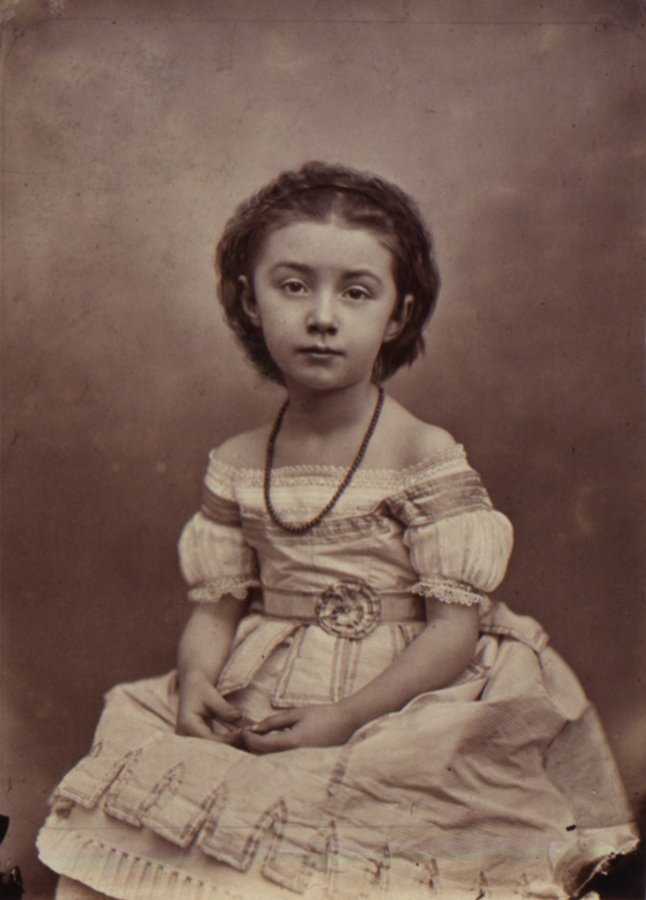
- In a journey designed to run counter to the course of our lives (we enter a space dedicated to remembrance and end up in a room dedicated to birth), this project invites visitors to experience all the stages that can mark a lifetime. We see bodies and faces “frozen” in time through painting, photography, and video, as if suspended in one of the phases of their existence. Old age, prime of life, adolescence, early childhood, and birth form the main chapters of this project, which draws on the MAMCS collection. From Renoir to Sarah Jones, Muybridge to Marlene Dumas, the project also features several pieces on loan from museums in the Strasbourg network, forging new links between the institutions' collections.
Time reversed. Through the ages of life
Until 18 Oct 2026
Musée d'Art Moderne et Contemporain (MAMCS)
Museum / institution
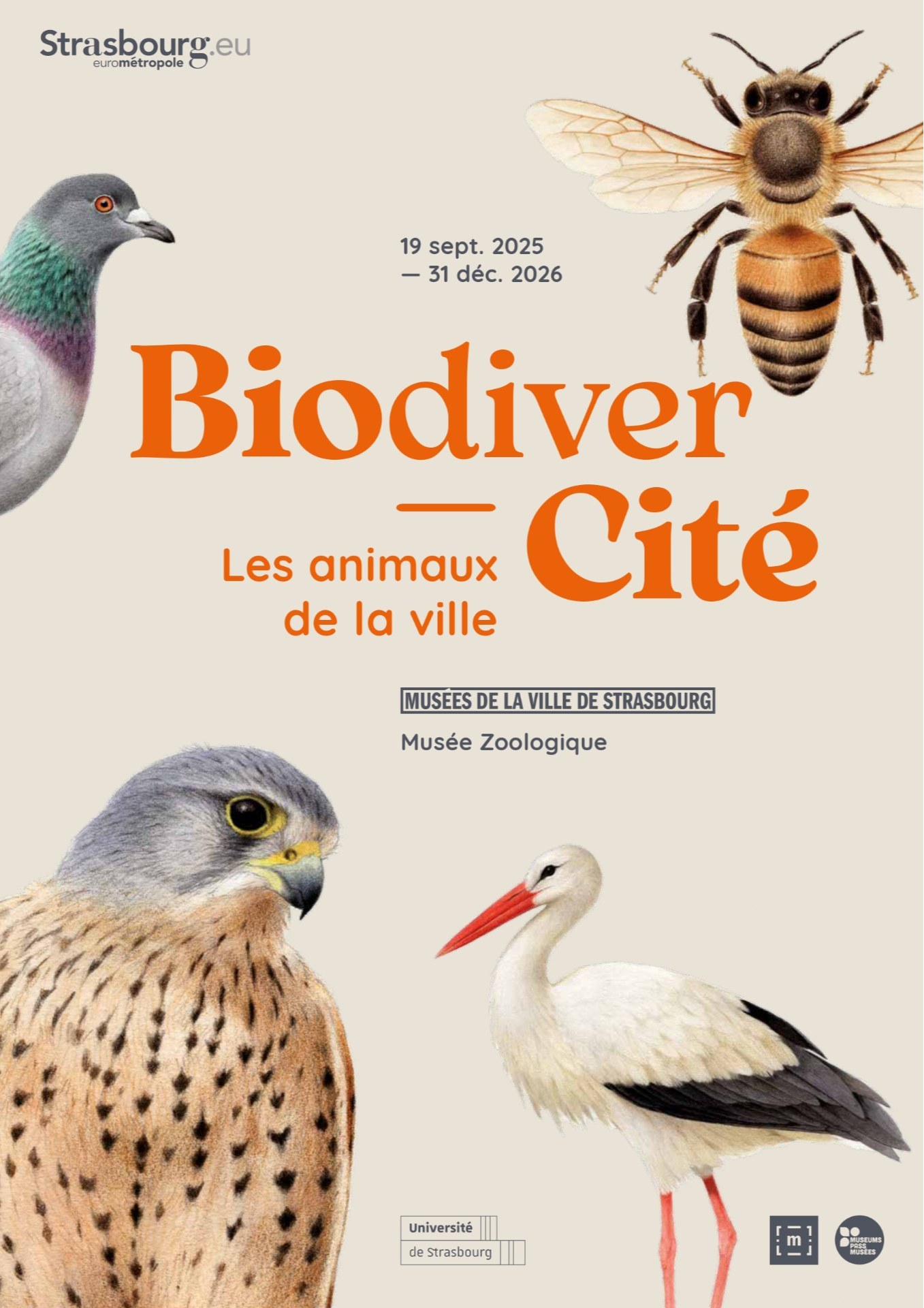
- Having become a place to learn about the world's wildlife, the renovated Zoological Museum is devoting its first temporary exhibition, "BiodiverCity," to the city's animals. Devised as a walk punctuated by drawings by the wildlife illustrator Valentine Plessy, the “BiodiverCity” exhibition examines the ways in which human and non-human city dwellers coexist in times of environmental crises. Is the city merely an ecosystem like any other? Even though nearly 80% of the French population now lives in urban areas, such places tend to be regarded as unnatural spaces. However, a multitude of species and sizes of animals of all origins lives next to us on a daily basis. By focusing on such local biodiversity, the exhibition reaffirms the need to contemplate the continuity of our relationships with living things, beyond our emotions. Visitors will discover around thirty species in five environments representative of the Strasbourg area: the street, sewers, parks, the cathedral, urban wasteland. These five biotopes reflect issues common to all cities, such as the occupation of buildings by wildlife, waste management in public spaces and the maintenance of ecological continuity in the face of increased housing pressure. Certain species presented, such as the stork and the bee, are emblematic of efforts to protect living creatures; others, including Florida turtles and rats, reflect imbalances resulting from human activity. All are associated with subjective values and representations. By bringing these elements into play, “BiodiverCity” underlines the city’s role as a laboratory space in which our relationships with other beings are negotiated daily. In doing so, it establishes animals as a protagonist in their own right. Valentine Plessy is a wildlife illustrator based in Strasbourg. Since the beginning of her career, she has contributed to numerous books and films devoted to animal diversity. The presentation of her work at the heart of the exhibition extends the existing link between the Museum and local wildlife artists and reaffirms the importance of drawing and in situ observation in discovering and understanding living creatures. The scenography was entrusted to HEAR students as part of an art school project. This partnership represents a continuation of the ties between the two institutions. Steering committee: Simon Malivoire de Camas , curator and project manager at Strasbourg Zoological Museum, Samuel Cordier , curator and director of the Strasbourg Zoological Museum. Technical committee: Adine Hector , head of the Territorial Ecology department, Marie-Laure Desigaux , “animal in the city” project manager, City and Eurometropolis of Strasbourg. In partnership with Haute école des arts du Rhin (HEAR) This exhibition is being presented within the framework of the reopening of the Zoological Museum under the joint auspices of Strasbourg City Museums and the University of Strasbourg’s Jardin des sciences
BiodiverCity. Urban animals
Until 31 Dec 2026
Musée d'Art Moderne et Contemporain (MAMCS)
Museum / institution
Coming soon in Strasbourg
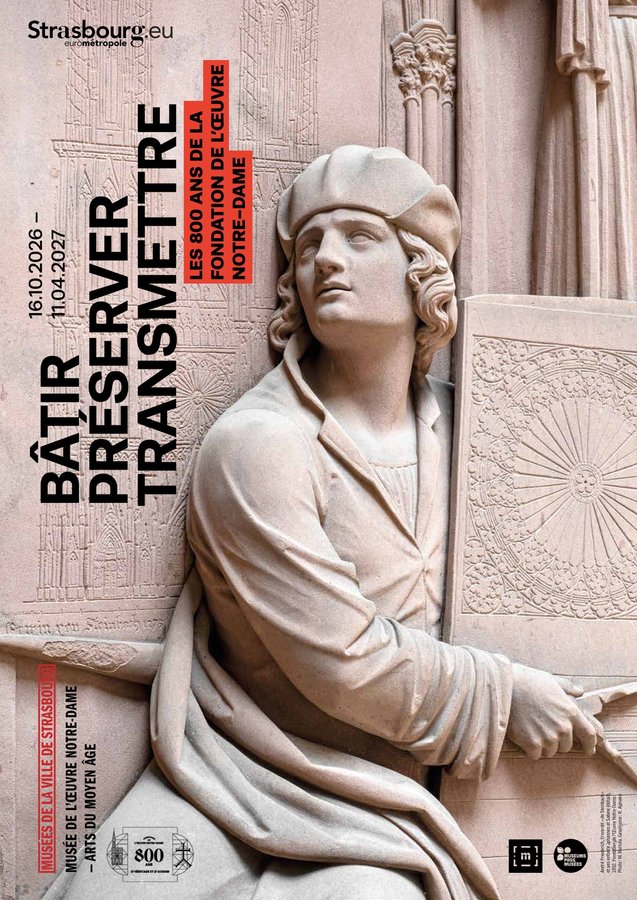
- The Œuvre Notre-Dame Foundation is a unique institution in France and has been devoted for eight centuries to building and preserving the Cathedral of Strasbourg. Despite political and religious upheavals, its existence has never been questioned. This exhibition invites us to explore the rich history and the specificity of this unique institution, from its creation to the present day. Founded at the beginning of the 13th century by the Bishop of Strasbourg and the Cathedral's Chapter of Canons to supervise construction and manage donations and bequests, the Œuvre Notre-Dame (in Latin Opus Sancte Marie, in German Frauenwerk or Werk Unserer Lieben Frau), came under the control of the City from the 1280s onwards.
Building · Preserving · Handing on : the 800 years of the Œuvre Notre-Dame Foundation
16 Oct 2026 – 11 Apr 2027
Musée d'Art Moderne et Contemporain (MAMCS)
Museum / institution
Past Exhibitions
Recent past exhibitions
- The CEAAC is partnering with the Aubette 1928 to present a dual exhibition by artist Florian Fouché, marking the first stage in a programme devoted to public health issues. The exhibition builds on Fouché’s ongoing artistic research project entitled Manifeste assisté (Assisted Manifesto), a broad perceptual inquiry initiated in 2020 around what the artist calls ‘assisted life’. Since 2024, he has developed this research into a multi-chapter exhibition series titled SÉCURITÉ SOCIALE PRÉLUDE, which offers an oblique exploration of the history and current transformations of public healthcare. Rather than presenting a strictly documentary reading of these themes, Florian Fouché stages the devices, architectures, and imaginaries that concretely organize assistance, accessibility, or the exclusion of bodies in public space. The fourth chapter of this series, SÉCURITÉ SOCIALE PRÉLUDE La rampe PèreMèRe, brings together installations, sculptures, films, and documents to examine how the institutional forms of care are organized for both bodies and objects in today’s society. At the CEAAC, the exhibition takes the form of an immersive installation that engages in dialogue with the Art Nouveau architecture of the building, a listed monument, addressing a central issue raised by the artist: the site’s inaccessibility for people with reduced mobility. Here, the artist deploys a reworked version of the visual language of the Aubette 1928 within a phantasmagorical scenario. The Père Cuillère, represented as both miraculous and in a state of gestation, is a central sculptural figure in the exhibition. The character evolves through an environment of inclined coloured planes, ramps, and sculptures deriving from Nicole Parent’s ‘Inclipan’ method of gymnastics and the theory of ‘oblique living’ developed by her brother Claude Parent. In this unstable landscape, somewhere between accessibility device and obstacle, bodies, whether wheeled or upright, appear caught in a paradoxical system of assistance, effort, and constraint. Nearby, in the spaces of the Aubette 1928, amid the coloured surfaces designed by Sophie Taeuber-Arp, her husband Hans Arp, and Theo van Doesburg—which were subsequently covered over in 1938 and restored for reopening to the public in 2006—the exhibition continues with the first presentation of the 2026 film Mort assistée (Assisted Death). Commissioned and produced by the Centre Pompidou – Musée national d’art moderne in Paris in the context of its closure for renovation, the film offers a phantasmagorical vision of a museum under maintenance. Through a series of filmed actions, Florian Fouché explores how cultural institutions organize the preservation, disappearance, or transformation of their artworks. The film is accompanied by sculptures, drawings, and documents related to its production, extending the reflection on forms of ‘assistance’ applied to institutions and artworks. By linking these two Strasbourg heritage sites, the exhibition creates a tension between architecture, art history, and contemporary policies of public assistance. Between impossible accessibility, bodies in motion, partial reconstructions, and suspended cultural institutions, Florian Fouché proposes a critical and poetic exploration of the visible and invisible infrastructures that organize both assisted life and, sometimes, assisted death.
Sécurité Sociale Prélude La Rampe Pèremère
Ended 6 Sept 2026
CENTRE EUROPÉEN D’ACTIONS ARTISTIQUES CONTEMPORAINES (CEAAC)
- Traduttore, traditore is an exhibition by Alexandre Caretti at the CEAAC in Strasbourg in 2026. The exhibition features a series of photographs capturing various aspects of the artist's work and creative process.
Visite commentée de l’exposition Traduttore, traditore
Ended 6 Sept 2026
CENTRE EUROPÉEN D’ACTIONS ARTISTIQUES CONTEMPORAINES (CEAAC)
- À deux occasions, la visite du premier week-end du mois se transforme en double-visite entre le CEAAC et l’Aubette 1928, en compagnie de Florian Fouché. Une belle opportunité de voir comment l’artiste a investi ces deux lieux et d’appréhender la manière dont les deux parties de l’exposition dialoguent l’une avec l’autre.
Doubles-visites CEAAC x Aubette 1928
Ended 5 Sept 2026
CENTRE EUROPÉEN D’ACTIONS ARTISTIQUES CONTEMPORAINES (CEAAC)
- For the first time, this exhibition presents to the public the discoveries made during the preventive archaeological operations carried out prior to the motorway developments on Strasbourg's Western Bypass. It is the result of a partnership between the Direction régionale des affaires culturelles du Grand Est - service régional de l'archéologie and the Musée Archéologique de Strasbourg. It has been awarded the Exhibition label of national interest by the Ministry of Culture. At the end of 2010, 24 kilometres of motorway were built to the west of Strasbourg. As with any project of this scale, and in accordance with the French Heritage Code, it was necessary to check for the presence of archaeological remains in the construction area and, if necessary, to study them. From September 2016 to August 2019, substantial resources were deployed on prescription of the State. Nearly 200 archaeologists, attached to five preventive archaeology operators (Inrap, Archéologie Alsace, ANTEA-Archéologie, Archeodonum and Éveha) were mobilised for the 34 excavations spread along the route. In total, 380 hectares were the subject of a diagnostic and 62.5 hectares of an excavation. The main advantage of an archaeological operation of this kind is that it enables us to observe an area continuously and comprehensively . These excavations have made it possible to discover, uncover and document the long, dense and complex history of this area. Archaeologists have identified traces of more than 200 human occupations from a wide range of periods, from the Middle Palaeolithic to the First World War. The exhibition ‘Un passé incontournable’ looks at these discoveries from a number of different angles: from the formation and evolution of landscapes in the Palaeolithic to the intimacy of the graves of men, women and children. There is a wealth of previously unpublished evidence. They are profoundly renewing our knowledge and understanding of past societies. At the same time, the public is invited to discover the new methods and technologies that are helping archaeologists to gain a better understanding of these societies, their environments and the changing climate on the Rhine plain. The exhibition is accompanied by a publication presenting all the discoveries and results of the excavations. Curator: Bertrand Béhague, research engineer at the regional archaeology department of the Direction régionale des affaires culturelles du Grand Est (Ministry of Culture) and Mathilde Villette then Quentin Richard, Archaeological Museum of Strasbourg An exhibition organised by the DRAC Grand Est and the Museums of the City of Strasbourg.
Backtrack. Archaeological discoveries along the A355
Ended 21 Jun 2026
Musée d'Art Moderne et Contemporain (MAMCS)