Modern & Contemporary Art Exhibitions in Wijnegem
Discover contemporary and modern art exhibitions in Wijnegem. Our exhibition guide helps you explore museums, galleries, and artist-run spaces showcasing modern and contemporary art. Whether you're an art enthusiast or a curious visitor, stay informed about what's happening in the art scene in Wijnegem.
Browse by venue
On now in Wijnegem
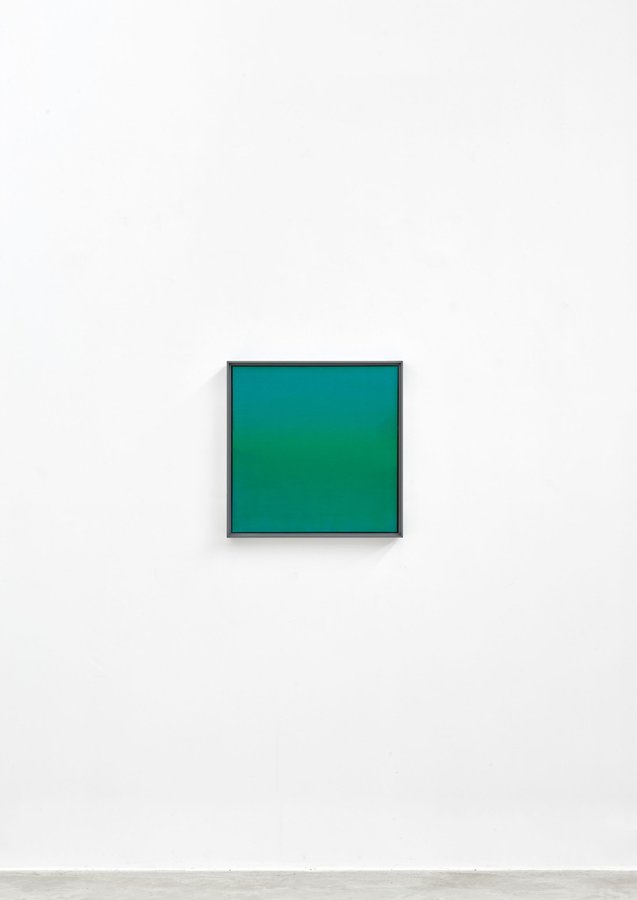
- Axel Vervoordt Gallery is proud to invite you to the opening of the solo exhibition Jef Verheyen. -Silence of Light in the Patio Gallery of Kanaal. The exhibition will feature early paintings from the 1950s and 1960 where Jef Verheyen (1932-1984) explored the essence of light and space, but also formerly unreleased paintings from the 1970s in which Verheyen transformed light into a subtle vibration, offering a glimpse of infinity. As the author of the Essentialism manifesto and a member of the ZERO movement, Verheyen sought purity and spirituality through monochrome colour fields and subtle geometric structures. Inspired by nature, mathematics, and philosophy, Verheyen used light as his primary artistic medium. His paintings invite viewers to experience contemplation, harmony, and the infinite rather than represent the visible world.
Jef Verheyen, Silence of Light
Until 21 Nov 2026
Axel Vervoordt Gallery
Gallery / art space
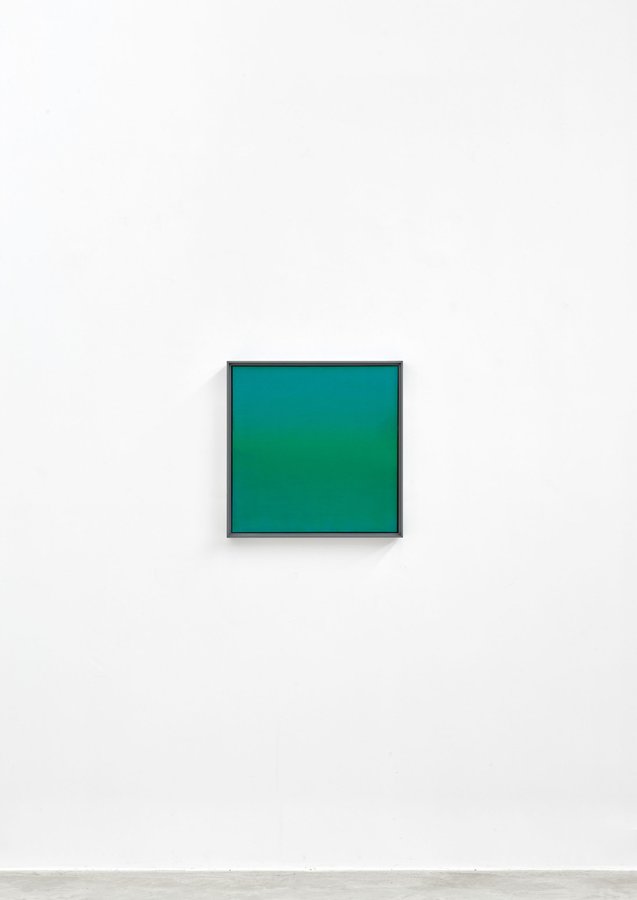
- Axel Vervoordt Gallery is proud to invite you to the opening of the solo exhibition Jef Verheyen. -Silence of Light in the Patio Gallery of Kanaal. The exhibition will feature early paintings from the 1950s and 1960 where Jef Verheyen (1932-1984) explored the essence of light and space, but also formerly unreleased paintings from the 1970s in which Verheyen transformed light into a subtle vibration, offering a glimpse of infinity. As the author of the Essentialism manifesto and a member of the ZERO movement, Verheyen sought purity and spirituality through monochrome colour fields and subtle geometric structures. Inspired by nature, mathematics, and philosophy, Verheyen used light as his primary artistic medium. His paintings invite viewers to experience contemplation, harmony, and the infinite rather than represent the visible world.
Jef Verheyen, Silence of Light
Until 21 Nov 2026
Axel Vervoordt Gallery – Kanaal
Gallery / art space
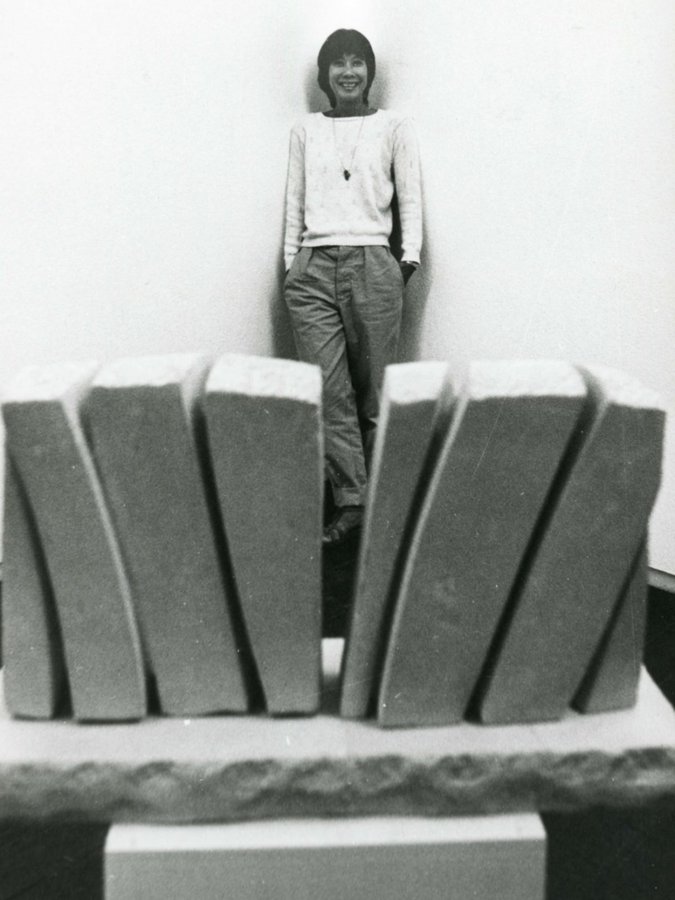
- Kim Lim: Source Curated by Bianca Chu Axel Vervoordt Gallery is delighted to present Source, a solo exhibition of artworks by late Singaporean-British artist Kim Lim. Source brings together sculptures, prints and photographs by Kim Lim in an exhibition exploring rhythm, transformation and the vital energies held within matter. Taking its title from Lim’s 1988 sculpture, the exhibition begins with the idea of the source not simply as a fixed point of origin, but as a generative condition: a place from which forms emerge, change and return. It also refers to source material—the observations, things, experiences and documentation that inspired Lim’s artistic journey and process. Photographs selected from the artist’s archive punctuate the exhibition. Although photography remained a constant element of Lim’s working life, these images have previously been presented primarily as archival or supporting material. Here, they occupy a deliberately ambiguous position. They offer traces of Lim’s travels and working processes, revealing her sustained attention to structures, rhythms and forms found across natural and built environments. Lim was highly attuned to her chosen materials: to their particular densities, textures and internal rhythms. Writing about Source, she described how its carved lines “widen and spread, deepen and sometimes disappear,” while the granite itself possessed “a kind of compact energy.” Such observations reveal an artist who did not treat stone or wood as inert substances upon which form was imposed. After 1979, when carving stone became a central focus of her practice, the dialogue between the movement of Lim’s hand and the latent capacities of the material became even more visible. Through prolonged observation and considered intervention, she responded to the weight, resistance, grain and energetic properties of each stone, allowing something of its inner life to be gradually revealed. Organised around ideas of breath, movement and attention, the exhibition considers Lim’s work in relation to ancient Chinese cosmological and philosophical understandings of the natural world as a continuous process of transformation. Within Daoist thought, the Dao [Way] is described as the unnameable and inexhaustible source from which the myriad things emerge. From this primordial condition arises wuxing —wood, fire, earth, metal and water—commonly translated as the “five elements.” Yet these are not static substances; rather, they describe interdependent movements through which matter and energy continually generate, transform and return. The related concept of qi —variously understood as breath, vital energy or life force—offers one way of approaching the movement held within Lim’s apparently still forms. Grooves ripple across stone; surfaces alternately absorb and reflect light; solid volumes appear porous, fluid and responsive to the surrounding space. In works such as Wind-Stone (1992) and Sea-Stone II (1996–97), the permanence of stone meets the movements of wind and water, evoking natural processes unfolding across deep time. These qualities extend throughout Lim’s practice. Her prints translate rhythm into sinuous lines that move between the recognisable and the enigmatic, suggesting topographical maps, cells, whirlpools, labyrinths or unseen structures. Scale remains fluid too: a single line might evoke the course of a river, the contour of a mountain or the connective tissue of a larger universe. Rather than referring to one specific image, Lim sought to create “metaphors that could act as triggers,” opening her work towards experiences beyond the object itself. Kim Lim: Source invites visitors to encounter the artist’s practice as a field of interrelated rhythms: between solidity and flow, presence and absence, nature and artifice, the atomic and the cosmic. Her works ask us to look slowly, to listen carefully and to contemplate the possibility that even the most enduring forms are never entirely still—or entirely what they seem. In doing so, we might consider the idea of source: not only as an origin, but as the tapestry of a life, woven from the observations, encounters, memories and experiences from which vital form continually emerges.
Kim Lim, Source
Until 30 Jan 2027
Axel Vervoordt Gallery
Gallery / art space
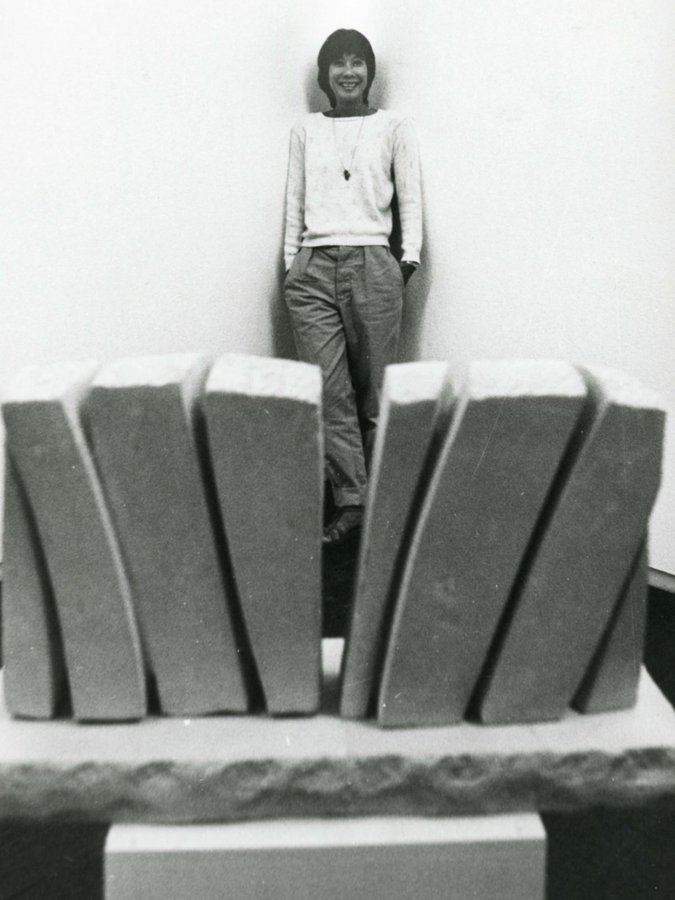
- Axel Vervoordt Gallery is delighted to present Source, a solo exhibition of artworks by late Singaporean-British artist Kim Lim. Source brings together sculptures, prints and photographs by Kim Lim in an exhibition exploring rhythm, transformation and the vital energies held within matter. Taking its title from Lim’s 1988 sculpture, the exhibition begins with the idea of the source not simply as a fixed point of origin, but as a generative condition: a place from which forms emerge, change and return. It also refers to source material—the observations, things, experiences and documentation that inspired Lim’s artistic journey and process. Photographs selected from the artist’s archive punctuate the exhibition. Although photography remained a constant element of Lim’s working life, these images have previously been presented primarily as archival or supporting material. Here, they occupy a deliberately ambiguous position. They offer traces of Lim’s travels and working processes, revealing her sustained attention to structures, rhythms and forms found across natural and built environments. Lim was highly attuned to her chosen materials: to their particular densities, textures and internal rhythms. Writing about Source, she described how its carved lines “widen and spread, deepen and sometimes disappear,” while the granite itself possessed “a kind of compact energy.” Such observations reveal an artist who did not treat stone or wood as inert substances upon which form was imposed. After 1979, when carving stone became a central focus of her practice, the dialogue between the movement of Lim’s hand and the latent capacities of the material became even more visible. Through prolonged observation and considered intervention, she responded to the weight, resistance, grain and energetic properties of each stone, allowing something of its inner life to be gradually revealed. Organised around ideas of breath, movement and attention, the exhibition considers Lim’s work in relation to ancient Chinese cosmological and philosophical understandings of the natural world as a continuous process of transformation. Within Daoist thought, the Dao [Way] is described as the unnameable and inexhaustible source from which the myriad things emerge. From this primordial condition arises wuxing —wood, fire, earth, metal and water—commonly translated as the “five elements.” Yet these are not static substances; rather, they describe interdependent movements through which matter and energy continually generate, transform and return. The related concept of qi —variously understood as breath, vital energy or life force—offers one way of approaching the movement held within Lim’s apparently still forms. Grooves ripple across stone; surfaces alternately absorb and reflect light; solid volumes appear porous, fluid and responsive to the surrounding space. In works such as Wind-Stone (1992) and Sea-Stone II (1996–97), the permanence of stone meets the movements of wind and water, evoking natural processes unfolding across deep time. These qualities extend throughout Lim’s practice. Her prints translate rhythm into sinuous lines that move between the recognisable and the enigmatic, suggesting topographical maps, cells, whirlpools, labyrinths or unseen structures. Scale remains fluid too: a single line might evoke the course of a river, the contour of a mountain or the connective tissue of a larger universe. Rather than referring to one specific image, Lim sought to create “metaphors that could act as triggers,” opening her work towards experiences beyond the object itself. Kim Lim: Source invites visitors to encounter the artist’s practice as a field of interrelated rhythms: between solidity and flow, presence and absence, nature and artifice, the atomic and the cosmic. Her works ask us to look slowly, to listen carefully and to contemplate the possibility that even the most enduring forms are never entirely still—or entirely what they seem. In doing so, we might consider the idea of source: not only as an origin, but as the tapestry of a life, woven from the observations, encounters, memories and experiences from which vital form continually emerges.
Kim Lim, Source
Until 30 Jan 2027
Axel Vervoordt Gallery – Kanaal
Gallery / art space
Past Exhibitions
Recent past exhibitions
- Threads of Being: Textiles, Time and Transformation brings together the work of eight artists whose practices unfold through sustained and attentive modes of making. Across painting, sculpture, film and installation, each engages with repetition, accumulation and material sensitivity as a way of thinking through form. Rather than approaching textiles as a medium alone, the exhibition considers textile-related logics such as threading, layering, stitching and interlacing as conceptual frameworks through which time, memory and presence are articulated. Within this framework, surfaces are not passive. They hold duration, register gesture and carry the trace of labour. Materials are approached as active agents, embedded with histories and cultural memory. What emerges is a shared commitment to slowness and continuity, where meaning is not immediate but gradually disclosed through sustained engagement. A key historical anchor within the exhibition is the work of Barbara Levittoux-Świderska, whose practice expands fibre-based practice into architectural space, weaving becomes a way of organising perception. Through weaving, layering and the combination of natural and industrial materials, she developed a precise visual vocabulary grounded in rhythm and structure. Her work establishes an early articulation of textile logic as a system of order, one that organises light, movement and perception, and sets a foundation for many of the concerns explored in the exhibition. In the paintings of Varda Caivano, time is embedded rather than depicted. Her works unfold slowly, through restrained accumulation and subtle shifts in surface and tone. Each painting resists immediacy and remains open, holding the viewer in a space where perception is prolonged rather than resolved. Painting becomes a process of thinking through time, where structure is never fixed but continually forming. In a markedly different register, Chiyu Uemae brings a historical perspective grounded in postwar abstraction. Associated with the Gutai movement, his practice is defined by a persistent engagement with repetition and material accumulation. The works presented here exemplify his method: small, tactile elements are assembled into dense, rhythmic fields, where gesture is embedded within structure. Each surface becomes a record of labour rather than a depiction of it. His work bridges painting and textile logic, translating the act of making into a durational process in which time is physically inscribed into the surface. A comparable sense of devotion to process underpins the work of Waqas Khan, whose recent paintings are constructed through countless minute marks. His drawings and paintings are built from repeated micro-gestures that accumulate into dense fields of attention. The viewer is drawn into a space where looking slows down and concentration becomes physical. In dialogue with Uemae, Khan extends the exhibition’s exploration of accumulation as both a visual and temporal condition, though in an increasingly reduced scale. With Junko Oki, repetition turns into a form of intimate repair. Working with found and aged textiles, she stitches, marks and mends in ways that remain deliberately direct. Her practice moves between drawing and mending, where the act of repair becomes a way of holding time together. The works carry the sense of something fragile that is continuously being sustained, where making is inseparable from care and attention. This notion of care expands into a broader social dimension in the work of Jaffa Lam. Her long-term collaborations with communities in Hong Kong turn material reuse into a shared process of production. Works such as Meditation Tent (2011) and Lost and Found (2021) reflect a collective rhythm of making, where discarded materials are reactivated through cooperation. Her practice can be read as a form of communal weaving, where social relations become part of the material itself. Spatial and perceptual activation are central to the work of Katsuhiro Yamaguchi, a founding member of the Experimental Workshop. His mesh-based works introduce lightness and instability, engaging directly with movement, reflection and changing conditions of light. Rather than presenting a stable image, his work activates the conditions of seeing itself, where time becomes part of perception. Finally, Kimsooja situates these concerns within a broader philosophical framework. Her practice is grounded in repetition and stillness, where making is reduced to gesture and presence. In Deductive Object (2016), a plaster cast of the artist’s arms rests on an antique table, forming a void that recalls the act of sewing. The absence of action becomes central, shifting attention from object to state. The work suggests a suspension of production in which presence is articulated through quiet refusal, and where making is redefined as a condition of being rather than doing. Taken together, the artists in Threads of Being articulate a shared understanding of making as a sustained, embodied practice. Whether through thread, mark, image or light, each engages with processes that unfold over time, holding memory and enabling transformation. The exhibition proposes textile and textile-adjacent logics not as ends in themselves, but as ways of thinking, frameworks through which rhythm, labour and continuity can be experienced, and through which the relationship between material and time is continuously renegotiated.
Group exhibition, Threads of Being: Textiles, Time and Transformation
Ended 19 Sept 2026
Axel Vervoordt Gallery
- Threads of Being: Textiles, Time and Transformation brings together the work of eight artists whose practices unfold through sustained and attentive modes of making. Across painting, sculpture, film and installation, each engages with repetition, accumulation and material sensitivity as a way of thinking through form. Rather than approaching textiles as a medium alone, the exhibition considers textile-related logics such as threading, layering, stitching and interlacing as conceptual frameworks through which time, memory and presence are articulated. Within this framework, surfaces are not passive. They hold duration, register gesture and carry the trace of labour. Materials are approached as active agents, embedded with histories and cultural memory. What emerges is a shared commitment to slowness and continuity, where meaning is not immediate but gradually disclosed through sustained engagement. A key historical anchor within the exhibition is the work of Barbara Levittoux-Świderska, whose practice expands fibre-based practice into architectural space, weaving becomes a way of organising perception. Through weaving, layering and the combination of natural and industrial materials, she developed a precise visual vocabulary grounded in rhythm and structure. Her work establishes an early articulation of textile logic as a system of order, one that organises light, movement and perception, and sets a foundation for many of the concerns explored in the exhibition. In the paintings of Varda Caivano, time is embedded rather than depicted. Her works unfold slowly, through restrained accumulation and subtle shifts in surface and tone. Each painting resists immediacy and remains open, holding the viewer in a space where perception is prolonged rather than resolved. Painting becomes a process of thinking through time, where structure is never fixed but continually forming. In a markedly different register, Chiyu Uemae brings a historical perspective grounded in postwar abstraction. Associated with the Gutai movement, his practice is defined by a persistent engagement with repetition and material accumulation. The works presented here exemplify his method: small, tactile elements are assembled into dense, rhythmic fields, where gesture is embedded within structure. Each surface becomes a record of labour rather than a depiction of it. His work bridges painting and textile logic, translating the act of making into a durational process in which time is physically inscribed into the surface. A comparable sense of devotion to process underpins the work of Waqas Khan, whose recent paintings are constructed through countless minute marks. His drawings and paintings are built from repeated micro-gestures that accumulate into dense fields of attention. The viewer is drawn into a space where looking slows down and concentration becomes physical. In dialogue with Uemae, Khan extends the exhibition’s exploration of accumulation as both a visual and temporal condition, though in an increasingly reduced scale. With Junko Oki, repetition turns into a form of intimate repair. Working with found and aged textiles, she stitches, marks and mends in ways that remain deliberately direct. Her practice moves between drawing and mending, where the act of repair becomes a way of holding time together. The works carry the sense of something fragile that is continuously being sustained, where making is inseparable from care and attention. This notion of care expands into a broader social dimension in the work of Jaffa Lam. Her long-term collaborations with communities in Hong Kong turn material reuse into a shared process of production. Works such as Meditation Tent (2011) and Lost and Found (2021) reflect a collective rhythm of making, where discarded materials are reactivated through cooperation. Her practice can be read as a form of communal weaving, where social relations become part of the material itself. Spatial and perceptual activation are central to the work of Katsuhiro Yamaguchi, a founding member of the Experimental Workshop. His mesh-based works introduce lightness and instability, engaging directly with movement, reflection and changing conditions of light. Rather than presenting a stable image, his work activates the conditions of seeing itself, where time becomes part of perception. Finally, Kimsooja situates these concerns within a broader philosophical framework. Her practice is grounded in repetition and stillness, where making is reduced to gesture and presence. In Deductive Object (2016), a plaster cast of the artist’s arms rests on an antique table, forming a void that recalls the act of sewing. The absence of action becomes central, shifting attention from object to state. The work suggests a suspension of production in which presence is articulated through quiet refusal, and where making is redefined as a condition of being rather than doing. Taken together, the artists in Threads of Being articulate a shared understanding of making as a sustained, embodied practice. Whether through thread, mark, image or light, each engages with processes that unfold over time, holding memory and enabling transformation. The exhibition proposes textile and textile-adjacent logics not as ends in themselves, but as ways of thinking, frameworks through which rhythm, labour and continuity can be experienced, and through which the relationship between material and time is continuously renegotiated.
Group exhibition, Threads of Being: Textiles, Time and Transformation
Ended 19 Sept 2026
Axel Vervoordt Gallery – Kanaal
- Axel Vervoordt Gallery is pleased to present a solo presentation by Ida Barbarigo (1920- 2018), featuring a selection of rarely-seen works from the mid-1950s, 1960s. During these two decades, the paintings illustrate the evolution in her approach to abstraction: from very formal and geometric to a much more lyrical visual language that is completely her own. Barbarigo’s chair paintings transform simple objects into haunting symbols of presence and absence, using repetition, distortion, and atmospheric space to evoke psychological tension rather than depict literal furniture. Ida Barbarigo was born as Ida Cadorin into a well-known Venetian family of artists, architects, and sculptors. She possessed a rare ability to convey emotions, unseen energies, and the depth of the human condition. She worked obsessively and passionately on various series throughout her life. These series took many forms, including self[1]portraits, judges, sphinxes, flowers, demons, beaches, city views, and earthlings. One theme was dominant and recurring: the moveable, sculptural, simple chair. Omnipresent in her oeuvre, the chair became Barbarigo’s leitmotif, like a personal script, a form of handwriting. A humble object that she related to through her intense observations and brought to life through poetic abstraction. The Spanish museologist and professor Kosme de Barañano writes about her devotion to chairs : “The chair in Barbarigo is not an object of use, but a witness. It conserves the trace of the body that has just left and evokes the one that will return. [...] Her painting seeks the space between things, that interval where silence acquires density and air itself becomes presence.” In the mid-1950s, still influenced by her former studies of architecture, Barbarigo reduced the chair to rigid, structured forms and painted them in geometric shapes. Influenced by Piet Mondriaan, she used primary, pure colours to distinguish the abstract lines and forms. She was paying as much attention to the forms as to the spaces in between the forms. She used vivid, distinctive colours to enhance the contrasts between the presence and the absence of shapes and their shadows. In the following years, her style evolved. She became aware that her real passion was for lines that suggest rather than enclose, calling them “interactions between the solid and the void”. The lines in the paintings become more fluid, delicate, and moving; they do not delimit but elude. She wanted to paint the unseen energy, the ephemeral which conveyed a sense of depth and mystery. Her palette shifted to muted, earthy colours and layered textures. Her compositions are marked by a dreamlike atmosphere that blurs the line between figuration and abstraction. She observed not only the chairs, but the people sitting in them. Enigmatic figures mysteriously appear in her paintings and are transformed into chairs and tables. She observed people through her endless passeggiate or promenades in her hometown, Venice, and later in Paris, where she lived off and on from 1952 onwards. In the early 1960s, during her walks, she made observations about daily life. She often transcribed the ordinary conversations she overheard and random encounters in the titles of her works. The size of her canvases became larger. At times, she even aligned two canvases together to make her compositions. General dixi: doman piovi (The General says: tomorrow it will rain, 1964) and Fabio ti buttano per terra (Fabio, they throw you on the ground) allude to a tension, an immediate emotion rather than a rendering of an actual scenery. Giovanna Dal Bon calls them “Echoes of non-dialogue. Emissions of breath” in the catalogue edited by AsaMer in 2013. Daniela Ferretti, curator and former director of Museo Fortuny, said: “When I think of Ida, most of the time I imagine her sitting at one of the cafés on the Zattere, or Piazza San Marco, or along the Parisian boulevards, contemplating the chairs and above all observing. Observing the mysterious, enigmatic voids and the interstices of simple chairs stacked in piles or abandoned in random geometric lines, she waited for a new vision to come to replace the usual image of these daily objects, designing them to reveal their essence. Nothing comes from anything. Everything takes place in a suspended, motionless time, and suddenly, in a new space, appears the other image, the one that emerges from the deepest part of the soul.” Ida Barbarigo was a groundbreaking artist who had a remarkable ability to “feel paint”. Despite the originality of her vision, she received little recognition in a male-dominated art world. Today, it’s clear she made a vital contribution to postwar art history with her fresh paintings, which bridge figuration and abstraction with a unique, timeless sensibility.
Ida Barbarigo, Chairs: Forms, Spaces and Shadows
Ended 14 Aug 2026
Axel Vervoordt Gallery
- Axel Vervoordt Gallery is pleased to present a solo presentation by Ida Barbarigo (1920- 2018), featuring a selection of rarely-seen works from the mid-1950s, 1960s. During these two decades, the paintings illustrate the evolution in her approach to abstraction: from very formal and geometric to a much more lyrical visual language that is completely her own. Barbarigo’s chair paintings transform simple objects into haunting symbols of presence and absence, using repetition, distortion, and atmospheric space to evoke psychological tension rather than depict literal furniture. Ida Barbarigo was born as Ida Cadorin into a well-known Venetian family of artists, architects, and sculptors. She possessed a rare ability to convey emotions, unseen energies, and the depth of the human condition. She worked obsessively and passionately on various series throughout her life. These series took many forms, including self[1]portraits, judges, sphinxes, flowers, demons, beaches, city views, and earthlings. One theme was dominant and recurring: the moveable, sculptural, simple chair. Omnipresent in her oeuvre, the chair became Barbarigo’s leitmotif, like a personal script, a form of handwriting. A humble object that she related to through her intense observations and brought to life through poetic abstraction. The Spanish museologist and professor Kosme de Barañano writes about her devotion to chairs : “The chair in Barbarigo is not an object of use, but a witness. It conserves the trace of the body that has just left and evokes the one that will return. [...] Her painting seeks the space between things, that interval where silence acquires density and air itself becomes presence.” In the mid-1950s, still influenced by her former studies of architecture, Barbarigo reduced the chair to rigid, structured forms and painted them in geometric shapes. Influenced by Piet Mondriaan, she used primary, pure colours to distinguish the abstract lines and forms. She was paying as much attention to the forms as to the spaces in between the forms. She used vivid, distinctive colours to enhance the contrasts between the presence and the absence of shapes and their shadows. In the following years, her style evolved. She became aware that her real passion was for lines that suggest rather than enclose, calling them “interactions between the solid and the void”. The lines in the paintings become more fluid, delicate, and moving; they do not delimit but elude. She wanted to paint the unseen energy, the ephemeral which conveyed a sense of depth and mystery. Her palette shifted to muted, earthy colours and layered textures. Her compositions are marked by a dreamlike atmosphere that blurs the line between figuration and abstraction. She observed not only the chairs, but the people sitting in them. Enigmatic figures mysteriously appear in her paintings and are transformed into chairs and tables. She observed people through her endless passeggiate or promenades in her hometown, Venice, and later in Paris, where she lived off and on from 1952 onwards. In the early 1960s, during her walks, she made observations about daily life. She often transcribed the ordinary conversations she overheard and random encounters in the titles of her works. The size of her canvases became larger. At times, she even aligned two canvases together to make her compositions. General dixi: doman piovi (The General says: tomorrow it will rain, 1964) and Fabio ti buttano per terra (Fabio, they throw you on the ground) allude to a tension, an immediate emotion rather than a rendering of an actual scenery. Giovanna Dal Bon calls them “Echoes of non-dialogue. Emissions of breath” in the catalogue edited by AsaMer in 2013. Daniela Ferretti, curator and former director of Museo Fortuny, said: “When I think of Ida, most of the time I imagine her sitting at one of the cafés on the Zattere, or Piazza San Marco, or along the Parisian boulevards, contemplating the chairs and above all observing. Observing the mysterious, enigmatic voids and the interstices of simple chairs stacked in piles or abandoned in random geometric lines, she waited for a new vision to come to replace the usual image of these daily objects, designing them to reveal their essence. Nothing comes from anything. Everything takes place in a suspended, motionless time, and suddenly, in a new space, appears the other image, the one that emerges from the deepest part of the soul.” Ida Barbarigo was a groundbreaking artist who had a remarkable ability to “feel paint”. Despite the originality of her vision, she received little recognition in a male-dominated art world. Today, it’s clear she made a vital contribution to postwar art history with her fresh paintings, which bridge figuration and abstraction with a unique, timeless sensibility.
Ida Barbarigo, Chairs: Forms, Spaces and Shadows
Ended 14 Aug 2026
Axel Vervoordt Gallery – Kanaal