Vienna
Albertina modern
On now
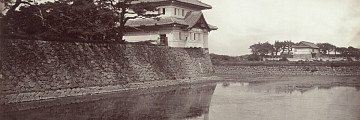
- Today, photography and travel are inextricably linked – yet this connection dates back to the establishment of the new medium in the nineteenth century. The exhibition The World in Focus is dedicated to travel and expedition photography from the mid-nineteenth century onwards, when photography was increasingly employed to capture images of the world. Photographs were valued for their precision, wealth of detail, and reproducibility. Compared with the draughtsmen who had previously accompanied expeditions and were gradually replaced by photographers, work on site could also be carried out much more quickly. The extensive series at the heart of the exhibition depict different regions of the world and tell of shifting claims to power, the expansion of mobility, the exploration of remote landscapes, and the emergence of tourism. The presentation also sheds light on the contexts in which photographers were sent on journeys, the conditions under which the images were created, and the ways in which they were presented in exhibitions, facilitated the transfer of knowledge, and had a lasting impact on perceptions of distant territories.Description
The World in Focus
Until 26 Oct 2026
- The ALBERTINA Museum, VIENNA He is one of the most well-known comedy legends in the German-speaking world: Otto Waalkes. And he has played this role for a while. Generations have laughed about his wordplay and musical parodies. His legendary films, his unforgettable television appearances, his songs, and his verses have become an integral part of pop culture. For decades, he has also won the hearts of people—young and old alike—and cracked them up with his “Ottifants.” His serious (?) artistic ambitions are less known. As a painter, he has made his iconic character roam art history. During his time in an artists’ housing co-op with Udo Lindenberg, Marius Müller-Westernhagen, and others, OTTO was a student at the University of Fine Arts in Hamburg. The ALBERTINA Museum and its collection have always fascinated him, and now OTTO has achieved his destination with an intervention in the Habsburg staterooms: on the occasion of the 250th anniversary of its founding, the museum has asked him to revisit and comment upon selected masterpieces from the Graphic Art Collection—for which he naturally pursues a tongue-in-cheek approach. Otto Waalkes thus encounters famousDescription
Otto Meets Albertina
Until 10 Jan 2027
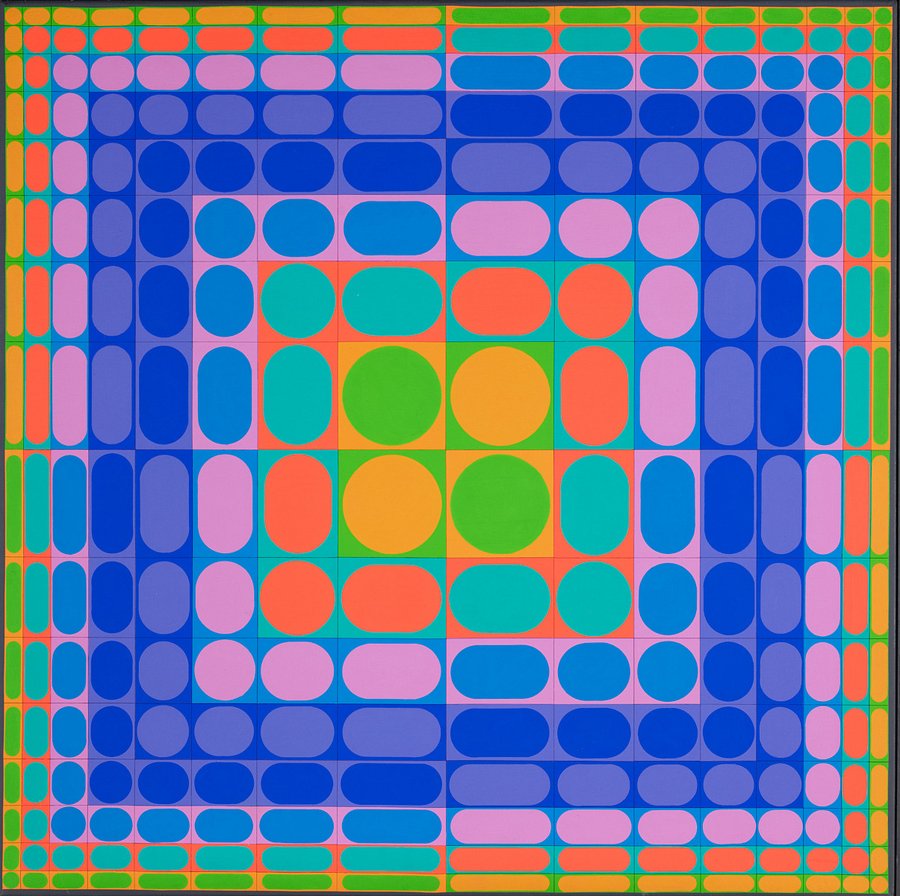
- ALBERTINA MODERN, VIENNA Op Art works are designed to set viewers’ eyes in motion—it is an art style that seeks to challenge the sense of sight in a very special way, calling for no prior knowledge, and being spontaneously experienceable. It established itself in America and Europe in the mid-1960s. Fascinated by the physical laws of light and optics, an entire generation of artists devoted themselves to the study of optical phenomena and the fundamentals of perception. While Op Art has fallen somewhat into obscurity over the decades, it remains a revolutionary art born from a revolutionary era. It was from the 1950s that Victor Vasarely and Marc Adrian put our vision to the test with optical effects. The bold colors of Vasarely’s strictly geometric patterns, as well as the stark contrasts of his black-and-white paintings continue to inform the aesthetics of painting and design today. The depiction of movement in art is also the central subject matter of Marc Adrian, nearly a quarter-century younger than Vasarely. Throughout his life, he kept exploring the boundaries of the depictable, in respect of both content and the materiality of his works.Description
Vasarely & Adrian
Until 10 Jan 2027
- ALBERTINA MUSEUM, VIENNA This major show undertakes an exciting juxtaposition of the 20th century’s two most important figurative painters: Pablo Picasso and Francis Bacon. Bacon was inspired to become a painter by Picasso’s works. Throughout his life, he would compete with him, eventually striving to surpass him. Bacon wanted to be the late 20th-century version of what Picasso was to its first half: a chronicler of being human in all of its tornness. Both of these seminal artists placed human existence at the core of their pictorial worlds. The subject they shared was the human figure – pulled apart, thrown back together, and reinvented with an unprecedented savagery. In their distorted portrayals, they elucidated pain, desire, and vulnerability, holding up a merciless mirror to the modern soul. To both, themes such as crucifixions, screams, bullfights, nudes, and the Tears of Eros revealed the drama of life itself. Although Picasso for his part was never influenced by Bacon, he followed his career very closely.Description
PICASSO – BACON
Until 31 Jan 2027
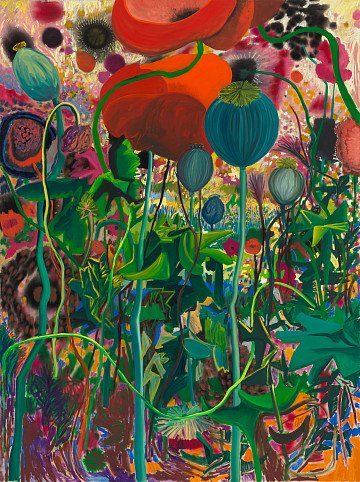
- Fields of flowers, enchanted forests, and mysterious waterfalls seem as if born of a wild fever dream: gigantic flowers weave their way toward the sky like trees, plants mutate into things familiar seeming yet unknown, blazing sunsets reflect upon the water, stars glow on the horizon and bathe the landscape in their supernatural light. The paintings of Shara Hughes (*1981 in Atlanta, Georgia) embody a journey through the trials, tribulations, the jungle-like terrain of an overwhelmingly rich inner world, and their motifs are charged with symbolism. While some works pay homage to Georgia O’Keeffe, the artist’s expressive use of color is owed above all to fauvist approaches to landscape depiction as well as the expressionism of the modern era.Description
Shara Hughes
Until 28 Feb 2027
Coming soon
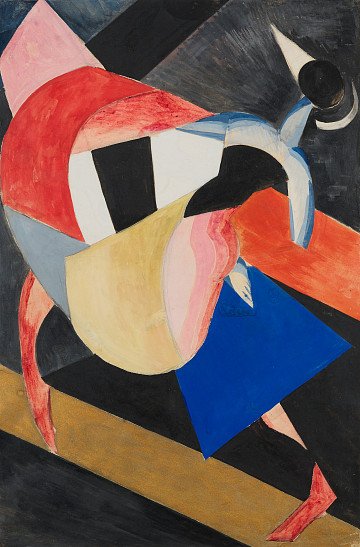
- ALBERTINA, VIENNA Women artists have always been a part of art history – but their work has seldom received the recognition it deserves. This epoch-spanning exhibition takes stock for the first time of the women artists in the Albertina’s collection, presenting works from five centuries: from drawings and prints by early engravers and publishers, which were collected by Duke Albert of Saxe-Teschen and Archduchess Maria Christina of Habsburg-Lorraine themselves, to modern artists and pioneering feminist artists of the 1970s. Collectively, the biographies in Her Story portray women artists as enterprising, engaged protagonists who explored the world around them and established important networks as they pursued their careers. Featuring works by Diana Scultori, Magdalena de Passe, Maria Sibylla Merian, Angelica Kauffmann, Berthe Morisot, Käthe Kollwitz, Sonia Delaunay, Louise Bourgeois, Maria Lassnig, and VALIE EXPORT – and many more.Description
Her Story
30 Oct 2026 – 14 Feb 2027
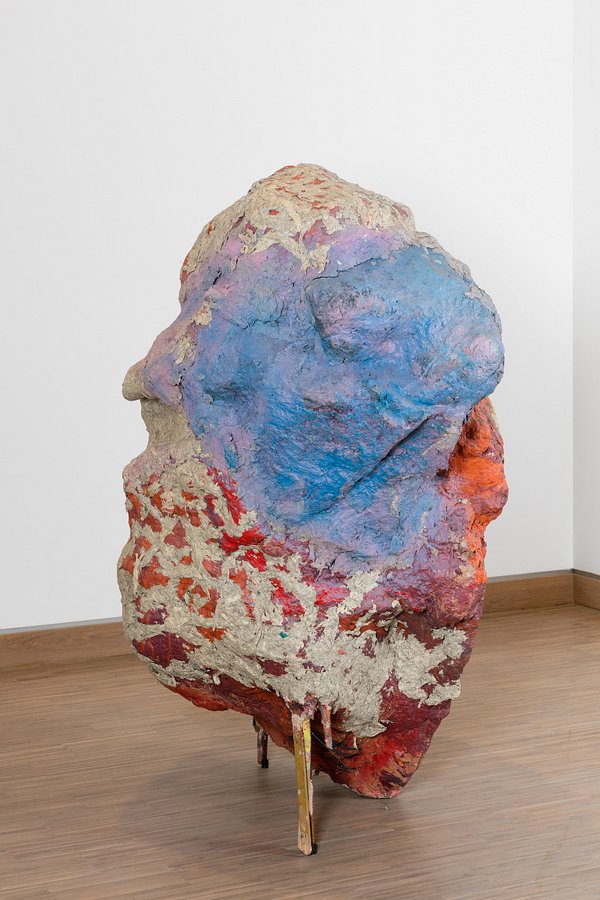
- The ALBERTINA Museum is devoting a retrospective to Franz West (1947–2012) in honor of what would have been his 80th birthday. This nonconformist artist, known for an unruly personality characterized by willfulness and humor, participated in multiple editions of documenta and the Venice Biennale, whose Golden Lion he received in 2011. It was under the influence of Viennese Actionism that West originated his legendary Adaptives in the 1970s: by being worn, held, and applied, these prothesis-like objects adapt to the human body’s shapes and give the audience the opportunity to interact. Objects thus become opportunities, with art becoming a situation. West’s oeuvre breaks boundaries, connects art with life, and has inspired multiple generations of artists. This presentation pays homage to one who removed art from its pedestal to place it in the thick of life.Description
Franz West
6 Nov 2026 – 29 Mar 2027
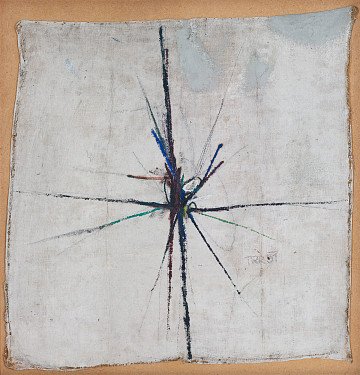
- ALBERTINA, VIENNA Arnulf Rainer numbers among post-1945 Austrian and international art’s most significant and uncompromising personalities. This artist, who was born in Baden (near Vienna) in 1929 and passed away in Upper Austria in late 2025, left an indelible mark on international art history as an innovator who spent over seven decades probing the outer limits of painting. From the very beginning of his artistic career, fired on by his resolute resistance against all of National Socialism’s brutal restrictions, Rainer consistently strove for independence and autonomy. It was with his radical ‘overpaintings’ of the 1950s that he became known internationally and rose to occupy an important place in the post-1945 artistic pantheon. These works testify impressively to his personal stance as an artist, which defied all conventions. It was a group of photographic (self-)portraits, his late-1960s ‘soliloquies in front of the camera,’ that gave rise to the fascinating series Face Farces—impressive examples of which clearly show just how broad a range of approaches to images’ manipulation and reworking he employed, not to mention the intensity and dynamism of theDescription
Arnulf Rainer
13 Nov 2026 – 25 Apr 2027
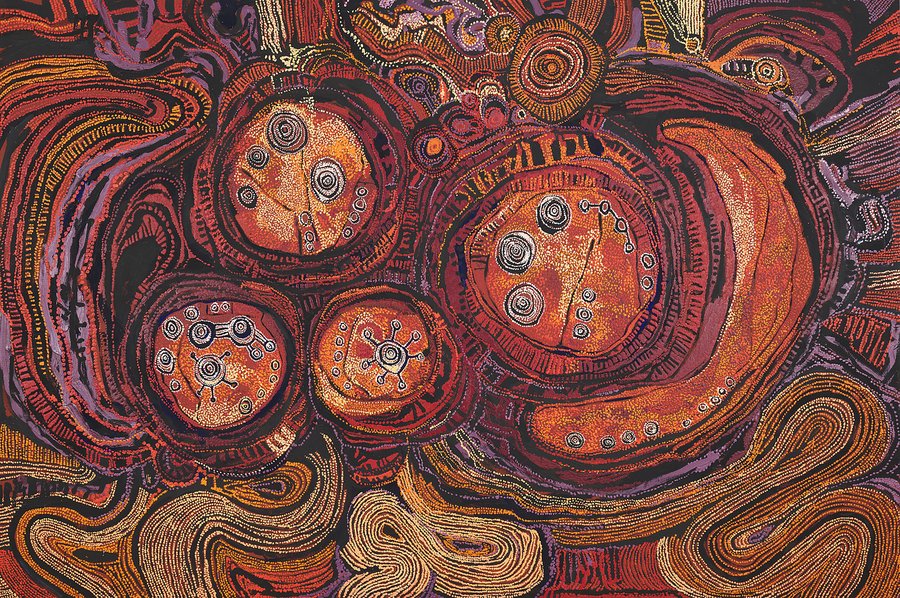
- Paintings of monumental beauty and power convey histories and knowledge passed down through many generations. The breadth and diversity of Australian First Nations art stand at the heart of this exhibition, bringing together works by artists and artist collectives from Papunya, Utopia, Balgo, Warmun, and beyond. Among them is Emily Kam Kngwarray (1910–1996), one of its most internationally renowned figures. She began painting on canvas only in her late 70s, creating an extraordinarily prolific and wide-ranging body of work in the final eight years of her life. The exhibition draws on the ALBERTINA Museum’s unique and extensive holdings of Australian art, encompassing some 100 artistic positions. The collection was most recently augmented by a generous donation from collectors Elisabeth Bähr and Lindsay Frost in honor of the museum’s 250th anniversary. Works by artists such as Destiny Deacon and Tracey Moffatt further expand the presentation, underscoring the remarkable variety of artistic practices across Australia.Description
Down Under
23 Apr 2027 – 5 Sept 2027
Recent past exhibitions
- worked together with her husband Albert to build the collection in a systematic manner. It is therefore the collection’s beginnings and the collectors’ respective motives that are explored, here. What profile was the collection intended to develop, and for what purpose was this collecting being done? Which artists were favored? And when did the largest groups of works by figures such as Albrecht Dürer or Egon Schiele arrive here? These and further questions will be answered with reference to priceless examples such as Dürer’s Hare. In doing so, this presentation shall train its gaze not only on a great past but also forward, into the future. Rosa Barba’s Artistic Perspective on the ALBERTINA This forward-looking perspective is also reflected in the work of internationally acclaimed artist Rosa Barba. Created for the anniversary year, her site-specific installation explores the historical dimensions of the ALBERTINA as a nexus of past, present, and future. Following the exhibition, the work will enter the museum’s collection, thereby becoming part of the very history that the exhibition seeks to tell. With Collecting for the Future, the ALBERTINADescription
Collecting for the Future
Ended 11 Oct 2026
- KAWS. Art & Comix explores the interplay between comics, comic strips, cartoons, and fine art. This presentation places the American artist KAWS in dialog with selected contemporary stances with a focus on the artistic autonomy of his characters, who unite characteristics of pop, commercial, and public art. Comics are characterized by a universal language and exist in many cultures as an accessible way of telling stories graphically, in words and images. Jean-Michel Basquiat and Ad Reinhardt were fine artists who created comics in a near-classic vein. And even prior to the advent of photography and (animated) films, caricature, satire, and frame-by-frame narration represented an attractive way in which stories could be conveyed—transcending boundaries both national and otherwise, addressing all age groups and social strata. Starting in the 1960s, artists such as Roy Lichtenstein, Claes Oldenburg, H.C. Westermann and Keith Haring questioned the distinction between high and low art in a radical manner. Prominent contemporary stances of a similar bent range from KAWS and Joyce Pensato to Cosima von Bonin and on to Peter Saul.Description
Kaws | Time Off, 2021
Ended 27 Sept 2026
- The artist Helga Philipp (1939–2002) is regarded as a preeminent representative of Austrian concrete art and op-art. As early as the 1960s, she developed a precise, conceptually grounded visual language that placed perception and motion at the center of her artistic output. Her oeuvre, situated between the poles of visual experience, geometric abstraction, and a kinetic formal language, features experimentation with mathematical principles, serial structures, and interactivity. This exhibition will present around 50 of the artist’s most important works from several decades, showing the great variety of her output in various genres such as painting, drawing, printed graphics, and object art.Description
Helga Philipp
Ended 20 Sept 2026