Amsterdam
andriesse eyck galerie
On now
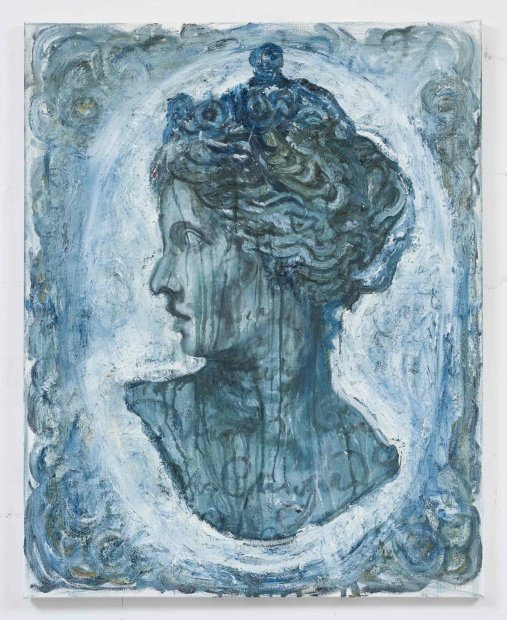
- In her new paintings, Kensmil depicts mythological figures and glacial landscapes. In these works, she explores themes such as power, beauty and transience. Early cultures used myths to understand the changing world around them. Stories of the death, decline and rebirth of gods and heroes served as metaphors for the fragility of human life. Kensmil paints portraits of Greek goddesses and nymphs: archetypes of an idealised beauty that has endured for centuries. In her paintings, these classical figures take on a new form. Through her layered and at times raw painting style, she highlights the transience of idealised beauty. Alongside the depictions of divine figures hang paintings of glaciers. In their pure form, glaciers are breathtakingly beautiful. However, due to climate change, they have also become the ultimate symbol of what is slowly disappearing. In these paintings, Kensmil depicts the process of erosion and melting. Their dark, weathered surfaces bear traces of pollution, violence and decay. In another painting, Marble Grief, we see the sleeping Ariadne as a nymph, in a restless sleep marked by grief. The image symbolises human vulnerability. The title of the painting is taken from the book Grief Made Marble (1), a study of the interplay between art and mourning in antiquity. With A Grave of Mythology, Kensmil has created an impressive exhibition about change, loss and the fragility of a world that is constantly in flux. Paintings by Natasja Kensmil are also on display in Gossip, Buitenplaats Kasteel Wijlre; Collection as Cosmos, Van Abbemuseum, Eindhoven; Collection Display, Stedelijk Museum, Amsterdam; Plantage aan de gracht, Huis Willet-Holthuysen, Amsterdam; and Hold On: Identity and Intimacy in Late Medieval Book of Hours, Museum Meermanno, The Hague. On 10 October, her monumental mural Allegory of Glaciers will open in the stairwell of the Kunstmuseum Den Haag. (1) Grief Made Marble: Funerary Sculpture in Classical Athens, Seth Estrin, Yale University Press, 2023Description
A Grave of Myhtology
Until 7 Nov 2026
Recent past exhibitions
- An exhibition about looking, deceleration, and the in-between space Snuffel is a Drag on Art GUEST EXHIBITION CURATED BY BOBO OPHUIS ARTISTS: Tang Pinggang, Zhang Wei, Yang Xinguang, Liao Guohe, Kang Wanhua, Lova Yu, Wumen Ghua & Mia Cecille Snuffel is a Drag on Art is an experimenting exhibition and weekly programme at andriesse ~ eyck galerie in Amsterdam, exploring deceleration, abstraction, and life in the in-between space. From 28 August to 25 September 2026, curator and initiator Bobo Ophuis brings together works by Chinese abstract pioneers and contemporary artists who engage with matter, power, identity, and institutional expectations. The gallery is transformed into a physical venue for encounter, where the tea table serves as a central landing strip; visitors are invited to first land, sit, and leave their usual pace behind before encountering the artworks. Drawing from her navigating life between China and the Netherlands, Ophuis examines how an in-between position does not merely evoke alienation, opens up space for an alternative way of looking. The exhibition shows what happens when one lives between worlds without fully belonging to either. ‘Snuffel is a Drag on Art’ offers explanations while opening a dialogue across generations, geographical contexts, and artistic positions. Rather than prioritising rapid recognition, it foregrounds presence, materiality, and friction.Description
Snuffel is a Drag on Art
Ended 25 Sept 2026
- [LINK text='emmeline de mooij' href='http://andriesse-eyck.com/artists/56'] 14 Feb — 11 Apr 2026 HELL HOLLE ENG below ‘ Jongens, jongens, jongens waarom zorgt er niemand voor die Sheela na Gig’s ’, roept Emmeline de Mooij, terwijl ze voor een overwoekerde ruïne van een kasteel in Ierland staat. Het is eigenlijk geen echte vraag; het is een confrontatie, een bevestiging, van iets dat ze eigenlijk al wist: de belichaming van de eeuwenlange onzichtbaarheid van vrouwelijke seksualiteit. In haar film, GoPro HERO (2026) - een knipoog naar de populaire masculine outdoor adventure camera -, neemt De Mooij ons mee op haar zoektocht naar het schemergebied tussen leven en dood. Terwijl ze over hekken klimt, komen we via womb tombs, bekentenissen van twintigjarige mannen in dating-app chats en lust uit bij het symbool van die overgang: de Sheela na Gig. Uit steen gehakte, middeleeuwse, mythische figuren van uitgemergelde, oude vrouwen met kale hoofden en uitstekende ribben. Het meest prominent zijn de twee handen die haar vulva openspreiden - groots en met anatomische precisie. Een lichaam dat zichzelf opeist, dat weigert zich te schamen. Niemand weet precies wat ze betekenen. Vruchtbaarheid? Waarschuwingen? Regeneratie of genot? Waar komt die angst voor de onvruchtbare vrouw, voor de menopauze toch vandaan, vraagt De Mooij zich af. Aan de muur hangt een trui waar met grote zwarte letters de woorden HELL en HOLLE op staan. Een verwijzing naar de namen uit de talloze voorchristelijke tradities en mythes waarin oude vrouwen niet marginaal waren, maar machtig. Maandenlang werkte De Mooij eraan, koos de zachtste niet-prikkende wol van Franse schapen, spon draad voor draad de wol, breide pen voor pen. De taal van De Mooij is associatief, een poëtische belichaming van textiel. De stoffen en kleding die ze gebruikt zijn vaak gevonden, overgebleven van haar kinderen. Kijk goed naar de gestopte sokken, naar de steken op een matras van quilt uit de serie The Guest Mattress (2022). Let op lijkt De Mooij te zeggen: het geduld waarmee je wol spint, een sok repareert, een mouw breit, de stof steekje voor steekje vastzet, is hetzelfde repetitieve monnikenwerk als het zorgen voor iemand die je voortgebracht hebt. Omdat die oneindige herhalingen, het handwerk, uiteindelijk de kern van zorg zijn: erkennen dat iets aandacht nodig heeft om verder te kunnen bestaan. De Mooij verzet zich tegen het verdwijnen, het onzichtbaar worden, de ode aan de seksualiteit wordt belichaamt in de Sheela na Gig. Een lichaam dat zichzelf opeist en viert. Openspreidt, bevrijdt van het spektakel van reproductiviteit. Fragmenten uit een tekst van Mirthe Berentsen, geschreven voor deze tentoonstelling. De volledige tekst is beschikbaar in de galerie.Description
Hell Holle
Ended 11 Apr 2026