Amsterdam
Annet Gelink Gallery
On now
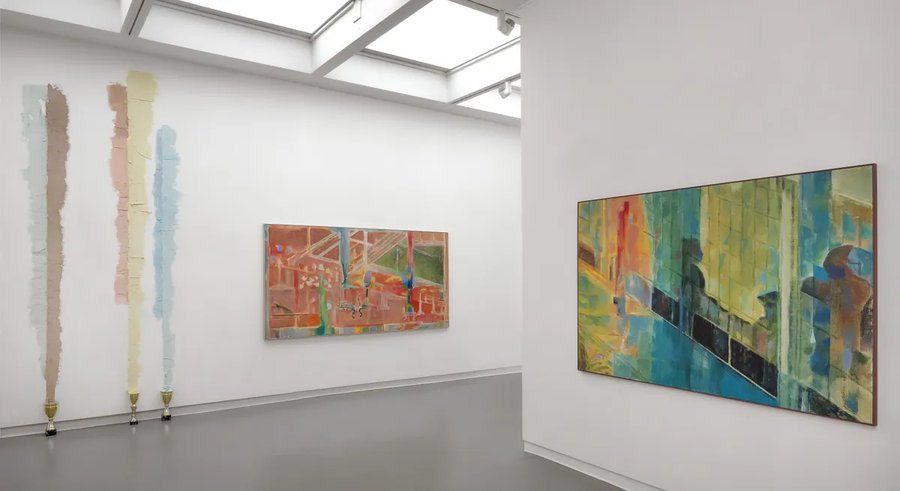
- David Maljković's seventh solo exhibition at the gallery, In the café, a landscape is placed on the wall at eye level, features a new series of paintings developed in dialogue with writer Ana Lozica. The exhibition considers space as something that can exist in several versions at once. Through recurring...Description
David Maljković: In the café, a landscape is placed on the wall at eye level
Until 31 Oct 2026
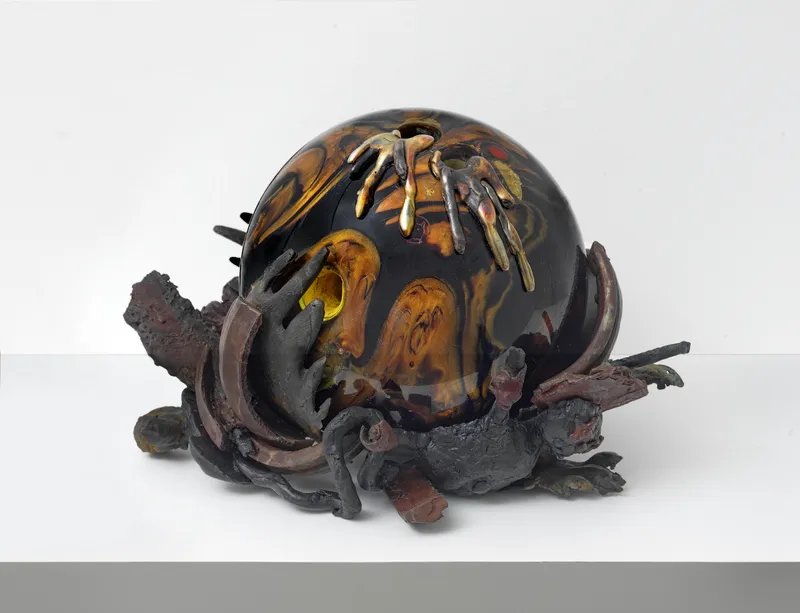
- Annet Gelink Gallery is proud to present the first exhibition by Alessandro Di Pietro at the gallery, hosted in The Bakery, in collaboration with Case Chiuse by Paola Clerico. Featuring new sculptures and a drawing, the exhibition La Vita Agra is developed around the artist's ongoing investigation into impact and...Description
Alessandro Di Pietro | in The Bakery La Vita Agra
Until 31 Oct 2026
Recent past exhibitions
Leo Arnold
Ended 16 May 2026
- Annet Gelink Gallery is proud to present Heavenly Beauty, the first exhibition by Lizzy Deacon in its project space, The Bakery. Rooted in a framework of portraiture, Deacon’s practice explores social dynamics, systems and displays of value and class in contemporary life. Working predominantly in moving image, drawing and performance, Deacon develops long-term, character-driven investigations, drawing on the specific behaviours and individual histories of the real people she interacts with, both in physical environments and online spaces. Mining YouTube, tabloids, social media and internet forums, she reconstructs her findings into characters that expose the surreal and absurd dimensions of everyday life. Scenes of ‘petty’ violence, betrayal and embarrassment sit alongside images of excess, spectacle and glamour. Central to her work is an inquiry into the performance-of-self and aspirational individualism. Often adopting a DIY approach to filmmaking, Deacon enters ‘real’ situations alone to observe, magnify and participate in the rituals of self-presentation that define contemporary culture. These themes are explored in her latest work Heavenly Beauty, first presented at the conclusion of the artist’s residency at De Ateliers, Amsterdam in 2025. The film traces the artist’s attendance at an exclusive high-net-worth networking gala at which ultra-wealthy adults live out their childhood fantasies by assuming the roles of princes and princesses. Attending the event alone, Deacon films herself and her surroundings as she navigates this surreal environment. Dealing with questions of intimacy, fantasy, class and aspiration, she attempts to infiltrate a clique of princesses — forcing her way into a dance circle, edging onto the stage to blend in with performers, asking another guest to slow-dance with her. These gestures reveal a strategic vulnerability: improvising simultaneously as participant, observer and intruder. The work was filmed using several cameras, all of which had to fit into a postcard-sized clutch bag, alternating between 4K footage captured on a 360-degree camera and low-quality, grainy images filmed covertly from a spy cam embedded in the wristwatch Deacon wore throughout the event. The resulting visual language oscillates between the polished aesthetic of contemporary social media and the raw, nostalgic grain of early 2000s blogs and digital photography. The stylistic friction exposes the frailty of influencer-capitalism, transforming a high-society gala into a surreal stage. At once comic and sharply critical, the work captures today’s social dynamics with an almost merciless gaze: a document of performance that implicates its maker as much as its subjects.Description
Lizzy Deacon: Heavenly Beauty
Ended 16 May 2026
- Annet Gelink Gallery is pleased to present the third solo show by David Claerbout at the gallery. At the heart of the exhibition is Claerbout’s newest video work, The woodcarver and the forest (2025). The woodcarver and the forest unfolds around two central figures: a solitary woodcarver and the forest that surrounds him. Set in a large house deep in the woods, the film follows a man who spends his days ceaselessly carving wooden spoons, recalling craft practices often embraced as analogue antidotes to screen fatigue and as ways of reconnecting with nature. The slow, repetitive gestures of carving and the soft yet sharp sounds they produce evoke a sense of calm and focused attention, while introducing a subtle irony into the work as it questions comfort, attention, and the mechanisms through which contemporary art seeks to engage its audience. Over the course of the film, which represents two different days in the timespan of 13 years, there is a quiet and constant shift between inside and outside, until it becomes apparent that the forest has almost entirely disappeared. The final day of the 13 years is represented in black and white photographs. Originally trained in painting and drawing, David Claerbout works across photography, video, digital technology, and sound. His practice centers on questions of temporality and duration, producing images that invite an experience of dilated time, perception, and memory. In The woodcarver and the forest, the forest is presented less as a concrete ecosystem than as an image — an idea of nature rather than a dense, living environment — evoking a dreamlike atmosphere that feels at once calm and strangely hollow. Framed by the architecture of the house, the forest becomes a staged backdrop, an idealized scene held at a distance, available for contemplation and consumption. This dichotomy is central to the work, as the woodcarver’s engagement with nature remains indirect and carefully controlled. He seemingly never ventures outside to gather wood; logs appear ready for use, suggesting an unseen network of labour that supports his retreat. The spoons he carves are never used but accumulated and hung, detached from function. What initially appears as a meditative devotion gradually reveals itself as a paradoxical form of withdrawal that depends on infrastructure, resources, and social organization. As the forest subtly thins and eventually vanishes, the film unsettles the promise of a simple “return to nature,” constructing a retreat that is sealed off from the natural world it claims to reconnect with, ultimately exhausting it instead. Nature is not encountered directly but through an already culturally produced representation, filtered by aesthetics and systems of production, a distance enforced by the glass offering panoramic views of the forest. As the man devotes himself entirely to woodcarving as a self-fulfilling pursuit, the film points to the conditions that make such a lifestyle possible. His apparent solitude is not outside society but deeply embedded within it, supported by invisible forms of work and care. Through its restrained pacing and carefully composed imagery, The woodcarver and the forest offers a quiet reflection on contemporary desires for escape, sustainability, and self-sufficiency. Rather than presenting retreat as a refusal of society, the work reveals how such fantasies remain shaped and ultimately sustained by the economic, technological, and cultural structures they seek to step away from.Description
The Woodcarver and the Forest
Ended 14 Mar 2026