Wijnegem
Axel Vervoordt Gallery
On now
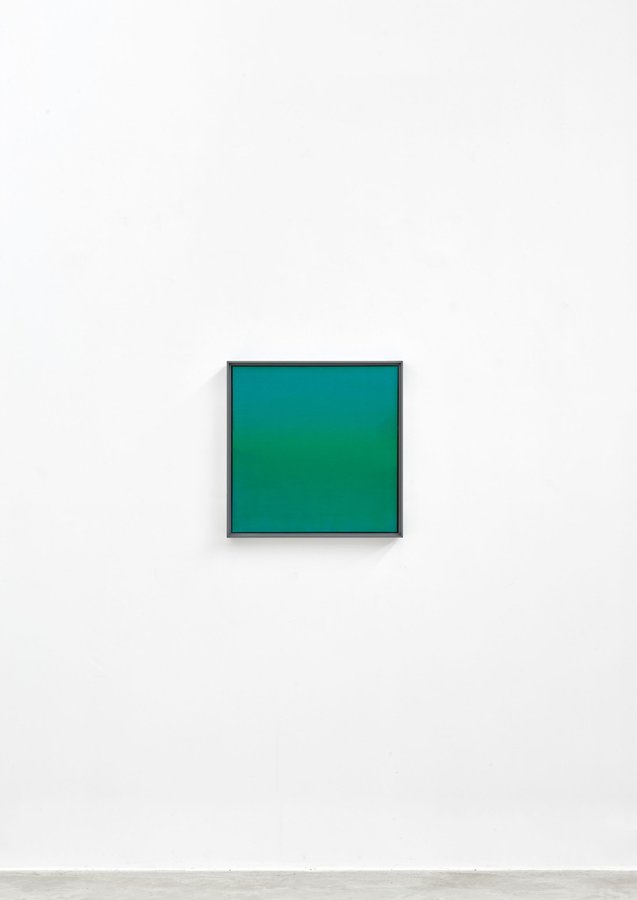
- Axel Vervoordt Gallery is proud to invite you to the opening of the solo exhibition Jef Verheyen. -Silence of Light in the Patio Gallery of Kanaal. The exhibition will feature early paintings from the 1950s and 1960 where Jef Verheyen (1932-1984) explored the essence of light and space, but also formerly unreleased paintings from the 1970s in which Verheyen transformed light into a subtle vibration, offering a glimpse of infinity. As the author of the Essentialism manifesto and a member of the ZERO movement, Verheyen sought purity and spirituality through monochrome colour fields and subtle geometric structures. Inspired by nature, mathematics, and philosophy, Verheyen used light as his primary artistic medium. His paintings invite viewers to experience contemplation, harmony, and the infinite rather than represent the visible world.Description
Jef Verheyen, Silence of Light
Until 21 Nov 2026
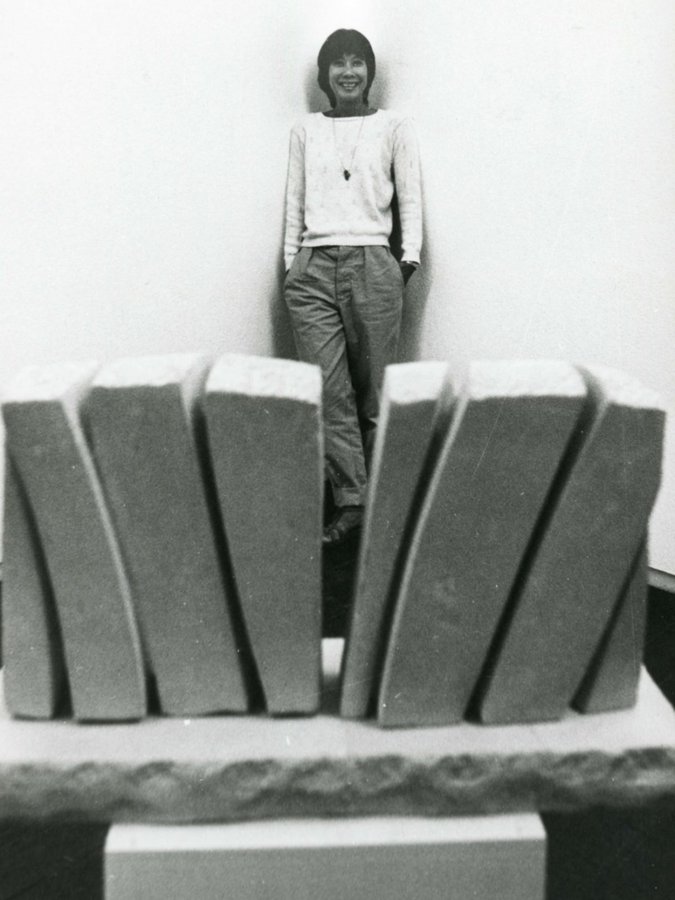
- Kim Lim: Source Curated by Bianca Chu Axel Vervoordt Gallery is delighted to present Source, a solo exhibition of artworks by late Singaporean-British artist Kim Lim. Source brings together sculptures, prints and photographs by Kim Lim in an exhibition exploring rhythm, transformation and the vital energies held within matter. Taking its title from Lim’s 1988 sculpture, the exhibition begins with the idea of the source not simply as a fixed point of origin, but as a generative condition: a place from which forms emerge, change and return. It also refers to source material—the observations, things, experiences and documentation that inspired Lim’s artistic journey and process. Photographs selected from the artist’s archive punctuate the exhibition. Although photography remained a constant element of Lim’s working life, these images have previously been presented primarily as archival or supporting material. Here, they occupy a deliberately ambiguous position. They offer traces of Lim’s travels and working processes, revealing her sustained attention to structures, rhythms and forms found across natural and built environments. Lim was highly attuned to her chosen materials: to their particular densities, textures and internal rhythms. Writing about Source, she described how its carved lines “widen and spread, deepen and sometimes disappear,” while the granite itself possessed “a kind of compact energy.” Such observations reveal an artist who did not treat stone or wood as inert substances upon which form was imposed. After 1979, when carving stone became a central focus of her practice, the dialogue between the movement of Lim’s hand and the latent capacities of the material became even more visible. Through prolonged observation and considered intervention, she responded to the weight, resistance, grain and energetic properties of each stone, allowing something of its inner life to be gradually revealed. Organised around ideas of breath, movement and attention, the exhibition considers Lim’s work in relation to ancient Chinese cosmological and philosophical understandings of the natural world as a continuous process of transformation. Within Daoist thought, the Dao [Way] is described as the unnameable and inexhaustible source from which the myriad things emerge. From this primordial condition arises wuxing —wood, fire, earth, metal and water—commonly translated as the “five elements.” Yet these are not static substances; rather, they describe interdependent movements through which matter and energy continually generate, transform and return. The related concept of qi —variously understood as breath, vital energy or life force—offers one way of approaching the movement held within Lim’s apparently still forms. Grooves ripple across stone; surfaces alternately absorb and reflect light; solid volumes appear porous, fluid and responsive to the surrounding space. In works such as Wind-Stone (1992) and Sea-Stone II (1996–97), the permanence of stone meets the movements of wind and water, evoking natural processes unfolding across deep time. These qualities extend throughout Lim’s practice. Her prints translate rhythm into sinuous lines that move between the recognisable and the enigmatic, suggesting topographical maps, cells, whirlpools, labyrinths or unseen structures. Scale remains fluid too: a single line might evoke the course of a river, the contour of a mountain or the connective tissue of a larger universe. Rather than referring to one specific image, Lim sought to create “metaphors that could act as triggers,” opening her work towards experiences beyond the object itself. Kim Lim: Source invites visitors to encounter the artist’s practice as a field of interrelated rhythms: between solidity and flow, presence and absence, nature and artifice, the atomic and the cosmic. Her works ask us to look slowly, to listen carefully and to contemplate the possibility that even the most enduring forms are never entirely still—or entirely what they seem. In doing so, we might consider the idea of source: not only as an origin, but as the tapestry of a life, woven from the observations, encounters, memories and experiences from which vital form continually emerges.Description
Kim Lim, Source
Until 30 Jan 2027
Recent past exhibitions
- Threads of Being: Textiles, Time and Transformation brings together the work of eight artists whose practices unfold through sustained and attentive modes of making. Across painting, sculpture, film and installation, each engages with repetition, accumulation and material sensitivity as a way of thinking through form. Rather than approaching textiles as a medium alone, the exhibition considers textile-related logics such as threading, layering, stitching and interlacing as conceptual frameworks through which time, memory and presence are articulated. Within this framework, surfaces are not passive. They hold duration, register gesture and carry the trace of labour. Materials are approached as active agents, embedded with histories and cultural memory. What emerges is a shared commitment to slowness and continuity, where meaning is not immediate but gradually disclosed through sustained engagement. A key historical anchor within the exhibition is the work of Barbara Levittoux-Świderska, whose practice expands fibre-based practice into architectural space, weaving becomes a way of organising perception. Through weaving, layering and the combination of natural and industrial materials, she developed a precise visual vocabulary grounded in rhythm and structure. Her work establishes an early articulation of textile logic as a system of order, one that organises light, movement and perception, and sets a foundation for many of the concerns explored in the exhibition. In the paintings of Varda Caivano, time is embedded rather than depicted. Her works unfold slowly, through restrained accumulation and subtle shifts in surface and tone. Each painting resists immediacy and remains open, holding the viewer in a space where perception is prolonged rather than resolved. Painting becomes a process of thinking through time, where structure is never fixed but continually forming. In a markedly different register, Chiyu Uemae brings a historical perspective grounded in postwar abstraction. Associated with the Gutai movement, his practice is defined by a persistent engagement with repetition and material accumulation. The works presented here exemplify his method: small, tactile elements are assembled into dense, rhythmic fields, where gesture is embedded within structure. Each surface becomes a record of labour rather than a depiction of it. His work bridges painting and textile logic, translating the act of making into a durational process in which time is physically inscribed into the surface. A comparable sense of devotion to process underpins the work of Waqas Khan, whose recent paintings are constructed through countless minute marks. His drawings and paintings are built from repeated micro-gestures that accumulate into dense fields of attention. The viewer is drawn into a space where looking slows down and concentration becomes physical. In dialogue with Uemae, Khan extends the exhibition’s exploration of accumulation as both a visual and temporal condition, though in an increasingly reduced scale. With Junko Oki, repetition turns into a form of intimate repair. Working with found and aged textiles, she stitches, marks and mends in ways that remain deliberately direct. Her practice moves between drawing and mending, where the act of repair becomes a way of holding time together. The works carry the sense of something fragile that is continuously being sustained, where making is inseparable from care and attention. This notion of care expands into a broader social dimension in the work of Jaffa Lam. Her long-term collaborations with communities in Hong Kong turn material reuse into a shared process of production. Works such as Meditation Tent (2011) and Lost and Found (2021) reflect a collective rhythm of making, where discarded materials are reactivated through cooperation. Her practice can be read as a form of communal weaving, where social relations become part of the material itself. Spatial and perceptual activation are central to the work of Katsuhiro Yamaguchi, a founding member of the Experimental Workshop. His mesh-based works introduce lightness and instability, engaging directly with movement, reflection and changing conditions of light. Rather than presenting a stable image, his work activates the conditions of seeing itself, where time becomes part of perception. Finally, Kimsooja situates these concerns within a broader philosophical framework. Her practice is grounded in repetition and stillness, where making is reduced to gesture and presence. In Deductive Object (2016), a plaster cast of the artist’s arms rests on an antique table, forming a void that recalls the act of sewing. The absence of action becomes central, shifting attention from object to state. The work suggests a suspension of production in which presence is articulated through quiet refusal, and where making is redefined as a condition of being rather than doing. Taken together, the artists in Threads of Being articulate a shared understanding of making as a sustained, embodied practice. Whether through thread, mark, image or light, each engages with processes that unfold over time, holding memory and enabling transformation. The exhibition proposes textile and textile-adjacent logics not as ends in themselves, but as ways of thinking, frameworks through which rhythm, labour and continuity can be experienced, and through which the relationship between material and time is continuously renegotiated.Description
Group exhibition, Threads of Being: Textiles, Time and Transformation
Ended 19 Sept 2026
- Axel Vervoordt Gallery is pleased to present a solo presentation by Ida Barbarigo (1920- 2018), featuring a selection of rarely-seen works from the mid-1950s, 1960s. During these two decades, the paintings illustrate the evolution in her approach to abstraction: from very formal and geometric to a much more lyrical visual language that is completely her own. Barbarigo’s chair paintings transform simple objects into haunting symbols of presence and absence, using repetition, distortion, and atmospheric space to evoke psychological tension rather than depict literal furniture. Ida Barbarigo was born as Ida Cadorin into a well-known Venetian family of artists, architects, and sculptors. She possessed a rare ability to convey emotions, unseen energies, and the depth of the human condition. She worked obsessively and passionately on various series throughout her life. These series took many forms, including self[1]portraits, judges, sphinxes, flowers, demons, beaches, city views, and earthlings. One theme was dominant and recurring: the moveable, sculptural, simple chair. Omnipresent in her oeuvre, the chair became Barbarigo’s leitmotif, like a personal script, a form of handwriting. A humble object that she related to through her intense observations and brought to life through poetic abstraction. The Spanish museologist and professor Kosme de Barañano writes about her devotion to chairs : “The chair in Barbarigo is not an object of use, but a witness. It conserves the trace of the body that has just left and evokes the one that will return. [...] Her painting seeks the space between things, that interval where silence acquires density and air itself becomes presence.” In the mid-1950s, still influenced by her former studies of architecture, Barbarigo reduced the chair to rigid, structured forms and painted them in geometric shapes. Influenced by Piet Mondriaan, she used primary, pure colours to distinguish the abstract lines and forms. She was paying as much attention to the forms as to the spaces in between the forms. She used vivid, distinctive colours to enhance the contrasts between the presence and the absence of shapes and their shadows. In the following years, her style evolved. She became aware that her real passion was for lines that suggest rather than enclose, calling them “interactions between the solid and the void”. The lines in the paintings become more fluid, delicate, and moving; they do not delimit but elude. She wanted to paint the unseen energy, the ephemeral which conveyed a sense of depth and mystery. Her palette shifted to muted, earthy colours and layered textures. Her compositions are marked by a dreamlike atmosphere that blurs the line between figuration and abstraction. She observed not only the chairs, but the people sitting in them. Enigmatic figures mysteriously appear in her paintings and are transformed into chairs and tables. She observed people through her endless passeggiate or promenades in her hometown, Venice, and later in Paris, where she lived off and on from 1952 onwards. In the early 1960s, during her walks, she made observations about daily life. She often transcribed the ordinary conversations she overheard and random encounters in the titles of her works. The size of her canvases became larger. At times, she even aligned two canvases together to make her compositions. General dixi: doman piovi (The General says: tomorrow it will rain, 1964) and Fabio ti buttano per terra (Fabio, they throw you on the ground) allude to a tension, an immediate emotion rather than a rendering of an actual scenery. Giovanna Dal Bon calls them “Echoes of non-dialogue. Emissions of breath” in the catalogue edited by AsaMer in 2013. Daniela Ferretti, curator and former director of Museo Fortuny, said: “When I think of Ida, most of the time I imagine her sitting at one of the cafés on the Zattere, or Piazza San Marco, or along the Parisian boulevards, contemplating the chairs and above all observing. Observing the mysterious, enigmatic voids and the interstices of simple chairs stacked in piles or abandoned in random geometric lines, she waited for a new vision to come to replace the usual image of these daily objects, designing them to reveal their essence. Nothing comes from anything. Everything takes place in a suspended, motionless time, and suddenly, in a new space, appears the other image, the one that emerges from the deepest part of the soul.” Ida Barbarigo was a groundbreaking artist who had a remarkable ability to “feel paint”. Despite the originality of her vision, she received little recognition in a male-dominated art world. Today, it’s clear she made a vital contribution to postwar art history with her fresh paintings, which bridge figuration and abstraction with a unique, timeless sensibility.Description
Ida Barbarigo, Chairs: Forms, Spaces and Shadows
Ended 14 Aug 2026
- Human Traces Archetype, Archive, and Transformation Axel Vervoordt Gallery is pleased to present a group show at the Escher Gallery, Kanaal juxtaposing work of El Anatsui and William Turnbull. Although coming from a different historical and cultural background, these artists share a similar conceptual point of view around archetype, memory, material transformation, and the human journey. Both strive towards a transformation from the ordinary to the sacred. William Turnbull (1922, Dundee – 2012, London) worked between abstraction and archetype, creating sculptures that feel simultaneously ancient and modern... (rest of the description)Description
Group exhibition, Human Traces
Ended 6 Jun 2026
- Axel Vervoordt Gallery is pleased to present 'Asteroid J-734', a solo exhibition by Jaffa Lam at its Hong Kong space. Marking Lam’s third solo presentation with the gallery —and her second in this location since 2022 —the exhibition extends her longstanding engagement with material, community, and storytelling. Bringing together new works across a diverse range of mediums —including ceramics shaped during her residency in Longquan, alongside umbrella fabric and metal pieces —Asteroid J - 734 forms an interconnected constellation of materials and forms that move fluidly between the monumental and the intimate. Through this body of work, Lam invites viewers into a world seen through her eyes. Artworks scattered throughout the exhibition echo stories from her personal history and the discoveries made during her time away from Hong Kong. At once deeply personal and profoundly connected to the environments and communities that sustain her, 'Asteroid J-734' becomes a contemplative journey —an act of venturing beyond home to rediscover the self and to find meaning within uncertainty. The title, Asteroid J - 734, draws upon French author Antoine de Saint- Exupéry’s Le Petit Prince, referencing the lost prince’s home planet of Asteroid B-612. The story follows a fallen pilot encountering a prince venturing through planets in search of meaning, belonging, friendship and love. Saint - Exupéry’s writing resonated with Lam particularly deeply in the last few years as she navigated changes in her life brought about by personal loss. Lam felt a growing sense of disillusionment with the modern world as it is, longing for the simple joys of childhood in her hometown of Fuding, leading her on a journey to rediscover her own identity. Asteroid J-734 (re)introduces Jaffa Lam’s practice as it has developed in the past few years – each work showcasing the materials and ideas she has been experimenting with in this time. The exhibition begins with a sense of possibility and exploration: a series of stars, created from unexpected assemblages of materials, confronts the viewer and invites curiosity before discovery. The motif recalls a passage from Le Petit Prince : “All men have the stars… but they are not the same things for different people. For some, who are travelers, the stars are guides. For others, they are no more than little lights in the sky. For others, who are scholars, they are problems. For my businessman, they were wealth. But all these stars are silent. You — you alone — will have the stars as no one else has them…” To Lam, the stars become metaphors for the ongoing search for self — a journey that is at once individual and shared. The act of looking upward is profoundly human; it binds us to one another and to those who gazed before us. Yet within this common experience, each person encounters their own constellation of questions and answers. These works are sites of exploration, a declaration of the intention with which the artist set out on her journey. Each piece brings together new materials and forms, at times contradictory and disjointed, embodying Lam’s inquisitive and playful approach to discovery. From the stars, Jaffa Lam returns to Hong Kong through her Window series — a body of fabric works made in collaboration with members of the Women’s Labour Association with whom she has worked for years. Each piece is an assemblage of found umbrella fabrics which capture the melancholy of the fleeting nature of beautiful scenes in the city. The window motif has recurred throughout Lam’s oeuvre not only as representations of moments of change and transformation, but more importantly, as frames which allow one to see the world. The windows open onto different views, yet none offer definitive answers. For Lam, what one finds depends on where they stand — and what they are willing to discover. The series was previously rendered in colour – but in Asteroid J-734, a new body of work titled “ Dark,” centring around a black palette, is introduced. Some fully monochrome, the artist raises the question: what is one able to see in the darkness? In the face of adversity, what struck Lam were the accompanying moments of solace – the warmth of the sunset, the shimmer of leaves on a sunny day, the light shining through church windows. In works like Dark (Civil), 2026, these fleeting impressions are rendered in permanent form as windows of light within the dark. With both coexisting, a deep sense of melancholy emerges: an awareness that change is both inevitable and necessary yet always accompanied by the residue of what has passed. Lam does not present a dichotomy, but rather, her windows hold these tensions together, allowing both to remain visible, highlighting also the possibilities of what can be found in moments of uncertainty. Asteroid J-734 ends with the Windbreak series, which began in 2024 during Lam’s year-long residency in Longquan, China, a region famous for its unique celadon. On a visit to Shanghai, Lam encountered historical Western villas in its Pudong district. Amidst these unfamiliar environments, the sight of balusters surfaced the artist’s memories of her childhood home. How is it that one can find such meaning in an object, let alone a sense of familiarity in a foreign place? The relationship between material forms to individual and collective memory intrigued Lam, leading her to develop the series of ceramic balusters. A new beginning in many ways, the residency marked the artist’s first-time learning to work with clay and glaze. The miniature Windbreak sculptures in the exhibition emerged from this period of experimentation, as she explored these unfamiliar materials and techniques. Stripped of the balusters’ original functionality, Lam’s works become forms of new meaning. Each varying in their size, colour and form, they stand as tangible traces of the artist’s journey – an embodiment of memory, discovery, and renewal. Given the title Windbreak, which describes a method of planting trees in a linear formation to slow wind, reduce radiant heat, and protect the surrounding land, the works become a physical manifestation of resilience – a metaphor for the stability and clarity of identity she has cultivated in her time away from Hong Kong. Within it, a quieter statement of what endures amid change emerges: nature’s lasting ability to protect and to guide. Coming together to form a forest within Asteroid J ‑ 734, Windbreak anchors its roots in Hong Kong—where Jaffa Lam also finds herself returning home. This gesture of homecoming culminates in Endless Column, 2025–2026, a hybrid sculpture uniting Longquan clay and celadon glaze with wooden balusters found in Longquan and Hong Kong. Through combining these materials, Lam creates a structure that bridges the organic and the domestic – a gesture of returning discovery to the space of home. Standing as a central pillar within the exhibition, the work functions both as structure and symbol: a marker of domestic space and a reflection of Lam’s idea of the “domestic self.” For her, it stands as both foundation and horizon—an enduring testament to an authentic self forged through making, place, and memory.Description
Jaffa Lam, Asteroid J-734
Ended 24 May 2026
- Axel Vervoordt Gallery is pleased to present William Turnbull: Paintings 1959–1962, the artist’s first solo exhibition with the gallery. This presentation focuses on a seminal period in Turnbull’s career, offering a rare opportunity to experience a group of works that have seldom been shown in public. William Turnbull (1922–2012) was a central figure in postwar British art, whose practice spanned both painting and sculpture with an uncommon balance of form, colour and abstraction. Born in Dundee and based in London for most of his life, Turnbull emerged in a cultural climate that remained tied to figurative and romantic modes of expression. In the years immediately following World War II, British art was still marked by reconstruction and restraint, with abstraction regarded by many as a foreign or overly intellectual pursuit. Against this backdrop, Turnbull’s engagement with international modernism signaled a decisive and independent direction. After briefly studying at the Slade School of Fine Art, attending only the life drawing classes, Turnbull transferred his grant to Paris in the late 1940s. There, in the late 1940s, encounters with Alberto Giacometti, Jean Hélion and Constantin Brâncuși shaped his understanding of form, scale and spatial perception. Paris exposed him to a language of modernism that was simultaneously formal and metaphysical, concerned less with representation than with the act of seeing itself. Upon returning to London, he carried these lessons into a context that was still negotiating its postwar identity, becoming one of the few British artists to align with a truly international vision of abstraction. Turnbull’s visit to New York in 1957 proved equally transformative. At a moment when the city had overtaken Paris as the centre of contemporary art, he encountered the work of the American Abstract Expressionists first-hand. Large canvases by Mark Rothko and Barnett Newman, with their expansive colour fields and philosophical ambition, confirmed his own search for a painting that could exist as a field of experience rather than a window onto illusion. “These large canvases,” he wrote on his return to London, “are banners carrying the ideogram of our time; not creating a familiar illusionistic space… but acting outwards into our own world, large environmental shields changing our lives by leaving us at its centre.” These experiences affirmed his pursuit of a language of abstraction rooted in observation yet unbound by representation, marking a turning point that led to these luminous, spacious paintings. By the late 1950s, Turnbull had moved beyond figuration to produce large-scale works defined by uninterrupted fields of colour. The paintings included in this exhibition, created between 1959 and 1962, reflect his investigation into surface, rhythm and spatial tension. Vertical and horizontal lines, and occasionally softly curved bands, guide the eye across the field while maintaining a profound sense of stillness. The effect is meditative, inviting reflection on the relationship between line, colour and perceptual space. Turnbull’s abstraction resonates with the Colour-Field painters of his generation, including Jack Tworkov, Helen Frankenthaler, Rothko, and Newman, yet his voice remains distinctly his own. His paintings balance precision and openness, creating compositions that are elemental, contemplative and timeless. They invite viewers to experience the canvas as a continuous plane, where the meeting of coloured areas generates tension within the field rather than delineating distinct shapes. This emphasis on spatial continuity underscores both his formal rigour and his meditative intent. The materiality of Turnbull’s paintings is central to their effect. He applied colour in thin, even layers that enhance luminosity while preserving the tactile presence of the canvas. As critic Lawrence Alloway observed in 1961: “Materiality in painting has often been identified with the weight of paint lying thickly on the canvas. To Turnbull, however, like Rothko in this respect, materiality is a function of the ground itself. His colour is flat and bodiless as a dye, so that the tangibility of the canvas surface itself is preserved.” Turnbull’s surfaces, at once restrained and radiant, invite a quiet attentiveness, a form of looking that is both intimate and expansive. While his sculptural work of the same period explored mass, balance and physical presence, these paintings investigate space through stillness and light. The absence of gesture excess or narrative distinguishes Turnbull’s work from that of his American contemporaries, whose emphasis on emotional intensity and physicality he both admired and quietly resisted. Instead, his paintings embody a clarity and discipline that bridge European formalism with the existential depth of postwar abstraction. This focused presentation allows for a concentrated encounter with Turnbull’s mature abstraction. The selection foregrounds the precision, coherence and contemplative quality that define this period of his practice. Visitors are invited to engage with the works not as images, but as environments of thought and perception, as “banners carrying the ideogram of our time.” A second chapter, to be presented in the first half of 2027, will expand upon this presentation, incorporating both sculptural works and later paintings to offer a view of Turnbull’s lifelong dialogue between form and space. Together, the two exhibitions aim to illuminate the breadth and depth of his artistic inquiry, revealing a practice that continues to resonate with contemporary concerns of perception, materiality and the metaphysical potential of art. Axel Vervoordt Gallery is pleased to co-represent the Estate of William Turnbull with Offer Waterman, London, in close collaboration with the Turnbull Studio. Through this partnership, the gallery seeks to bring Turnbull’s work to new audiences and deepen appreciation of his remarkable legacy, highlighting a phase of his practice that is both historically significant and profoundly relevant to the language of abstraction today.Description
William Turnbull, Paintings 1959 – 1962
Ended 11 Apr 2026
- Axel Vervoordt Gallery is pleased to present the first solo exhibition in Asia of American artist Ann Leda Shapiro at its Hong Kong space. Body is Landscape brings together a historical work from 1980 alongside a series of recent paintings highlighting the central concerns of Shapiro’s practice: advocacy, care and the interplay between personal experience and the wider world. Shapiro emerged as an artist during the feminist art movement of the 1960s and 1970s, a period when her work engaged directly with questions of gender, social justice and the visibility of women in society. Her early practice combined sharp social awareness with a commitment to care, laying the foundation for a lifelong exploration of how art can respond to and reflect upon the broader human condition. In the 1980s, Shapiro’s volunteer work at an acupuncture clinic for AIDS patients in Austin, Texas, introduced her to the principles of traditional Chinese medicine. Its holistic understanding of the body as an interconnected ecosystem profoundly influenced her approach to both life and art. The philosophies and ideas which inform this practice became central to her visual and conceptual vocabulary, offering new ways to represent transformation, tension and harmony. Central to this newfound vocabulary is the concept of qi – the vital life force that courses through the body’s meridians. Shapiro describes this as “matter on the verge of becoming.” Her compositions reflect its dynamic nature, with each artwork embodying the constant state of flux that characterizes the flow of qi. Sustaining this energy flow is the delicate balance of yin and yang – forces that embody brightness and darkness, birth and death, stillness and motion. These dualities resonate deeply in Shapiro’s work, where yin and yang are not oppositional forces, but rather, two that form complementary parts of a unified whole. She renders the dynamic essence of qi and the delicate balance of yin and yang in paintings that are both sensorial and conceptual, capturing energy glows and relational dynamics without relying on literal representation. The diagnostic principles of Chinese medicine, which focus on detecting subtle imbalances, further provided Shapiro new tools to “diagnose” disturbances in the world — from environmental crises to social and political upheavals. Several works in the exhibition directly address ecological and social concerns, merging anatomical and natural imagery. She highlights not only external destruction but also the destructive potential of inner turmoil — what she calls the “fire not containing water” that can consume us from within. These pieces extend the ethos of care that has been present throughout her career, from personal advocacy in the feminist movement, to a broader consideration of social and planetary well-being. A key focus of Shapiro’s recent paintings presented in Body is Landscape is the deconstruction and reconstruction of the natural world, particularly through the motif of the tree. For the artist, trees are more than elements of a landscape; they are “refracted self-portraits.” In her works, they become metaphors for the human body; their roots mirroring the intricate network of veins and nerves, their branches extending like limbs seeking sustenance and connection. Rendered as soft, rippling silhouettes, these forms embody a compelling duality of strength and fragility, reflecting not only the intrinsic nature of earthly existence but also the interconnectedness that binds all life. The sense of oneness woven throughout Shapiro’s work resonates with Buddhist philosophy and the Gaia hypothesis, embracing life as an unending flow of energy and relational connections. By integrating her artistic practice and medical experience, Shapiro has developed a body of work that is visually compelling, intellectually rigorous and deeply reflective. Body is Landscape invites viewers to engage with both historical and ongoing concerns of her practice, encountering the subtle forces that shape individuals, communities, and the natural world.Description
Ann Leda Shapiro, Body is Landscape
Ended 7 Mar 2026
- Story of the exhibition Raimund Girke (1930–2002) is regarded as one of the leading German abstract painters of the post-war period. Linked to the broader European ZERO network, although never part of the movement itself, he developed a radical pictorial language in which white, rhythm, and brushstroke became central. For Girke, painting was a way to approach silence through movement, a practice where clarity, balance, and intensity came together. This exhibition presents seven works on paper from the 1990s, shown here for the first time, directly from the artist’s estate. Their freshness underlines the continuing relevance of Girke’s practice and highlights the independence of his works on paper within his oeuvre. The paper provided a direct, flexible surface for testing ideas and opening new directions, often revealing developments. The catalogue Raimund Girke. Arbeiten auf Papier, published in conjunction with the eynymous 2024 exhibition at the Josef Albers Museum Quadrat Bottrop, underscores the significance of this medium. It notes how Girke often reversed his usual process on paper: rather than building from dark to light, he worked from light to dark. This created layered fields where translucency and density shift continuously. As early as the 1960s, his focus on modulating a single colour became evident: expanses of white disrupted by subtle touches of blue or grey. Girke’s works on paper form a fully independent domain within his oeuvre, developed with equal intensity alongside and beyond his canvas painting. In the 1990s works, blue takes on a prominent role, entering into dialogue with Girke’s whites. It sometimes lies beneath the surface, sometimes cuts across the field, creating tonal shifts that suggest both depth and light. The brushwork, structured yet free, animates each sheet with a quiet, insistent rhythm, holding it in a tension between stillness and motion. Three smaller canvases from the same decade echo these works on paper. In oil, the dialogue between white and blue acquires greater material weight, translating immediacy into density. Both formats reveal Girke’s ongoing search for balance between order and openness, discipline and gesture. His works from the 1990s show how reduction can lead to resonance. As one of his poems reads: White is not nothing. It is fullness, waiting to begin. Together, these works demonstrate how Girke transformed minimal means into a field of endless variation. The works on paper embody the essence of his practice: colour pushed to its limit, gesture rendered as vibration, silence realised through movement. In their restraint, they reveal a concentrated, present, and enduring art. Girke’s works on paper are also represented in several major museum collections, including the Josef Albers Museum Quadrat Bottrop, Kunstmuseum Bonn, and Staatliche Museen zu Berlin, affirming their central place within his artistic legacy.Description
Raimund Girke, Works on Paper, 1990s
Ended 21 Feb 2026