Berlin
BBA Gallery
On now
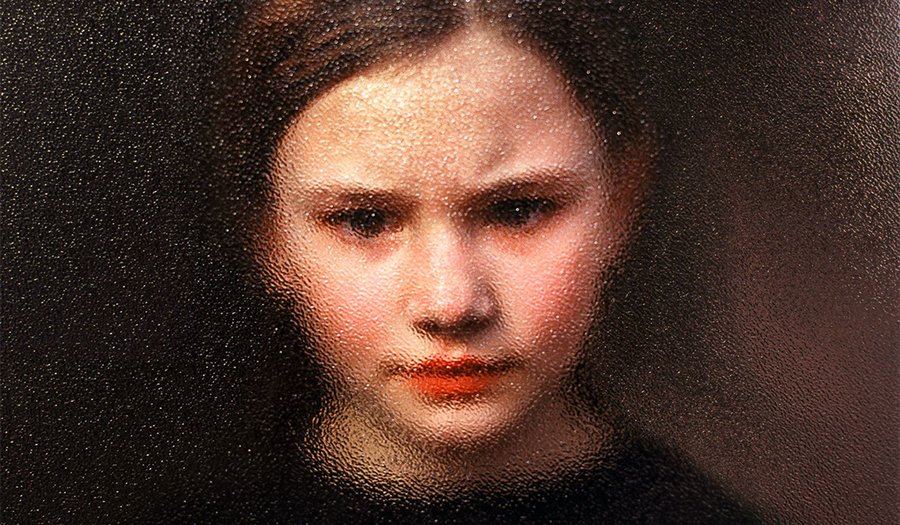
- What makes a person? A face, a memory, a gesture, a mask, a story? In an age of carefully curated identities, digital projections, and shifting social roles, and the blurred line between reality and fakeness the notion of the self has become increasingly fluid, fragmented, and complex. Poor Traits brings together nine contemporary artists working across painting, photography, sculpture, installation, video, and mixed media. Rather than focusing on traditional portraiture, the exhibition explores the many ways in which identity is constructed, performed, concealed, and revealed. The representation of the human being has been a central subject throughout art history. From ancient sculptures and Renaissance portraits to modern and contemporary explorations of identity, artists have continuously sought to capture not only physical appearance but also character, status, emotion, belief, and the complexities of the human condition. Across centuries, the portrayal of the self and others has remained one of art’s most enduring and significant themes, reflecting the values, questions, and concerns of each era. Playing on the sound of the word “portraits,” the title Poor Traits suggests the imperfections, contradictions, vulnerabilities, and psychological complexities that make us human. The works in the exhibition move beyond physical likeness to examine character, emotion, memory, mental states, social expectations, and the traces we leave behind. Some artists turn inward, investigating personal narratives and the architecture of the psyche. Others reflect on collective experiences, societal pressures, and the roles imposed upon us by culture, technology, and history. Together, the works challenge viewers to look beyond appearances and question how we perceive ourselves and others. At a time when identity is constantly negotiated between the private and public sphere, Poor Traits invites us to consider the spaces between image and reality, presence and absence, self-perception and external projection. The exhibition offers not a collection of portraits, but a study of what it means to be human.Description
Poor Traits: Beyond the Image
Until 24 Oct 2026
Coming soon
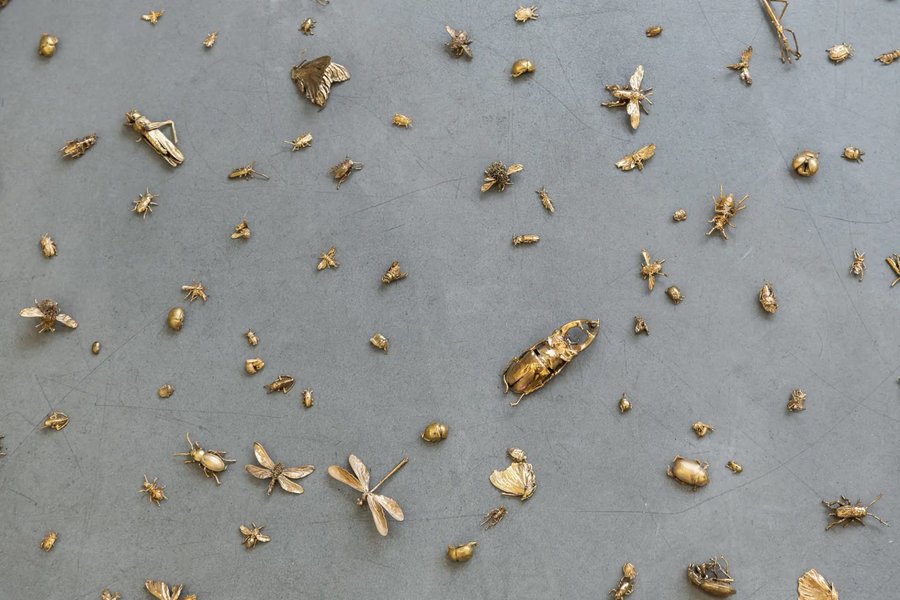
- German artist Verena Bachl works across sculpture and installation. Her practice draws on industrial elements, material processes, and light to examine how functional objects persist beyond the systems they once served. These works occupy a space between infrastructure, geology, and artefact, where material transformation gives rise to new spatial and perceptual relationships. Titled Graceful Degradation, the exhibition follows gradual processes of change in which systems no longer perform as intended yet continue to retain traces of their former logic. Rather than focusing on rupture or collapse, the works dwell within transitional states, where stability remains provisional and transformation unfolds as an ongoing material condition. Systems rarely collapse in dramatic gestures; more often, they change state gradually, almost imperceptibly, as one condition gives way to another while traces of the former persist. The exhibition unfolds within metastable intervals, moments of internal recalibration where stability is provisional and structural tensions remain alive beneath the surface. The works traverse perceptual phenomena and emergent material constellations, tracing states in which transformation is not represented but structurally embedded in the behaviour of charged matter, indifferent to human presence. Light becomes surface, reflection becomes structure, signals begin to thin. Materials hover at thresholds, held in temporary alignment, suggesting that what appears coherent may already be shifting from within. Rather than narrating rupture or catastrophe, the exhibition follows change as a continuous reconfiguration—a process unfolding under ongoing conditions, in which elements displace, drift, and reform themselves without fully abandoning what came before. Across the space, perceptual fields, tipping arrangements, and metastable formations coexist as overlapping phases within a larger dynamic. They do not follow a linear progression but remain suspended in transition, while one configuration recedes and another quietly begins to take shape, in rhythms beyond control.Description
Verena Bachl: Graceful Degradation
13 Nov 2026 – 18 Dec 2026
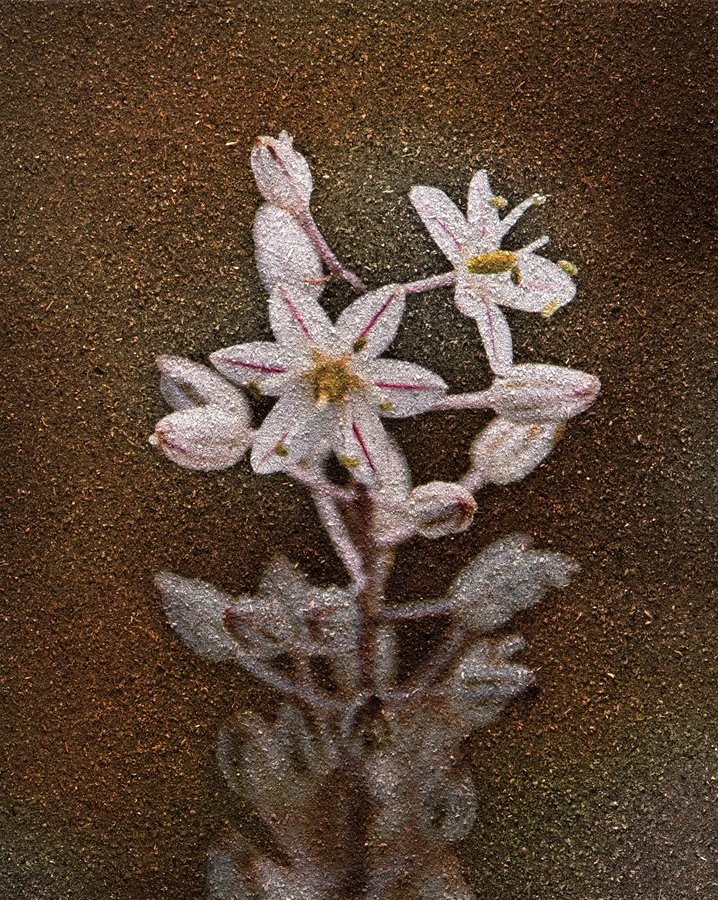
- Welsh artist Rhys Himsworth works across painting, print, sculpture, and digital fabrication, developing a material practice rooted in the transformation of electronic waste. His work examines the relationship between geological extraction and technological production, tracing how minerals embedded in the earth are reconfigured into the devices that structure everyday life. Titled Menhir, a term referring to standing monolithic stones erected across Neolithic landscapes, the exhibition draws on objects that persist beyond the conditions of their making. Found across cultures, these structures remain as markers of ritual and belief, yet their meanings often remain unclear. Himsworth approaches the exhibition through this ambiguity, positioning the works between the scientific and the symbolic. The exhibition will consist primarily of CNC-milled panels alongside a small number of sculptural forms. Shredded electronic waste, such as circuit boards, LCD screens and hard drives, are combined with resin to form dense composite blocks, which are then carved using three-, five-, and six-axis CNC processes. Machining operates here as a form of excavation, cutting into the material to reveal its internal structure. The panel works position themselves in relation to painting, initially resembling Modernist monochrome abstraction, whilst the sculptural works recall the earthworks of Land Art. Their surfaces are carved from source imagery derived from metamorphic stones such as marble and slate, translating patterns of veining into tool-paths that erode the surface. As the material is cut away, stratified layers of embedded waste are exposed. The process draws on geological weathering, where variations in density determine how a surface is worn over time, here reconstructed through digital means. Fragments of electronic waste become analogous to sediment, compressing extended chains of extraction, manufacture, and disposal into a single material surface. The works reference geological diagrams—cross-sections, strata, and topographical mapping—while functioning as constructed objects in their own right. Across the exhibition, the repeated transformation of material introduces a ritual dimension, in which technological debris is returned to a form that recalls its geological origin. In this context, the works can be understood as speculative monoliths, objects that operate as both records of contemporary production and as remnants of a future archaeology.Description
Rhys Himsworth: Menhir
13 Nov 2026 – 18 Dec 2026
Recent past exhibitions
- What lies within a visible form — and can the core ever be separated from the system that allows it to exist? During Berlin Art Week, TOVA Gallery, in collaboration with BBA Gallery, presents The Game of Nuts, a group exhibition developed from TOVA NUTS™ and the research-based practice of TOVA Artist. At the centre of the project is TOVA’s concept of the nut: core and shell existing as a single structure, where inner content becomes perceptible through the form in which it appears. This principle of non-separation runs throughout TOVA’s practice, connecting specialist knowledge with artistic form and analytical systems with lived experience. For TOVA, every nut begins with specific knowledge. Her long-term research into financial markets, including market microstructure and financial modelling, becomes part of the artistic process itself. In TOVA NUTS™, research takes spatial form: an internal painting exists within a sculptural shell as one object. The exhibition presents Spiritual Vessel from the Tova Heart collection and Flare from Bloom Time. The Derivatives cycle develops the same logic through works on paper, drawing on systems in which value and meaning emerge through dependency. Individual signs acquire significance through their position and relation to the wider structure, while works such as Observer, Interpretation and Nonstandard Error explore how knowledge changes through observation, models and the possibility of error. The Game of Nuts extends this idea across the practices of the other artists. In Yvonne von Langsdorff’s Fragile Realism, the nut emerges as a somatic and emotional state that shapes visible reality. For Nano Nasty, it develops through tactile abstraction, where dense surfaces and physical material give inner states a tangible form. In the analogue photography of Adam Ripley, the nut is found in the internal organisation of the natural environment, where water, stone and time exist within a continuous system. Works by Vladimir Kordiukov from the TOVA Gallery collection introduce a material and cultural nut, built through assemblage and the relationships between found objects, textile elements and cultural signs. The exhibition begins with TOVA’s artistic method and opens it into a wider field of distinct practices. Knowledge, somatic experience, tactile matter, natural systems and cultural memory become different forms of nut. Their meanings remain in play, continuing to develop through the relationships between the works and through the viewer’s encounter with them. The Game of Nuts presents TOVA Artist, Yvonne von Langsdorff, Nano Nasty and Adam Ripley, alongside works by Vladimir Kordiukov from the TOVA Gallery collection, continuing the gallery’s programme in core-based art, modern and contemporary photography.Description
Tova Gallery: the Game of Nuts
Ended 13 Sept 2026
- For his debut solo exhibition in Berlin at BBA Gallery, photographer Marco Di Coscio presented a compelling body of work in “Selling Romance By The Pound”. This study of the photographic portrait as a site of transaction, a silent marketplace where vulnerability, identity and the desire to be seen are exchanged for public acceptance. Rooted in the artist's background in film and his deep study of acting, this collection of direct portraits challenges the viewer to look beyond the surface and consider the cost of the constructed image. The title, echoing the 1973 Genesis album Selling England by the Pound, Di Coscio defines the notion of romance not as a genuine feeling, but as an idealised, softer version of the self theta the subjects offer to the camera. The commodity of exchange between subject and photographer is this exchange in this romantic lens; how much are we willing to give in order to be seen? Inspired by the directness of photographers like Mark Seliger and Albert Watson, Di Coscio employs a style of direct portraiture characterised by clarity, concision, and a careful, constructed use of light. His training in film and theatre, including his study of acting under Lorraine Serabian at the HB Studio, informs his approach, emphasising presence, attention, and posing as a fundamental language. However, Di Coscio’s true interest lies in what happens where performance ends. He seeks the raw vulnerability that remains when the mask breaks: the tension of the body, the fragility of the face, and the thin line between what we intentionally show and what we desperately try to protect. Throughout his work, Di Coscio deliberately chooses a diverse range of global subjects including actors, people with disabilities, sex workers in New York, athletes and Nepalese monks. They are united through their universal gesture of offering an image of themselves to the world which highlights social depth with visual rigor. Di Coscio forces the viewer to confront their own role as a consumer in this transaction. Every subject here offers a vulnerable, high-value image. By studying the fragility and tension in these faces, we acknowledge the emotional labor required to present that image—and become complicit in the act of valuation, deciding what that 'pound' of romance is worth. Ultimately, Selling Romance by the Pound is an exhibition that confronts the ambiguity inherent in contemporary visibility, reminding us that every photograph holds within it a negotiation of intimacy and a tension between the authentic self and the marketable image.Description
Marco Di Coscio: Selling Romance By the Pound
Ended 21 Feb 2026
- BBA Gallery presents ‘ Pixel Desires’ , the first solo exhibition by Berlin-based artist and director Chris Kondek . The exhibition introduces a new body of work where Kondek translates his long-standing engagement with digital systems, code, and control from the stage into generative, algorithmic images. ... (rest of the description)Description
Chris Kondek: Pixel Desires
Ended 14 Feb 2026