Düsseldorf
BECK & EGGELING
On now
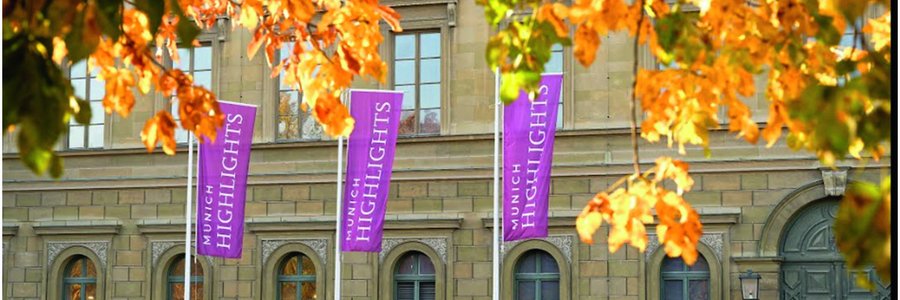
- We're looking forward welcoming you at this year's HIGHLIGHTS International Art Fair in Munich. We'll be showing works by Damien Hirst, Yayoi Kusama, Chun Kwang Young and Manolo Valdés amongst many others.Description
#BEartfair Munich Highlights Munich / 14 – 18 October 2026
Until 18 Oct 2026
Silence
Until 21 Nov 2026
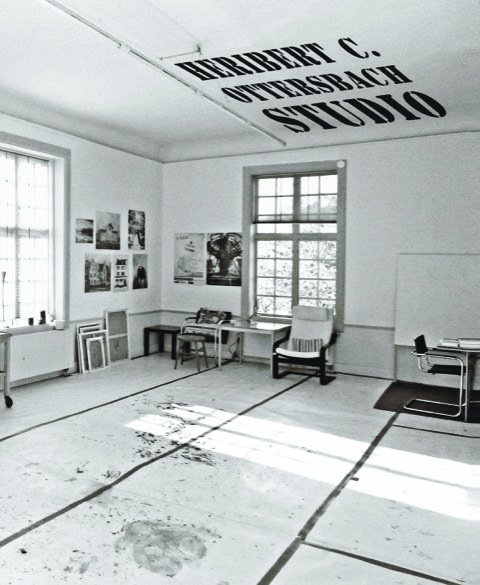
- »A Farewell to the Western World« gathers approximately 70 artworks in painting, drawing, sculpture and photography that depict imagery suggestive of global shifts and an irreverence towards systems of established order. By tracing patterns of conflict, power, and sociopolitical upheaval that have concerned artists globally, »A Farewell to the Western World« questions established constructs like West versus East. As authoritarian tendencies last seen almost a century ago appear to be in ascendancy, assumptions of »history ending« and liberal democracy are similarly challenged. Although these often-stark images illustrate the consequences of their time, they underscore a humbling reminder that every generation determines its own reckoning.Description
Heribert C. Ottersbach @ HALL ART FOUNDATION A Farewell to the Western World
Until 29 Nov 2026
Recent past exhibitions
- Die Brücke – founded in Dresden in 1905 by young architecture students – ranks among the most important movements of the German avant-garde. Ernst Ludwig Kirchner, Erich Heckel and Karl Schmidt-Rottluff, later joined by Hermann Max Pechstein and Emil Nolde, sought to break with academic art and the bourgeois constraints of their time. In search of new modes of expression – immediate, subjective, charged with emotional intensity – they experimented with colour, form and surface as well as with a range of techniques, becoming a driving force of German Expressionism. Even after the group disbanded in 1913 and each artist went their own way, this shared sensibility endured: art understood as the unmediated expression of feeling. At the centre of our presentation at Independent 20th Century is Ernst Ludwig Kirchner’s Totentanz der Mary Wigman (1926/1928), one of the major works of his Davos years: the painting finds a compelling pictorial equivalent for dance, translating movement into colour. Kirchner was fascinated by Mary Wigman, one of the foremost pioneers of modern expressionist dance in Germany. Across the boundaries of their respective disciplines, both pursued the same question: How does existential feeling become movement – and movement, form? Independent 20th Century now at the Breuer Building The architect Marcel Breuer (1902–1981), who trained and later taught at the Bauhaus, emigrated to the United States in 1937 and designed one of New York’s most radical museum buildings for the Whitney Museum in 1966. Following a sensitive renovation by Herzog & de Meuron, it is now Sotheby’s global headquarters – and, for the first time, also the venue for Independent 20th Century. We look forward to welcoming you.Description
#BEartfair Independent 20th Century: Artists of 'Die Brücke' New York / 24 – 27 September 2026
Ended 27 Sept 2026
- Loneliness — silent and unyielding — finds its way into the laminae of our society. The rampant spread of wordlessness seems no more stoppable than the proliferation of AI in the digital undergrowth. Alongside those sudden, violently felt ruptures caused by departure, by conflict, by death — those events that tear gaping holes into the fabric of our lives — another kind of absence is taking root, now more than ever. It is the kind of absence that appears, unexpectedly, between self and others, sometimes slipping in quietly and making itself at home, manifesting in shifting and strangely wondrous ways. We are unversed in facing these stifling voids that have crept into our reality. To suffer loneliness is to carry shame to which few admit or even acknowledge — that estrangement has become the only companion in a friendless home. Aimlessness has no place anymore. Undefined space, like those formed in the wake of delays, are stripped of their randomness while applications, ever learning, optimize every millimeter of the in-between and information bubbles dictate our distractions. Time is bridged only in haste and as the arena of real encounters is increasingly abandoned. Unaffected and out of touch, we remain distant from one another. This absence of one another, the void between us, is a self-sustaining system — like a perpetual motion machine, but more so, it accelerates with every attempt to fill the stillness of time. Being alone with oneself has become nearly unbearable. The exhibition explores this emptiness — both conceptual and spatial — and pairs it with boredom, its temporal counterpart. To confront and connect within is the starting point. Distance is to be exchanged for openness. A clear, piercing gaze is required — a reckoning with its presence, a call to honor its significance. The artists exhibiting here are united by the question of whether it is the emptiness itself that leads us into loneliness. Or is it rather the relentless attempt to banish it that results in unhappiness and isolation? Each of the participating voices navigates this terrain, exploring the many forms of emptiness. They are drawn not to what is full, but to that which remains unfilled — time, minds, spaces. Not merely to endure, but to provoke; not passivity, but a practiced stillness. And yet — can we truly place our trust in the goodness of emptiness? The exhibition itself — freely curated across wide, open spaces — follows the desire to see the spaces in-between as spaces to inhabit, with oneself and with others. There remains room for the temporary, for the echo of what people have said, for sounds, and for sounds willingly received.Description
Gehard Demetz @ In love, the emptiness / Ausstellungsräume Gruppenausstellung, Berlin
Ended 29 Jun 2026
Heinz Mack
Ended 23 May 2026
- On the occasion of the Bad Moon Rising exhibition, Stefan Kürten will present his musical performance 12 Guitars in our exhibition space. 12 Guitars was first performed in 2017 at Kunsthalle Düsseldorf and has since been continued in various forms and line-ups, depending on the location and context of the performance. Stefan Kürten begins the approximately 30-minute piece alone on guitar, before drums and bass join in. Gradually, 11 additional guitars are added, slowly building a kind of minimalist ‘wall of sound’. This wall steadily increases in intensity and volume. Its repetitive structure creates a hypnotic, almost meditative effect that subtly envelops both listeners and performers alike. Before the performance, Stefan Kürten outlines the basic structure, but gives no further instructions. The musicians do not need to know each other, and no rehearsals take place beforehand. As a result, each performance is a unique creation that emerges spontaneously and intuitively in the moment—no ‘wall of sound’ is ever the same. The performance is accompanied by a video by Düsseldorf-based artist and photographer Kai Schmidt, filmed in California. This is a special opportunity not only to experience Stefan Kürten’s works once more before the exhibition closes, but also to become part of an immersive experience with 12 Guitars. The exact line-up of 12 Guitars will be announced on our website as soon as possible. We look forward to seeing you!Description
Stefan Kürten: 12 GUITARS
Ended 19 Mar 2026
#BEartfair TEFAF Maastricht 2026
Ended 19 Mar 2026
- The reception of Chris Reinecke’s work has long been shaped by her role as one of the key figures of the avant-garde in Düsseldorf in the late 1960s. As a co-founder and protagonist of the artistic cooperative LIDL, she unquestionably deserves the long-overdue recognition and institutional attention now being accorded to her—for her close connection between art and activism, her engagement with tenants’ solidarity, her radical dissolution of traditional concepts of art, and her attempt to conceive art, through participatory experience, as a socially and democratically transformative force (currently, for example, in the exhibition 'Grund und Boden' at K21 in Düsseldorf). That Chris Reinecke continued to develop her work over the following decades into one of the most original artistic positions in Germany long remained largely unrecognized within art-historical discourse. The exhibition ZEITBLÖCKE (TIME BLOCKS) traces this artistic development from the late 1970s to the present. The most substantial time block of the exhibition is formed by the 1990s. Works that have rarely—or in some cases never—been shown before, drawn from the central series 'Die Beobachterin verlässt ihren stationären Posten' (The Observer Leaves Her Stationary Post) and 'Die Sorglosigkeit der Mechanik' (The Carefreeness of Mechanism), once again present Chris Reinecke as a radical reconfigurer of artistic and art-historical categories—and their limitations. Across layered compositions of image and text, she collages personal observations of her immediate surroundings (her studio was located in Duisburg at the time), travel experiences, as well as political, scientific, and social discourses. The result is a kind of visual stream of consciousness with its own density, momentum, and force. Formally and conceptually, these works occupy a seemingly solitary position within her oeuvre; on closer inspection, however, they form a coherent link between the painting of the 1980s and the large-format works on paper that have shaped her practice since the 2000s and continue to do so today—the further time blocks of the exhibition. Beyond the conditions and expectations of the art market and its institutions, Chris Reinecke has developed an exceptional freedom of thought and practice. By continuously questioning her own strategies and concepts, she has preserved an openness and permeability in her work that lends even her most recent works a striking sense of contemporaneity. Chris Re... The most substantial time block of the exhibition is formed by the 1990s. Works that have rarely—or in some cases never—been shown before, drawn from the central series 'Die Beobachterin verlässt ihren stationären Posten' (The Observer Leaves Her Stationary Post) and 'Die Sorglosigkeit der Mechanik' (The Carefreeness of Mechanism), once again present Chris Reinecke as a radical reconfigurer of artistic and art-historical categories—and their limitations. Across layered compositions of image and text, she collages personal observations of her immediate surroundings (her studio was located in Duisburg at the time), travel experiences, as well as political, scientific, and social discourses. The result is a kind of visual stream of consciousness with its own density, momentum, and force. Formally and conceptually, these works occupy a seemingly solitary position within her oeuvre; on closer inspection, however, they form a coherent link between the painting of the 1980s and the large-format works on paper that have shaped her practice since the 2000s and continue to do so today—the further time blocks of the exhibition. Beyond the conditions and expectations of the art market and its institutions, Chris Reinecke has developed an exceptional freedom of thought and practice. By continuously questioning her own strategies and concepts, she has preserved an openness and permeability in her work that lends even her most recent works a striking sense of contemporaneity. Chris Reinecke lives and works in Düsseldorf. She will celebrate her 90th birthday in July.Description
Chris Reinecke: Zeitblöcke
Ended 28 Feb 2026