Amsterdam
De Appel
On now
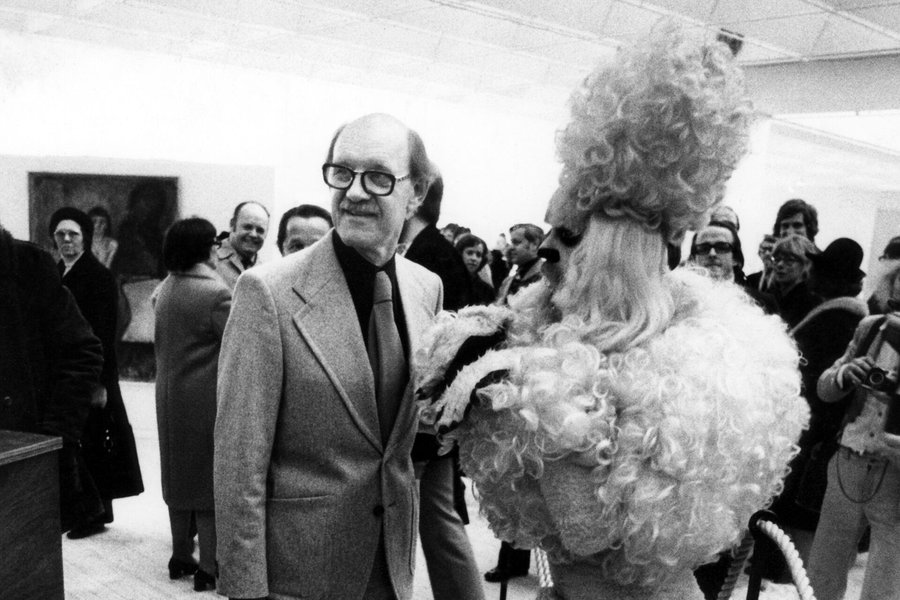
- Gedurende een periode van bijna vijf jaar onderzocht Lapdogs of the Bourgeoisie hoe klassenstructuren de productie, presentatie en ontvangst van hedendaagse kunst beïnvloeden. Het project, dat in 2006 van start ging, stelde complexe, onbeantwoorde vragen zoals: Hoe beïnvloedt klasse wie kunstenaar of curator wordt? Is hedendaagse kunst een voorrecht van de middenklasse? Twintig jaar later keren we terug naar deze vragen en onderzoeken we waarom klasse nog steeds zo gemakkelijk over het hoofd wordt gezien bij de productie en presentatie van kunst – zelfs in een tijd waarin kwesties rondom politieke gelijkheid veel prominenter aanwezig zijn. Wat klassenstructuren betreft, heeft de kunstwereld meer bij te dragen dan op het eerste gezicht lijkt. We weten allemaal dat de kunstwereld niet bepaald een meritocratie is. Maar de kunstwereld komt wel met ideeën en voorstellen, die vaak over het hoofd worden gezien door historici en theoretici. Door middel van een archief van het project en een publieksprogramma bouwt Lapdogs of the Bourgeoisie voort op dergelijke ideeën, scenario’s en analyses, om nieuwe perspectieven voor hedendaagse kunst en daarbuiten te bedenken.Description
Lapdogs of the Bourgeoisie 2026: Class Hegemony in Contemporary Art
Until 21 Nov 2026
Archief geopend
Until 17 Dec 2026
Coming soon
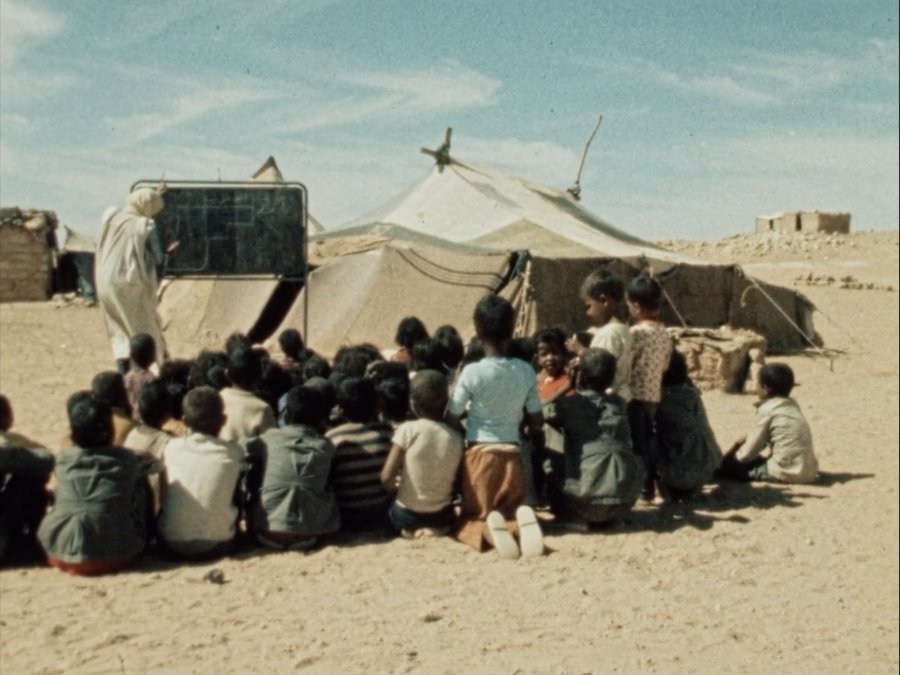
- An Exercise in Assembling van Subversive Film brengt fragmenten samen uit militante films die zijn gemaakt in het kader van bevrijdingsstrijden, antikoloniale bewegingen en sociale bewegingen voor burgerrechten en de rechten van arbeiders en immigranten. Alle scènes uit de verschillende films tonen momenten van openbare bijeenkomsten. De film is onderverdeeld in vier hoofdstukken: bijeenkomst als film, als bevrijding, als macht, en als methode of instrument. In plaats van nostalgisch terug te blikken op de geschiedenis van militante cinema, stelt deze filmcollectie de vraag wat het vandaag de dag betekent om bijeen te komen: als een vorm van bevrijding, een bron van collectieve macht en een methode om gedeelde politieke verbeeldingswerelden te creëren. Het werk stelt ook vragen over kunst en film zelf. Door een geschiedenis van de militante cinema te tonen, vraagt het zich af wat militante cinema vandaag de dag is, wat het militante beeld is, en hoe filmmakers films maken over strijd die niet ‘van hen is’. De filmfragmenten resoneren met het heden door een emancipatorische en hoopvolle collectieve horizon te vormen, die ook momenten van verdriet en hopeloosheid bevat.Description
Subversive Film: An Exercise in Assembling
12 Dec 2026 – 12 Feb 2027
Recent past exhibitions
- Deze workshop, gefaciliteerd door Rima Musa, verkent Tatreez, de traditionele Palestijnse kunst van het kruissteekborduurwerk. De sessies volgen de evolutie van Tatreez, van vroege dorpsgebruiken tot medium voor politieke expressie onder Palestijnse vrouwen, die tijdens de Intifada collectief leiderschap toonden. De workshop zal ook ingaan op de huidige praktijken, digitale bewaring en de symboliek van Tatreez als belichaming van liefde en veerkracht, waarmee de nadruk ligt op herinneren als een matriarchaal instrument. Deelnemers werken aan een klein geborduurd motief.Description
Palestijnse Tatreez-workshops met Rima Musa
Ended 30 May 2026
- The Broken Pitcher is a collaborative project by Natascha Sadr Haghighian, Marina Christodoulidou and Peter Eramian, with Raissa Angeli, Dimitris Chimonas, Stelios Kallinikou, Athina Kassiou, Orestis Lambrou, Orestis Lazouras, Panagiotis Mina (Pyrgatory Studios), Faysal Mroueh, Keti Papadema, Nayia Savva, Nikos Stephou, Maria Toumazou, Rumen Tropchev, Emiddio Vasquez. The iteration at De Appel includes new contributions from Stelios Kallinikou, Olga Micińska and Maria Toumazou. The Broken Pitcher project explores the consequences of financialization and austerity measures through a concrete case: a crucial meeting at a bank in 2019 where the execution sale of a family home in Larnaca, Cyprus was negotiated. Execution sales were one of the austerity measures imposed on the Cypriot government by the troika (the European Commission, the European Central Bank and the International Monetary Fund) after the financial crisis of 2012. The Broken Pitcher looks at the banking system and the possibilities for changing the interaction with it. The project consists of a life-size scale model of the bank space that functions both as an exhibition space and set for a 70-minute film reconstructing the scene. Inspired by Abbas Kiarostami's film First Case – Second Case (1979, Iran), the reconstruction of the meeting is then shown to people from different backgrounds, who are asked: 'What should the bank employees do according to you?' The filmed reactions include perspectives from various stakeholder groups in Cyprus and beyond, including housing rights activists in Barcelona, Berlin and Beirut, people affected in similar ways by this policy, public figures, lawyers, economists and artists. One of the main focuses of the project is collaboration as a form of collectivity. Since 2020, meetings and workshops have been central to the creation process, aiming to find structures and formats for collaboration, writing scripts and researching the context of execution sales in relation to debt, austerity, financialization and colonialism, and to counteract isolation and despair caused by this. The meeting in the bank space is based on memories of the affected family and their lawyer. Starting from a workshop at the independent artist-run space Thkio Ppalies in Nicosia, the set was designed in collaboration with artists who each took responsibility for a separate aspect of the set. The objects in the space deviate from a functional replica and become witnesses to the encounter on artworks. The stories of the affected family were unraveled and reconstructed in workshops with actors who re-enacted the dialogue in a filmed improvisation. The selection of respondents is based on personal connections, friendships and expertise shared within and between different communities. Various performances on public squares in Cyprus and a first presentation at Thkio Ppalies in May 2022 led to often lengthy discussions in local neighborhoods. Since then, the project has spread and intertwined with related self-organizing and institutional partners and their communities in Beirut, Leipzig, Munich, New York, Amsterdam (during the Housewarming program of De Appel in 2024), Cairo, Novi Sad and beyond. In these different iterations, personal testimonies, experiences and plans are shared in response to micro- and macro-effects of debt, to make contact and learn from each other. In the iteration at De Appel, The Broken Pitcher brings historical patterns to the fore through conversation partners whose practices are both socially, intimately and infrastructurally critical. Parallel to the installation, research material, video interviews and the film, these contributions invite to recontextualize both spaces and narratives. Within this movement, the additional artistic contributions of Stelios Kallinikou, Olga Micińska and Maria Toumazou trace the dead-end paths of state bureaucracy and the collapse of banking as a social structure. During the duration of the project, The Broken Pitcher Forum organizes a program with open discussions and reading groups, film screenings and a performance of an album released by the Cypriot label Moneda.Description
The Broken Pitcher
Ended 20 Mar 2026
- The Broken Pitcher is a collaborative project by Natascha Sadr Haghighian, Marina Christodoulidou, and Peter Eramian that explores the consequences of financialization and austerity measures through the specific case of a foreclosure sale of a family home in Larnaca, Cyprus. The project consists of a life-sized model of a bank space that functions as both an exhibition space and a set for a 70-minute film reconstructing the scene.Description
The Broken Pitcher Forum: Filmvertoning & lezing
Ended 20 Mar 2026
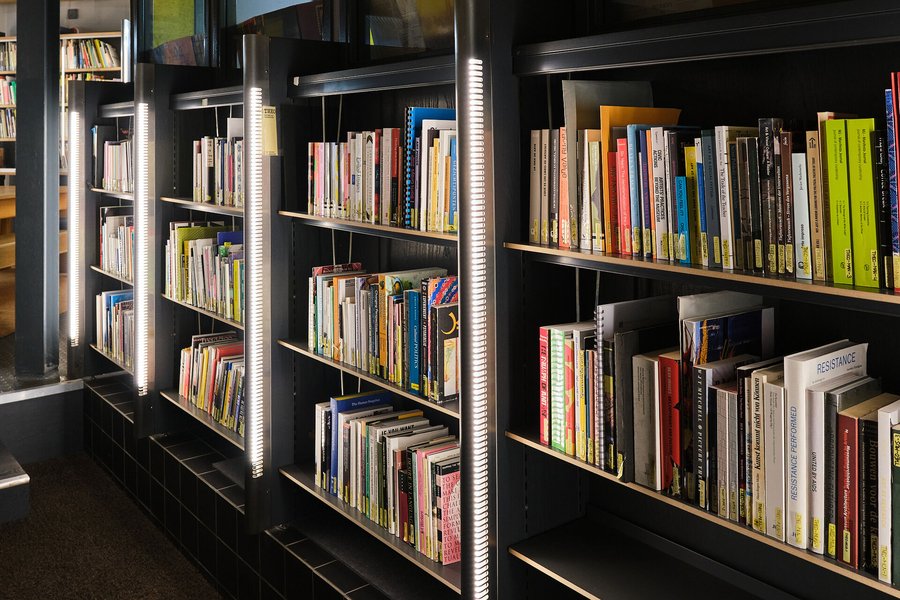
- Het Archief opent in februari met de lancering van de nieuwe The Remote Archivist en een aansluitende vitrine-presentatie in de bibliotheek van de Appel. De presentatie is gebaseerd op een geluidsband uit het archief van Works and Words, een internationale kunstmanifestatie die van 20 tot 30 september 1979 door de Appel werd georganiseerd: een opname van een lezing die Annosh Urbanke aan Marko Pogačnik kon toeschrijven. Uit correspondentie bleek dat Marko Pogačnik vanwege de geplande druivenoogst op de boerderij in Šempas (Slovenië) niet op de gevraagde datum voor een lezing kon komen, maar hij kwam later, na de oogst, en gaf een lezing over OHO en hoe leven en kunst samenkwamen in Šempas. Het kunstcollectief OHO onderzocht het idee van medialiteit. De naam van de groep “OHO” is een combinatie van de woorden ‘oko’ (oog) en “uho” (oor) en verwijst naar de zintuigen waarmee waarneming plaatsvindt. Ze werkten dicht bij de natuur en gebruikten eenvoudige materialen om kleinschalige werken te maken. Op de drempel van hun internationale succes in 1971 besloten ze zich terug te trekken. Ze waren niet geïnteresseerd in het internationale kunstdiscours en besloten in plaats daarvan een gemeenschap op te bouwen. De collectieve kunstpraktijk van de OHO-groep werd voortgezet op een verlaten boerderij in Šempas, terwijl de gemeenschap nog enkele jaren groeide, totdat Marko en Marika Pogačnik besloten zich als gezin op het stuk land te concentreren. Annosh besloot contact op te nemen met Marko en Marika Pogačnik, wetende dat Šempas – zij het in een andere vorm – nog steeds bestaat en dat de gemeenschappelijke praktijk werd voortgezet als een familieproject. Van het een kwam het ander en Annosh reisde naar Šempas om meer te weten te komen over de verschillende fasen en kunstpraktijken die hun werk en leven in Šempas hebben gevormd.Description
Amsterdam – Šempas: archiefpresentatie Works and Words & OHO
Ended 1 Mar 2026