Venice
ELISABETH DE BRABANT CONTEMPORARY
On now
- The film by Candida Richardson is based on a 45 min long unique performance ‘Live Transmissions in Venice’ that marked the opening of Morgan O’Hara’s solo show at Galleria dei Gondolieri, curated by Elisabeth de Brabant and Anna Shpilko. O’Hara documented master artisan Saverio Pastor, one of Venice’s last fórcole* makers, as he carved these intricate wooden rowlocks. Saverio’s son, sound artist Tiziano Pastor, was simultaneously threading a live soundscape in response to his father’s work using both electronic and acoustic guitars, the last one – a gift from his father. Morgan O’Hara’s Live Transmission series operates at the intersection of forensic precision and empathic resonance, capturing movement in real time through a near-seismographic drawing process. Trajectories inherent in human activity are carefully observed and drawn simultaneously with both hands using multiple razor-sharp pencils. Her work has documented world-renowned conductors, dancers such as Merce Cunningham and Trisha Brown, as well as performance and sound artists from the New York and Japanese avant-garde scenes since the 1970s. * The Venetian fórcole are the end result of centuries of refinement of the simple oarlocks used in the Veneto lagoons: the oars became thinner, the morsi (hollows) became tighter; expensive woods are now used instead of the recuperated wood, above all the sanca (the elbow-shaped part) was invented to facilitate rowing in the narrow Venetian canalsDescription
Film ‘Live Transmissions in Venice. Morgan O’Hara’ by Candida Richardson
Until 15 Oct 2026
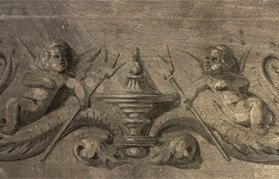
- In the exhibition Cilia, Léa Dumayet uses glass to create sculptures that reveal invisible forces at work in the body. The artist’s working process echoes the fluid, interdependent nature of Venice, where balance is maintained through constant adaptation, making it resilient and evolving. Her approach moves between deliberate intervention, accelerating instability and revealing hidden processes, and careful observation, listening, and repair. Equilibrium operates as a continuous process of calibration between direction, material, body, and environment. The installation central to the exhibition, CILIA, draws a parallel with biological systems. The title refers to cilia—microscopic hair-like structures on cells that enable movement in organs such as the fallopian tubes, brain, and respiratory tract. To address the fragility of vital systems and the persistent lack of attention they receive, this biological principle is translated into the material form of the installation. The installation brings together suspended glass sculptures called Cils and Tubas. Working with local artisans from Venice and Murano, Léa Dumayet seeks the precision needed to capture unstable, organic conditions in glass held in tension between stillness and instability at the point of rupture: “The installation explores the intrinsic dualities of glass—its fragility and strength, its transparency and its ability to reflect. Light passes through it while creating reflections, both physical and emotional. These qualities form a language through which I explore what is invisible yet perceptible, and how opposites can exist together as one. The sculptures engage a personal history rooted in the body; the process of making them becomes an active space of healing, both intimate and transformative.” Alongside these suspended forms, a series titled Souffle, made from recycled aluminium, introduce breath as a driving force and a condition of life. Air is a recurrent element in Léa Dumayet’s practice. To create these sculptures, she uses air to model the material without touching it, blowing at a precise moment to seek equilibrium and reveal the invisible. Essential to life, breathing allows external particles to enter the body, carrying the outside world into us and enabling perception and adaptation, a process only partially within our control. In collaboration with fragrance designer Daphné Perryman-Holt, the artist develops an olfactory layer that evokes the elements from which glass is formed: air, earth, water, and fire. Propelling the audience through the space, these volatile molecules extend the work beyond what can be seen. Glass, metal, light, space, and scent form a permeable structure that carries and amplifies intention through each material.Description
Cilia
Until 21 Oct 2026
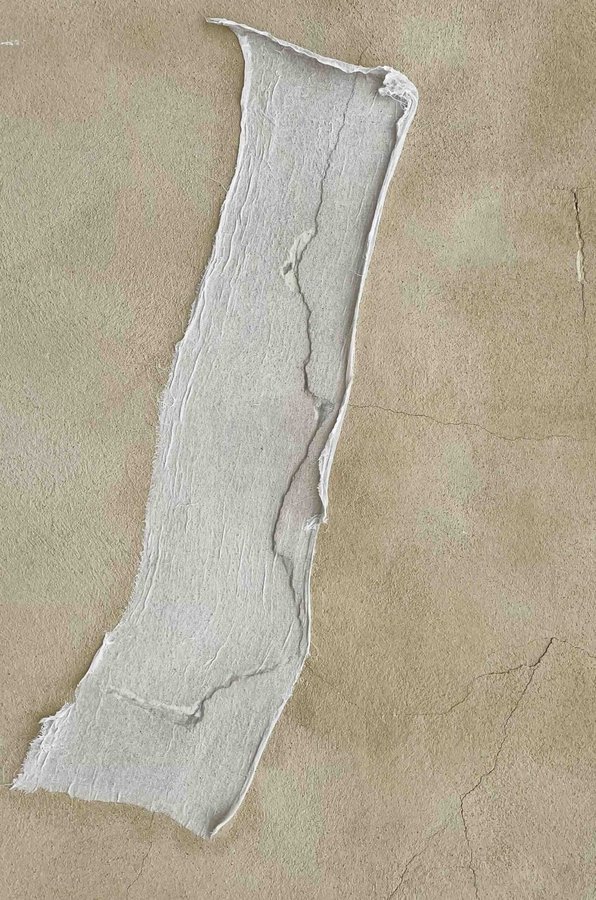
- One year after initiating Female Armour, a series of autonomous sculptural works that examine the capacity of networks and communities to sustain themselves under pressure, Andrea Bordács returned to Venice for a winter residency in situ to create three autonomous sculptures Exuviae. The artist works with forms of armour historically adopted and reinterpreted by women across cultures, redefining protection as a structure of presence, agency, and resilience. In biology, ‘exuviae’ are the remains left after an organism sheds its outer layer in order to grow. In Ancient Rome, the term referred to the armour of defeated enemies displayed as evidence of a transfer of power. In Andrea’s work, Exuviae pieces are material traces produced through the process of making, marking transformation through physical labour. For the artist, this process becomes both metaphor and method. Andrea Bordács disassembles textiles from her personal archive without the use of cutting tools, then recombines them to create a dense and flexible sculptural material whose layered structure evokes organic membranes. Artist merges entities collected in the lagoon (fragments, residues, organic traces) with her archival materials to create a Cabinet of Curiosities within the Oyster Alcove space. Historically, a ‘cabinet of curiosities’ assembled rare objects, natural specimens and artefacts in an attempt to grasp the complexity of the world. Andrea Bordács revisits this tradition through her own evolving archive. Shells, marine residues, fibres and found materials intertwine with sculptural elements, forming a unique timeless landscape. This evolving archive brings together materials whose histories and qualities are acknowledged, then reworked and combined to form new layers of meaning that emerge through the making of the work. Andrea approaches Venice as an ecotone, a place where organisms persist through adaptation. Seeking to embody this principle, Andrea Bordács organized her daily rhythm around the changing environment of the lagoon and uses as material old wooden piles from the lagoon (briccole), marked by the action of shipworms, marine molluscs characteristic of this ecosystem. This new chapter follows her series [LINK text='Fuga Ascendente' href='https://www.instagram.com/fuga_ascendente?utm_source=ig_web_button_share_sheet&igsh=ZDNlZDc0MzIxNw=='] (To Take Flight / An Ascending Escape), a tribute to historic female craft traditions across Tuscany, Sicily, and Venice, presented by Anna Shpilko, contributing curator at Elisabeth de Brabant Contemporary within the immersive exhibition at Villa Marigola during the Lerici Music Festival in summer 2025.Description
Exuviae
Until 21 Oct 2026
Recent past exhibitions
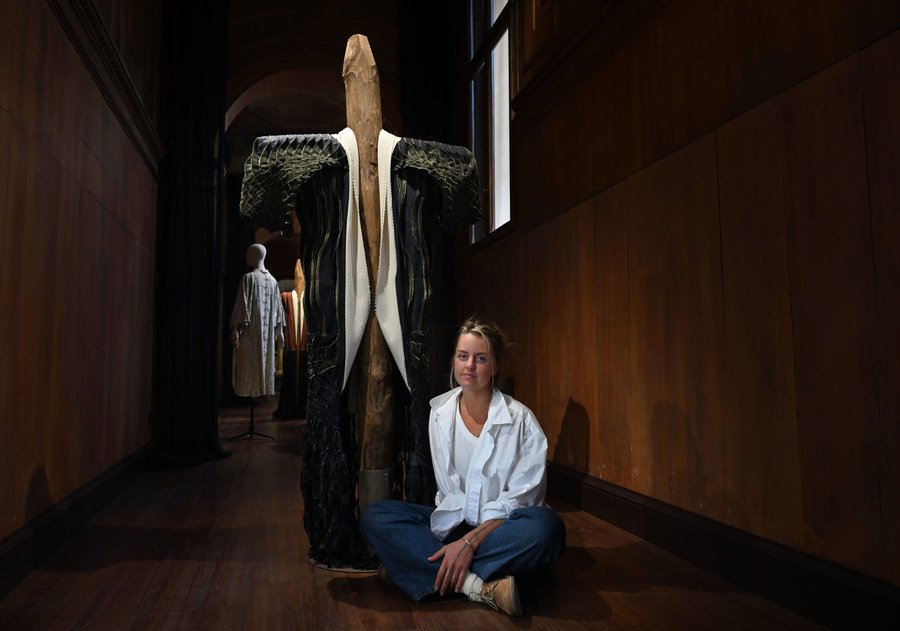
- Female Armour addresses the capacity to sustain networks and communities under pressure Andrea Bordács’ work investigates armour as a form historically adopted and redefined by women to assert presence, agency, and resilience. Across different cultural and temporal contexts, armour has functioned not only as protection, but as a marker of identity, strength, and continuity. Female Armour consists of autonomous sculptural works conceived as untouchable forms. Instead of referring to combat protection, they express a restrained, non-aggressive power, grounded in endurance, destined for the preservation of life and collective structures. While related to Bordács’ previous work for cinema and performance, these armours belong fully to her sculptural practice. Residency at Galleria dei Gondolieri Andrea Bordács began her residency at Elisabeth de Brabant Contemporary’s Venetian space, Galleria dei Gondolieri, in December 2025. The residency will culminate with the exhibition in April, 8-13. Within the architectural and historical context of Venice, the artist is developing a new chapter that draws from the Ocean and Forest as a connective system between territories, histories, and bodies, and as a model for circulation, exchange, and survival. This new chapter follows her series [LINK text='Fuga Ascendente' href='https://www.instagram.com/fuga_ascendente?utm_source=ig_web_button_share_sheet&igsh=ZDNlZDc0MzIxNw=='] (To Take Flight / An Ascending Escape), a tribute to historic female craft traditions across Tuscany, Sicily, and Venice, presented by Anna Shpilko, contributing curator at Elisabeth de Brabant Contemporary within the immersive exhibition at Villa Marigola during the Lerici Music Festival in summer 2025.Description
Artist in Residence at Galleria dei Gondolieri Andrea Bordács. Female Armour
Ended 16 Apr 2026
- Female Armour addresses the capacity to sustain networks and communities under pressure Andrea Bordács’ work investigates armour as a form historically adopted and redefined by women to assert presence, agency, and resilience. Across different cultural and temporal contexts, armour has functioned not only as protection, but as a marker of identity, strength, and continuity. Female Armour consists of autonomous sculptural works conceived as untouchable forms. Instead of referring to combat protection, they express a restrained, non-aggressive power, grounded in endurance, destined for the preservation of life and collective structures. While related to Bordács’ previous work for cinema and performance, these armours belong fully to her sculptural practice.Description
Female Armour
Ended 13 Apr 2026
- We are delighted to announce that artist, costume and scenography designer for film, Andrea Bordács, will commence her Residency at Elisabeth de Brabant Contemporary’s Venetian space, the Galleria dei Gondolieri, from December 2025 through March 2026, culminating in an exhibition in Spring 2026. During this residency, Bordács will develop a new series of Female Armour, an ongoing body of work exploring the intersection of sculpture and dress. In her practice, Female Armour revisits the notion of armour not merely as protection, but as a symbol historically reimagined by women across centuries—as an emblem of pride, strength, and defiance. While this imprint can be traced in her work for cinema, these sculptural pieces belong fully to her artistic practice. The series draws inspiration from South African landscapes, crafts, and traditional techniques. Currently on a research trip across the country, Bordács is conducting interviews and visiting ateliers to shape the project’s material and conceptual layers. This new chapter follows her acclaimed series [LINK text='Fuga Ascendente' href='https://www.instagram.com/fuga_ascendente?utm_source=ig_web_button_share_sheet&igsh=ZDNlZDc0MzIxNw=='] (To Take Flight / An Ascending Escape), a tribute to historic female craft traditions across Tuscany, Sicily, and Venice, presented by Anna Shpilko, contributing curator at Elisabeth de Brabant Contemporary within the immersive exhibition at Villa Marigola during the Lerici Music Festival in summer 2025.Description
Artist in Residence: Andrea Bordács — Female Armour
Ended 25 Mar 2026