Prague
PRAGUE CITY GALLERY | GHMP BÍLKOVA VILA
On now
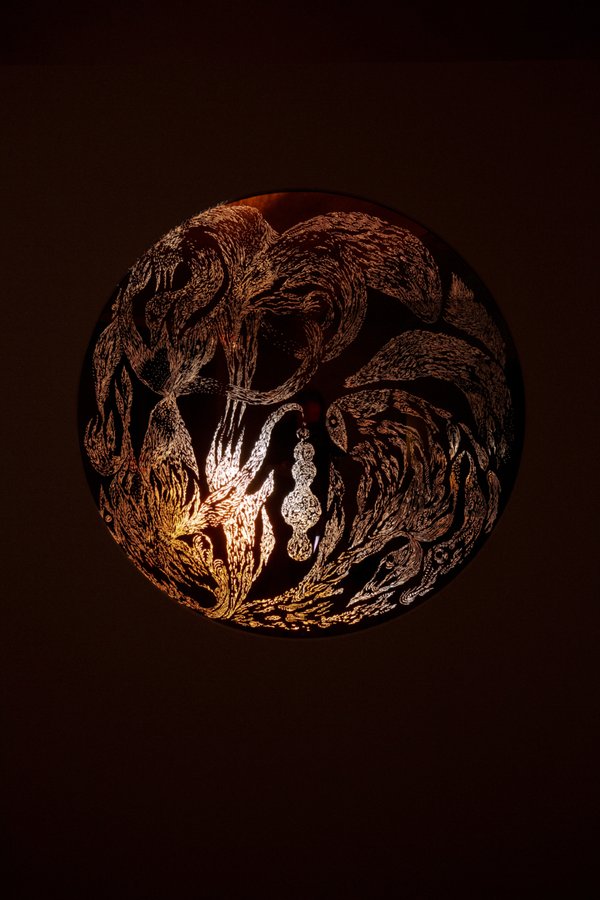
- The Labyrinth project explores precisely these issues. It confronts visitors with their attitudes, transforming them into critically thinking observers. The exhibition addresses key social issues. Among the central themes are fear of the unknown and uncertainty, generalisation and dehumanisation, responsibility of the individual in modern society and the power of words and their impact on human dignity. The path out of the labyrinth does not lie in simple answers, but in the willingness to listen, to question one’s own certainties and to take responsibility for how we understand the world and other people. The exhibition features works by several prominent figures on the contemporary Czech art scene: Vojtěch Hrubant’s relief Evolution explores the human journey through the labyrinth of one’s own decisions and the question of conformity. Veronika Homolová created the illustration Map of Fear for the exhibition, which confronts visitors with their fears and phobias. The Spring is an installation by Tereza Bartůňková who works with darkness, mirrors and the viewer’s encounter with themselves. Dominik Styk’s works Growth Protocol and Naked Roots reflect on the influence of the environment on human development and the threats of dehumanisation. In her Machine for Restoring Empathy, Eva Koťátková created a space of care, inclusion and mutual support. Eva Palčič’s object Recollection of a Procession addresses issues of communication, tradition and interpersonal connections in a secularised society. Matouš Lipus is the creator of the sculpture Atlas which symbolises the burden of responsibility and the weight of human decisions. Klára Samcová will present textile works addressing menstruation, gender roles and societal expectations associated with the female experience. The exhibition concludes with a video by Hedvika Hlaváčková, who reflects on the absurdity of stubbornly clinging to gender stereotypes and, through various perspectives, challenges the rigid categories of masculinity and femininity.Description
Labyrinth: Wandering Within
Until 29 Oct 2026
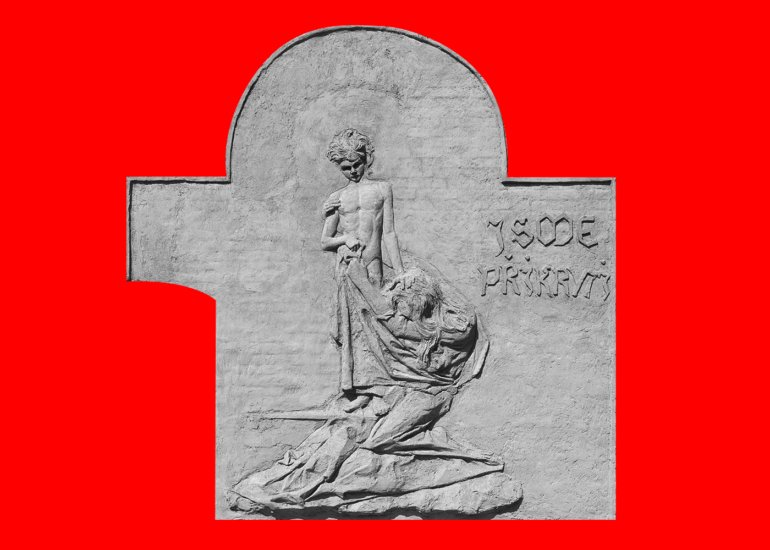
- The exhibition at the František Bílek’s House in Chýnov presents mainly the artist’s works with Hussite themes and reliefs from the second half of his creative period. Other exhibits commemorate the sculptor’s friendship with important Czech poets Julius Zeyer and Otokar Březina and his cooperation with Chýnov potters. Furniture designed by Bílek completes the atmosphere of the residential interiors.Description
František Bílek in Chýnov long-term exhibition
Until 1 Nov 2026
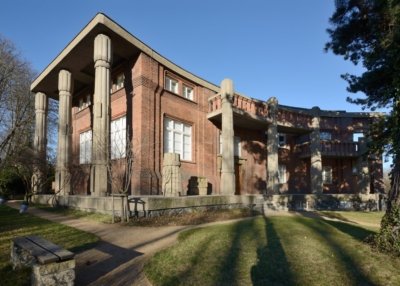
- According to Bílek (1872–1941), his Prague villa was supposed to express “life as a field full of ripe ears, providing everyday nourishment for the brothers. Many ears tied into sheaves – columns. Some of the columns unfinished, as they do not bear anything”. The segmented layout of the building can be perceived as the imprint of a scythe harvesting grain. Also striking is the shape of the columns, reminiscent of the architecture of ancient Egypt. The naked bricks and unpolished stones draw the edifice closer to nature and to man’s labor. Dominating the irregular interiors is the artist’s studio, with its high ceilings, forming the house’s natural working and spiritual center. Since 1963, the Villa Bílek located in the Hradčany district is managed by the Prague City Gallery. In addition to its original furniture, the newly opened permanent exhibition situated in the villa presents a selection of Bílek’s works from his most important creative period. In June 2022, on the 150 th anniversary of František Bílek’s birth, the Villa Bílek reopened to the public. The aim of the new permanent exhibition was to remove disruptive and non-original elements and to offer a more sensitive approach to the interiors. These now appear more homely, and the artist’s works are installed there with more consideration to their spiritual essence. Compared to the sculptor’s house in Chýnov, where mostly later works and works with Hussite themes can be seen, the exhibition in the Prague villa presents mainly early works charged with intense mysticism. Exalted monumental sculptures and figurative compositions characterized by organic forms, pronounced verticalizing silhouettes and pathetic gestures are exhibited in what used to be the artist’s spacious studio. It is dominated by the darkly stained sculptures Astonishment (1907), Moses (1904) and by the colossal design for Prague’s Jan Hus monument (1901). Most impressive are Bílek’s works made of wood – a material that suited his nature the most. Also remarkable are the artist’s graphic and ceramic creations complementing the sculptures placed in the villa’s dining room, Bílek’s study and other rooms, featuring some of the artist’s early works, monument designs and portraits, organized thematically. The largest room on the house’s first floor is dedicated to the striking model of Bílek’s Žižka Monument (1912–1925).Description
Long-term exhibition in Villa Bílek
Until 31 Dec 2026
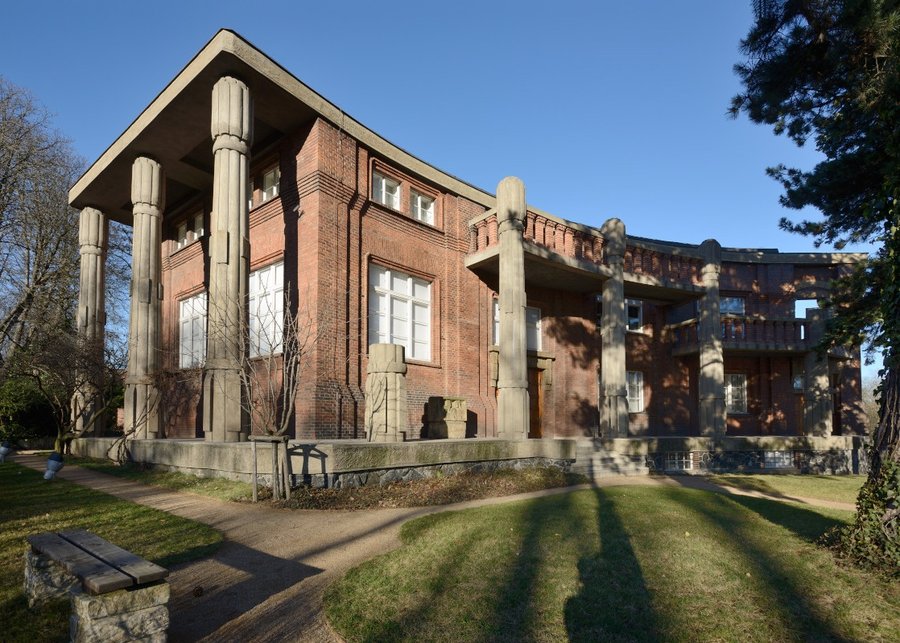
- František Bílek built his studio villa in the Prague Hradčany District between 1910 and 1911 according to his own plans and design. Bílek was mainly a sculptor and graphic artist, but his religious approach to art gradually steered him towards the need to create complex environments in which his works would find multi-layered function and roles, thus fulfilling Bílek’s vision of spiritualizing human life. His architecture was mainly idea-motivated. According to Bílek (1872–1941), his Prague villa was supposed to express “life as a field full of ripe ears, providing everyday nourishment for the brothers. Many ears tied into sheaves – columns. Some of the columns unfinished, as they do not bear anything”. The segmented layout of the building can be perceived as the imprint of a scythe harvesting grain. Also striking is the shape of the columns, reminiscent of the architecture of ancient Egypt. The naked bricks and unpolished stones draw the edifice closer to nature and to man’s labor. Dominating the irregular interiors is the artist’s studio, with its high ceilings, forming the house’s natural working and spiritual center. Since 1963, the Villa Bílek located in the Hradčany district is managed by the Prague City Gallery. In addition to its original furniture, the newly opened permanent exhibition situated in the villa presents a selection of Bílek’s works from his most important creative period. Exalted monumental sculptures and figurative compositions characterized by organic forms, pronounced verticalizing silhouettes and pathetic gestures are exhibited in what used to be the artist’s spacious studio. It is dominated by the darkly stained sculptures Astonishment (1907), Moses (1904) and by the colossal design for Prague’s Jan Hus monument (1901). Most impressive are Bílek’s works made of wood – a material that suited his nature the most. Also remarkable are the artist’s graphic and ceramic creations complementing the sculptures placed in the villa’s dining room, Bílek’s study and other rooms, featuring some of the artist’s early works, monument designs and portraits, organized thematically. The largest room on the house’s first floor is dedicated to the striking model of Bílek’s Žižka Monument (1912–1925).Description
Villa Bílek Long-term exhibition
Until 31 Dec 2026
Recent past exhibitions
- The Headless Horseman was founded in 1996 and joined the ranks of newly formed groups such as Pondělí, Koza Nostra, Jednotka, Luxsus and Podebal. Its members were united by a deep interest in neo-avant-garde art, classical literature, science fiction and DIY, which at the time stood in contrast to the one-dimensional language of advertising and mainstream pop culture. The name referred to their shared scepticism towards leadership and programmatic unity. In their day-to-day decision-making, a single "leader" was replaced by negotiation and artistic intuition. The exhibition offers visitors the opportunity to step into an environment that evokes the atmosphere of the last great pre-internet generation. It is permeated by themes of fascination with television as a window onto the West, psychedelia, comic strips, experiments with altered states of consciousness and the everyday life of post-revolutionary Czech households. With a few exceptions, The Headless Horseman did not directly reflect in their work the contradictions that the 1990s still evoke today; rather, they explored them through the very forms of perception and transformations of the structure of everyday life. The catalogue is published by GHMP in collaboration with AVU. Drawing on archival materials, photographs, interviews and other documentation, the book covers the group’s activities from 1996 to 2004 and offers one of the most comprehensive overviews of this chapter in Czech contemporary art.Description
Headless Rider
Ended 11 Oct 2026
- The exhibition showcases the early works of Art Nouveau Symbolist František Bílek (1872–1941). His sculptures, drawings, prints, artist’s books, and texts from that time convey Bílek’s unique interpretation of Christianity, rooted in a mystical world of symbols and allegories. Central to understanding Bílek’s spirituality are two of his seminal artist’s books from this period: Building the Future Temple in Us (1908) and The Journey (1909). These works reflect Bílek’s experiences during his study in Paris in the early 1890s, particularly influenced by the esoteric and then-popular book by French philosopher and essayist Édouard Schuré, Les Grands Initiés / The Great Initiates: A Study of the Secret History of Religions (1889), published in Paris in 1889. The resulting intricate mosaic of religious syncretism, which became the backbone of Bílek’s entire work, was most authentically expressed during this time.Description
František Bílek: Entrance to the Temple Vestibule
Ended 1 Jun 2026