Antwerp
GNYP Gallery
On now
- September heralds the approaching end of summer. Those who went on holiday are now returning to work or school. Those who stayed have to get used to the higher velocity of daily life. In this first month of the new season, we cling to memories of lazy, hot afternoons, recall memorable experiences and summer loves, while already preparing for new challenges and embracing the upcoming change. In the group exhibition “September,” GNYP Gallery presents works by six gallery artists that loosely address the subject of transformation, each in their own way. Kaifan Wang’s work Dead Rooster III from his series Bedtime Stories recalls the artist’s early childhood in China, when his grandmother would tell him stories during their afternoon naps. In these highly atmospheric paintings, memories become fantasies, myths become hallucinations—the work captures the state of becoming. In the lesser-known photographs made by Wojciech Fangor in the 1980s and 1990s, the artist displays his fascination with a medium that, according to him, would completely change our social relationships. Visionary as Fangor proved to be in many fields, he investigated the weird appeal of the medium thatDescription
Wojciech Fangor, Christopher Hartmann, Harrison Pearce, Elsa Rouy, Aistė Stancikaitė, Kaifan Wang · 王凯凡 September
Until 31 Oct 2026
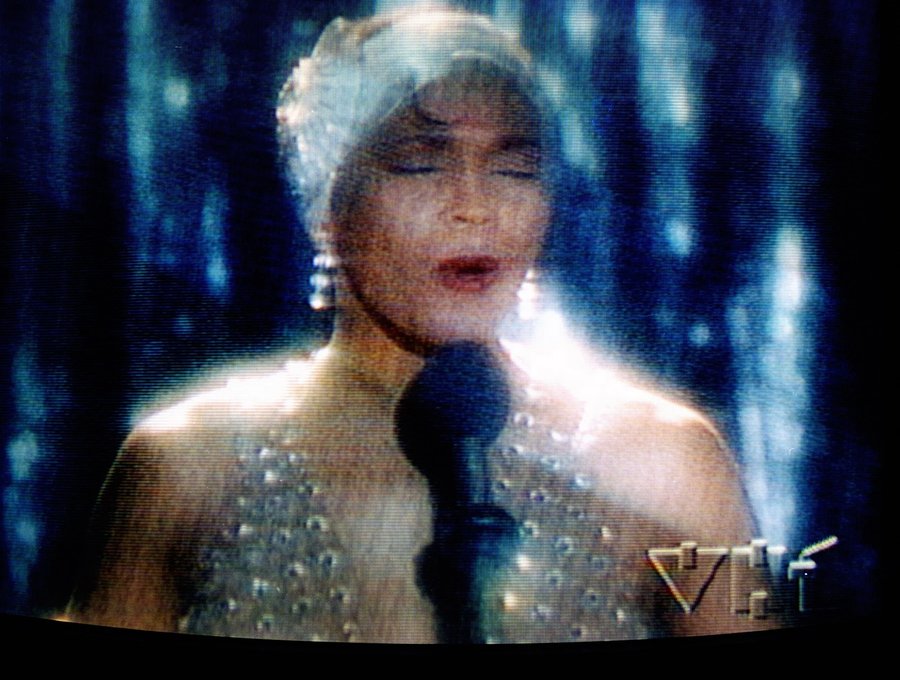
- The group exhibition "Un Jardin d’Hiver", a carte blanche for curator Sam Steverlynck, takes the unique setting of GNYP Gallery as its point of departure. Housed in a building dating from 1912 on Jan Van Rijswijcklaan in Antwerp, the gallery is distinguished by its high-ceilinged rooms, wooden wainscoting, grand staircase, and elegant stained-glass dome adorned with decorative motifs. The building was constructed in the Neo-Regency style at the end of the Belle Époque, a period of prosperity during which, among other things, Antwerp’s banking sector and port experienced remarkable growth. Affluent citizens commissioned stately residences in a wide variety of eclectic architectural styles, from Neoclassicism to Art Nouveau.Description
Group Exhibition "Un Jardin d'Hiver" curated by Sam Steverlynck
Until 28 Nov 2026
Coming soon
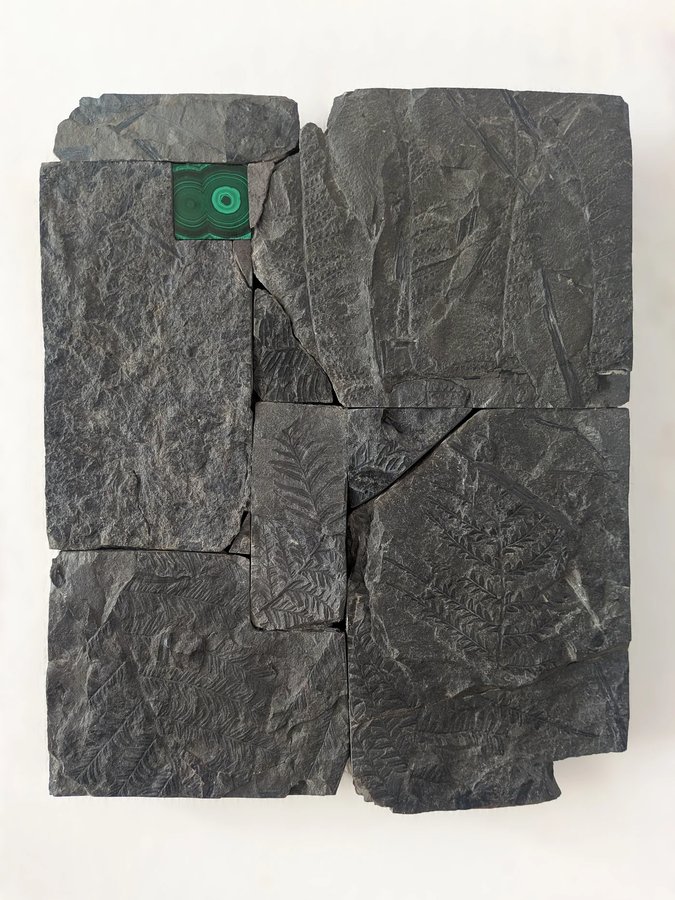
ULAY Ulay: Aesthetics Without Ethics Are Cosmetics
13 Nov 2026 – 15 Jan 2027
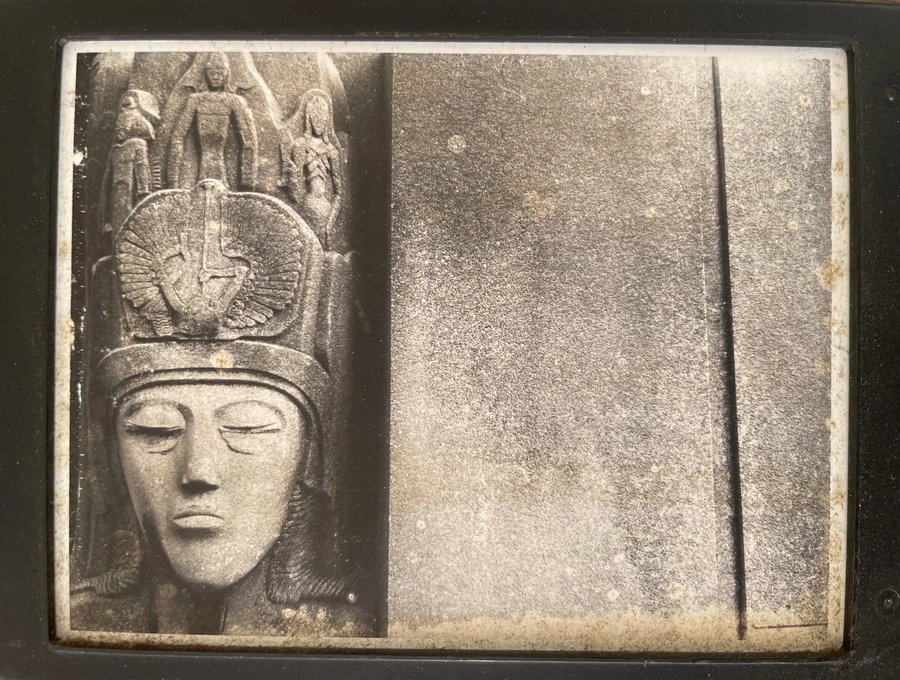
Elsa Rouy A Heart of lightness
4 Dec 2026 – 12 Feb 2027
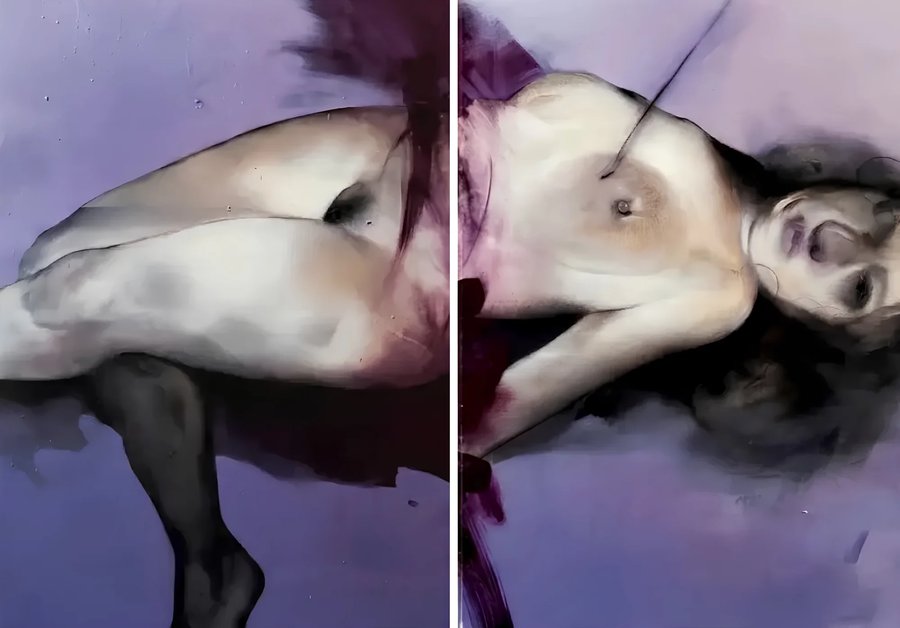
Recent past exhibitions
Christopher Hartmann: You Don't Live Here Anymore
Ended 11 Jul 2026
- Laurent Proux Out Of The Blue Tired dreams There is something deeply unsettling in the work of Laurent Proux. His works are not in this world to comfort, reassure, or entertain; they are not a “comfortable armchair”, quite the opposite. This uneasy feeling is perceptible, though in different ways, in both series of works presented in the artist’s newest exhibition “Out of The Blue” at GNYP Gallery in Antwerp. The artist is in fact accustomed, both in his studio practice and in his exhibitions, to pursuing two distinct paths: paths that on the one hand engage in a subtle dialogue with one another, and on the other produce a friction, an extremely fertile short circuit generated precisely by their evident differences. One trajectory brings together paintings whose subjects revolve around factory interiors where people are engaged in manual work. The images are derived from photographs taken by the artist in real factories and, in some respects, recall an aesthetic close to that of Socialist Realism, though stripped of any ideological rhetorics. They appear to depict small-scale manufactories, places where the human element still plays a central role: they seem to point toward a past that may be on the verge of disappearing. Rather surprisingly, the strongest connection to the present moment emerges in the more oneiric works, precisely where one would normally expect a dimension outside of time. The second series of paintings is populated by strange human figures, sometimes immersed in a natural setting – though always a strange and unsettling one – and at other times placed in interiors suspended somewhere between the familiar and the dreamlike. Part of the unease we experience stems from the artist’s highly theatrical use of light and shadow. The images seem to evoke Paul Gauguin, yet they are produced in a time when no form of exoticism is truly possible anymore, in a world that has become far too small. At the center of everything, however, are the bodies: bent, deformed, almost on the verge of liquefying. These human figures are subjected to strange torsions or bloodless mutilations. At times, we find ourselves wondering how many bodies are actually present within the painting, attempting to solve a visual riddle much as we would when confronted with an image by M.C.Escher. The deformation is obviously beyond the realm of reality, yet I would hesitate to say that it resembles the typical distortions of our dreams – certainly not the dreams that, at least I, used to have until a few years ago. It seems instead to carry something of the digital dimension, of the distortions that might arise from the biases of artificial intelligence. It is as if, in Proux’s paintings, I find proof of something I sense every evening in the half-sleep before falling asleep: that the “reality” we constantly experience during the day through our devices is beginning to infiltrate our dreams as well. In this light the images tied to industry and manufacturing return almost like a lifeline, like a reality that is more manageable, more comprehensible, less invasive in its heavy, metallic, mechanical existence. The painterly resolution is also completely different: where the figures engaged in work possess the stability of realist painting, the deformed bodies are fragmented into a plurality and richness of painterly marks that become almost kaleidoscopic, recalling certain solutions of post-impressionism. Yet the most striking contrast lies in the poses, which become positions – human, and perhaps even moral ones. Opposed to the manual workers are these strange human figures. The bodies are not only deformed: they are lying down, collapsed. Above all, they seem to drag themselves along, exhausted, spent. Even dreams are tired. And dreams are desire. A sensual and sexual dimension is indeed present in the paintings, but it seems to emerge only as a memory, as though we were facing characters destined to repeat an old and now useless script, almost out of duty. The meeting of bodies appears to happen by accident, perhaps only because two figures become confused with one another, melting together like candles in the sun. Text by Antonio Grulli, Bologna, 2026Description
Laurent Proux - Out Of The Blue
Ended 25 Apr 2026
- The Game of Resistance Wojciech Fangor I am an individual who probably never deeply believed in any single organized ideology. I didn’t believe much in God that I was threaten with as a child, because I was much more afraid of my father. I always feared enslavement through superstition, faith, and belonging. Of course, I had periods when I believed in Saint Nicholas (until I was 5). I believed for much longer in the extraordinary nature of the Polish nation, its virtues, abilities, achievements, and the wickedness of all its neighbors. The war period strengthened my belief that humanity is mentally sick, crazy, and fundamentally evil. This belief, combined with my mental problems resulting from the traumatic experiences (during the war), led me to despair and to attempts to relinquish my faith in humanity, in the triumph of good over evil. It seemed to me that there had to be some idea that could create a community of people of good will. Beyond nationality, beyond race, beyond religion. Hence my postwar leftist sympathies. These sympathies were, of course, constantly tested. Contradictions were revealed. Communism versus the Russian Empire. Classlessness versus the incitement of class conflict. The scientific rationality of Marxism versus wild hatred and terror. Acting in the interests of disadvantaged classes while simultaneously building an exclusive bureaucratic class. Protection of cultural goods versus simultaneous destruction of the class that created and maintained them. Lack of trust in the creators of art and science. And, of course, general hypocrisy, deception, and concealing the true image of oneself. The period between 1949 and 1953 was a time of great contradictions for me. The desire for moral and psychological reconstruction after the catastrophe of war, the search for a vehicle that would socially unite people and provide a chance for joint action in this reconstruction – and at the same time a feeling of loneliness and helplessness. Liberation from the fear of my father because of his imprisonment, and simultaneously an awareness of the enormous injustice and harm done to him. My father’s sentence and imprisonment opened up the only opportunity for me to find myself in a psychological position of strength against him. I am free, I have the opportunity to act. The trial and the (death) sentence were a theatrical representation of revolutionary terror. Neither the trial nor the sentence had any criminal or legal basis. It was a trial to intimidate the bourgeois class. I was therefore convinced that just as there were no legal reasons for his imprisonment, there would be no legal possibility of his release. Numerous legal applications for a review of the trial, filed every year, were systematically rejected. Since he had not been legally convicted, he could not be legally released. I was 27 years old then, a completely unknown young painter. My individual and individualistic exhibition at the Jewish Theater at Saski Square in 1949 went completely unnoticed. At the same time, a great discussion erupted in the press that the working masses and their Marxist leadership were impatiently awaiting realistic, understandable, propagandistic socialist art. I knew that my academic education and my talent could offer a proposal for socialist realism based on the classicism and romanticism of the first half of the 19th century. This style, originating in the Renaissance, was widely replicated in churches for centuries. Church art, in turn, was the only art form with which the masses of workers and peasants had contact. I painted several paintings of this kind on current topics. I received awards. I became famous, noticed, and respected by the artistic community, and through that community, noticed and recognized by the government-party bureaucracy. Within a few months, I was befriended by luminaries of the artistic and bureaucratic worlds… After a few paintings that made a mark in the artistic community and among higher-ranking government officials—but obviously didn’t reach the masses of workers and peasants—I switched to poster graphics and exhibitions design. In this field, I also found recognition among my colleagues and powerful officials. This was already in 1954 and 1955. I had discussed my father’s fate several times with (Minister) Motyka and (party secretary) Staszewski. Finally, Motyka arranged an audience with (Prime Minister) Cyrankiewicz. I explained to the Prime Minister that my father had been sentenced to death which was later changed into life imprisonment, without any other real basis, as part of a terror campaign to intimidate the bourgeoisie. That the sentence of 1949 had served its purpose, and that keeping him in prison made no sense. Cyrankiewicz agreed with me, and within a week, my father was released from prison without any trial or search. It was a great psychological triumph for me. For the first time in my life, I felt stronger than my father, I stopped being afraid of him, and in my inner conviction, my entire brief involvement in propaganda art had not stimulated the working class or the peasantry but instead had freed my father from prison and me from the feeling of fear of him. Memories of Wojciech Fangror, not dated. With thanks to Fangor Foundation and Wojciech Fangor Archives at Museum of Modern Art, Warsaw.Description
The Game of Resistance
Ended 28 Feb 2026
Wojciech Fangor The Game of Resistance
Ended 28 Feb 2026