Paris
Hauser & Wirth - Zürich
On now
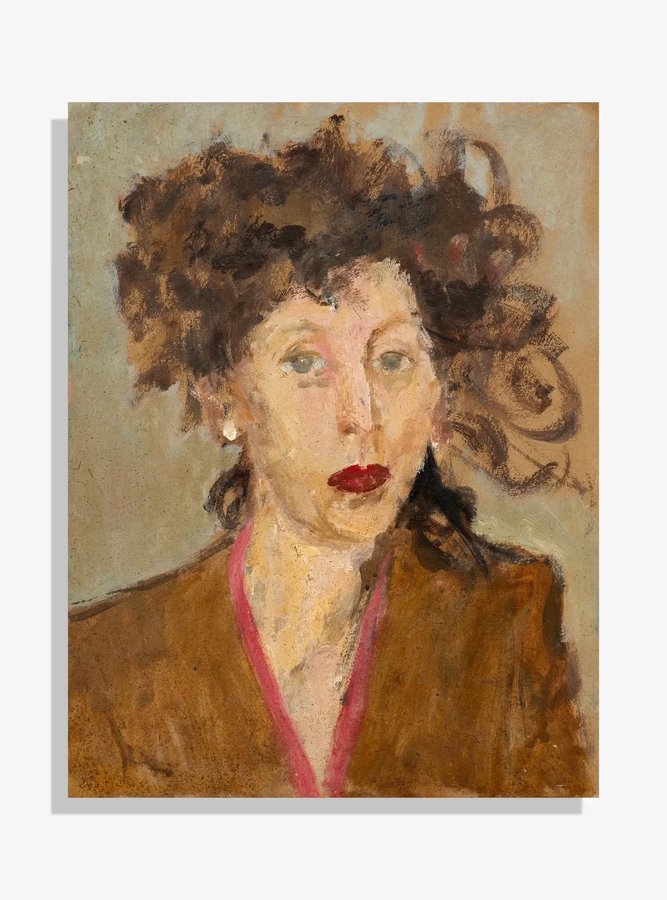
- Coinciding with Kunsttage Basel, this August we present a solo exhibition dedicated to the work of Swiss artist Irène Zurkinden (1909 – 1987) at our Basel gallery. Zurkinden defied easy categorisation, developing a distinctive painterly language that drew on both Surrealism and Neo-Impressionism. Known for commissioned portraits of Basel society, the presentation highlights a more intimate body of work centered on portraits and self-portraits, offering a deeply personal perspective on Zurkinden's life and experiences.Description
Irène Zurkinden
Until 28 Nov 2026
- 'Arcs and Lines. Pure Form in Modern & Contemporary Art' brings together a selection of works by pioneering, cross-generational artists working from minimalism to conceptual art and abstraction. Taking its title from Sol LeWitt’s landmark drawing series, represented in the presentation by a seminal work from 1974, the display traces a shared interest in reduction, repetition and geometric structure through paintings, drawings and sculptures by Jenny Holzer, Roni Horn, Takesada Matsutani, Robert Ryman and Georges Vantongerloo. The presentation is on view through Saturday 19 December 2026.Description
Arcs and Lines. Pure Form in Modern & Contemporary Art
Until 19 Dec 2026
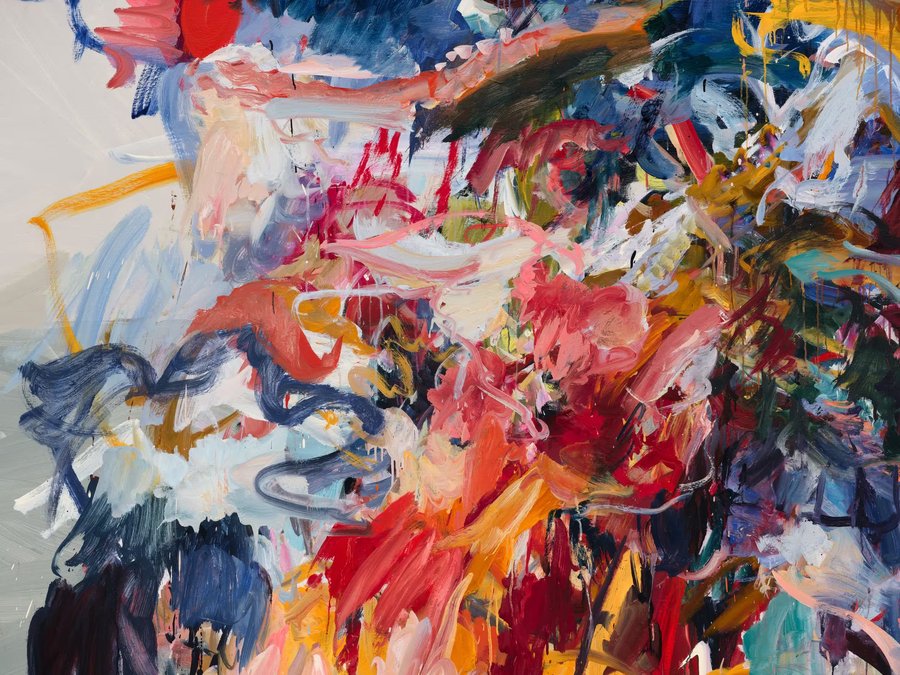
- For more than four decades, Catherine Goodman CBE has developed a unique visual language that communicates a powerful visionary response to her lived experience and memory. In this new body of work, presented in the exhibition ‘The Colour of a Quiet Mind…,’ Goodman combines strongly pigmented oil paint, expressiveDescription
Catherine Goodman: The Colour of a Quiet Mind
Until 19 Dec 2026
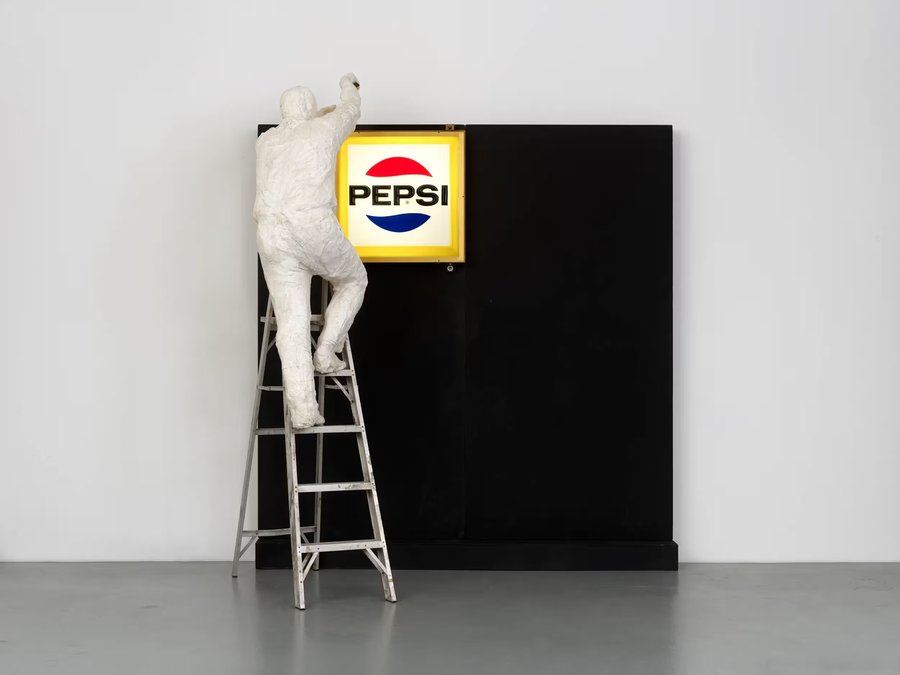
- This work from 1973 is a seminal example of George Segal’s most celebrated series, his narrative tableaus of plaster figures in commonplace urban settings. ‘Man Installing Pepsi Sign’ is a snapshot of a solitary individual at work; by suspending the motion of the worker in time, Segal transforms a mundane activity into a performance permeated with eerie stillness. Segal began creating these life-size cast figures in the early 1960s, and in 1962 participated in Sidney Janis’s landmark ‘New Realists’ exhibition in New York, which introduced Pop Art to the world and included works by artists such as Roy Lichtenstein, Claes Oldenburg and Andy Warhol.Description
George Segal: Icons
Until 19 Dec 2026
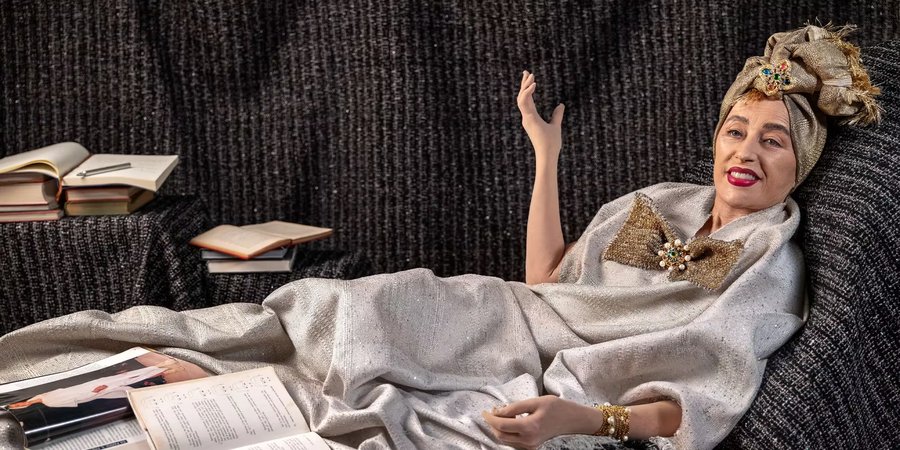
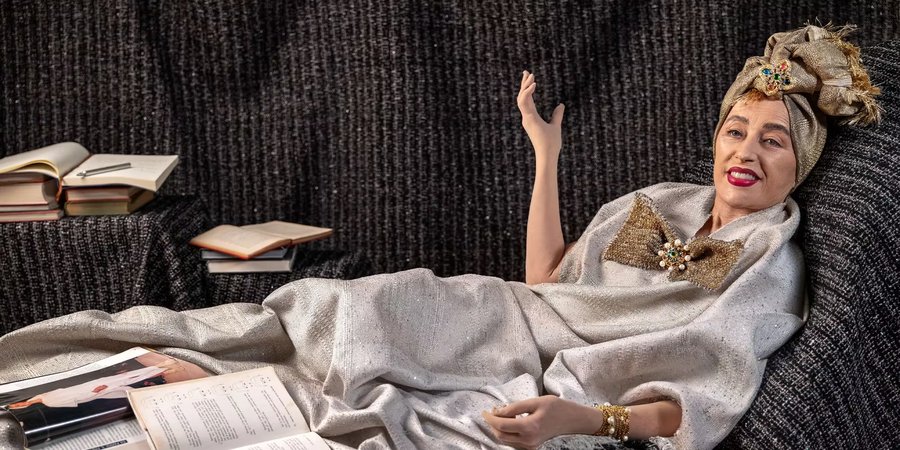
- This fall at Hauser & Wirth London, Cindy Sherman will debut photographic works from her new Fabric Matrons series that explores identity as a continual process of construction over a lifetime. Shaped by a visual vocabulary of elaborately draped fabrics, the protagonists in Cindy Sherman’s images appear to dissolve into their surroundings, heightening the tension between concealment and display to examine how women negotiate visibility in different phases of life. Through these staged scenes, the artist foregrounds the performance—and perception—of both femininity and beauty, probing the societal expectations and enduring pressure to fashion and maintain a public image over time. The works on view mark a sophisticated evolution in herDescription
Cindy Sherman & Lorna Simpson
Until 23 Dec 2026
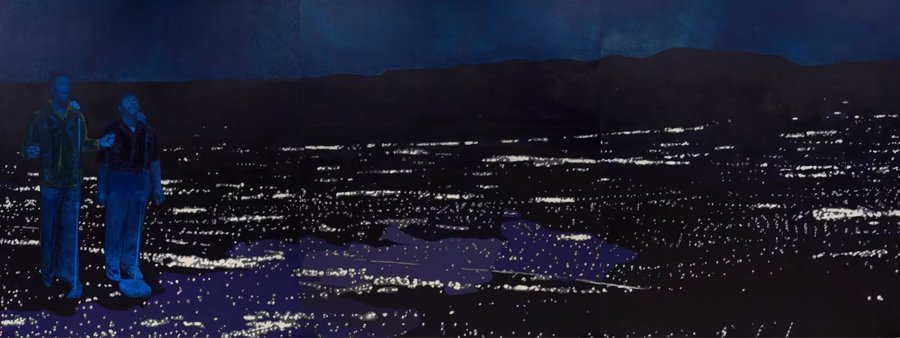
- Lorna Simpson will return to the UK for the first time in eight years with an exhibition of new works at Hauser & Wirth London that reveal the symbiotic relationship between her paintings, collages and wider oeuvre. Coming to prominence in the 1990s for her pioneering approach to conceptual photography, Lorna Simpson’s masterful paintings have become a defining facet of her creative output following her turn to the medium in 2014. From multi-panel compositions and large-scale paintings to sculpture, the works on view are anchored by the artist’s sustained engagement with found defunct photographic news archive photography, particularly from Ebony Magazine.Description
Lorna Simpson Previous & Ongoing
Until 23 Dec 2026
- This fall at Hauser & Wirth London, Cindy Sherman will debut photographic works from her new Fabric Matrons series that explores identity as a continual process of construction over a lifetime. Shaped by a visual vocabulary of elaborately draped fabrics, the protagonists in Cindy Sherman’s images appear to dissolve into their surroundings, heightening the tension between concealment and display to examine how women negotiate visibility in different phases of life. Through these staged scenes, the artist foregrounds the performance—and perception—of both femininity and beauty, probing the societal expectations and enduring pressure to fashion and maintain a public image over time. The works on view mark a sophisticated evolution in her engagement with fashion imagery, with many pieces incorporating fabrics and other elements drawn from Chanel’s extensive archives. Sherman’s dialogue with the fashion house dates back to her Ominous Landscapes series (2010 – 2012), in which her characters wore archival garments and accessories. The new series on view in London embraces an intensified sense of theatrical styling, drawing on the visual codes of editorial photography to disrupt the glamour of fashion with deliberate artifice and fabrication.Description
Cindy Sherman
Until 23 Dec 2026
Recent past exhibitions
- Opening at the gallery’s Limmatstrasse location in Zurich is an exhibition of new sculptures by the artist KOO JEONG A, alongside recent paintings and drawings. The exhibition coincides with the artist’s solo exhibition at Kunsthaus Bregenz, opening January 2026. The work of KOO JEONG A incorporates intersubjective phenomena, digital features and timely imaginaries with the capacity to transform into large-scale sculpture and painting, as well as film, animation, sound and scent, to reinvent the architectural space. The artist’s site-specific reconfigurations open up narrative portals, where the various media are combined with natural elements such as wind or gravity and the electromagnetic field. In this way, alternative realities are conjured not only geographically but also in an astral sense, tracing the poetry that permeates their unique universe.Description
Koo Jeong a - Kangse X
Ended 16 May 2026
- The 60th anniversary of Matsutani’s time in Paris, France is concurrent with the 10th Prix Matsutani, an initiative from the SHŌEN endowment fund founded by Takesada Matsutani and his wife Kate Van Houten with the goal of supporting artists and their work. Additionally, Musée Cernuschi will commission a project with the artist in September 2026. Running alongside Matsutani’s exhibition is a solo show on Tetsumi Kudo (1935 – 1990) in the South Gallery. Kudo was a key player of Tokyo’s anti-art movement as well as the nouveau realisme movement in France. Though the two artists were part of different movements, they are united by their relocation from Japan to Paris, France, in the 1960s, where they became acquainted with each other, and by their rejection of established modes of making. A key member of the Japanese avant-garde collective the Gutai Art Association (1954 – 1972) in the 1960s, Matsutani moved to Paris in 1966 after receiving a grant from the French government as a result of winning first prize in the 1st Mainichi Art Competition. As part of the Gutai group, the artist experimented with vinyl glue by manipulating the substance to create bulbous and sensuous forms reminiscent of human curves and features. By applying glue to canvas, letting it partially dry to form a skin and then inflating it with his own breath using a straw or hairdryers and fans, Matsutani brings the material to life. Continuing this form of artmaking in the present day, he incorporates acrylic paint in the new body of work on view to turn the glue a deep purple—a color he began exploring in the last five years. Transforming the viscous material into solid, three-dimensional forms, the artist attempts to stop time and capture a suspended moment. In Gutai fashion, Matsutani challenges traditional painting by incorporating unconventional, everyday materials into the surface of his vinyl works, such as a piece of rope in ‘Propagation 25-A 繁殖25の A’ (2025), creating a tension between flatness and sculptural protrusion. This is complemented by the assemblage work ‘A pillar 柱’ (2025), which proposes an inverse of his canvases. Here, a wooden stick forms the base of this sculpture, onto which Matsutani applies glue, ink and acrylic. Together, his works initiate an investigation between soft and hard material forms. A selection of recent vinyl works allows viewers to trace the powerful evolution of the artist’s meditative and methodical practice, including ‘Work – P’ (2009 – 2013)—presented as a completed work for the first time since its conception during a performance at the Centre Pompidou in Paris, France, in 2019. Historic works on display provide an insight to Matsutani’s time living in Paris in the 1970s, where he was working with limited resources and was compelled to reconsider the essential tools of artmaking. The artist began creating works composed of vast expanses of metallic black graphite on mural-size sheets of paper built up with painstaking individual strokes, known as his Streams series. Stretching across two walls, ‘Stream-2’ (1978) acts as a time-based record of his mark-making, a ritualized act that has a performative gesture. Applying graphite outside of its conventional use for flat and often wall-mounted works, Matsutani heroes the material in ‘Magic Box’ (1988). With the graphite-marked cotton cloth that connects the wooden cube to a column that reaches the gallery’s ceiling, the artist furthers his interplay of soft and hard components. Exemplifying the Gutai spirit to ‘do what no one has done before,’ Matsutani has reimagined graphite and vinyl glue as artistic tools, pushing the boundaries of their uses to the limits. One of the last surviving members of the Gutai group, he turned 89 on 1 January 2026, yet he still maintains a daily studio practice, evident in the relentless energy that continues from his historic works to the new canvases on view.Description
Shifting Boundaries
Ended 18 Apr 2026
- “Untitled” (Go-Go Dancing Platform) consists of a painted blue platform framed by 48 light bulbs. When the work is installed, a dancer may appear once a day, at unscheduled times—wearing silver lamé and listening to music of their own choosing through headphones—ascending the platform for brief unchoreographed performances in which they are only dancing for themselves. The dancer draws forth surprise, desire and projection. When unoccupied, the platform remains a sculpture defined by the possibility of activation, evoking art-historical precedents and ‘isms’—particularly minimalism—while subtly challenging them. While the work is linked to a time of profound absence and grief, it radiates with joy, physicality and emotional openness, qualities that course through and reinforce the delicate complexities of Gonzalez-Torres’ practice. As Humberto Moro, Deputy Director of Program at Dia Art Foundation, said in a recent film on the work, ‘It reminds us that beauty can be ephemeral, that performance can be a private act, and that care, like memory, requires effort. “Untitled” (Go-Go Dancing Platform) still feels urgent because it deals with timeless questions. Who gets to be seen? Who is allowed to perform and for whom? What do we do with our desire, attention, waiting? Felix Gonzalez-Torres gives us art that doesn’t conclude but continues again and again in each encounter and he leaves space for us not just to look but to feel and to remember.’ Over the past three decades, “Untitled” (Go-Go Dancing Platform) has been realized in numerous institutional contexts, each presentation shaped by its particular time and place, allowing the work to unfold anew with every iteration.Description
Felix Gonzalez-Torres - Untitled (Go-Go Dancing Platform)
Ended 18 Apr 2026
- His work gives shape to these phenomena, drawing on Chinese cultural and philosophical traditions, as well as the influence of poets Robert Lowell and Emily Dickinson. Nostalgia, loss and wonder are distilled into compositions that suggest the vastness of the theater of life: presence and absence, prosperity and decline, grand histories and individual emotions gyre in the tidal dramas of human experience. The family photographs Qiu found among his late father’s belongings form the psychological engine of this new body of work. The stories of love and loss captured in heretofore undeveloped rolls of silver-halide film, peeling and oxidized from the passage of time, set in motion the artist’s broader consideration of the cycle of life. The exhibition’s title, ‘The Theater of Wither and Thrive,’ captures the drama inherent in this cycle, and references Qiu’s familial connections to the stage: his grandparents were directors of the Yongfeng Society, the legendary Beijing theater troupe where his father was a painter and set designer. Many of the works on view at Hauser & Wirth—including the painting of a dense red forest that greets visitors entering the gallery and is the exhibition’s namesake—make use of a distorted ground and scale to evoke the flatness of the theater backdrops so familiar to Qiu’s childhood. Natural and architectural elements of the artist’s hometown in China intertwine with visages of both relatives and otherworldly humanoid monsters, forming hallucinatory scenes across the paintings and works on paper. Flowers and fallen petals recur throughout the works, reminders that ecological renewal is a natural consequence of death, that loss gives rise to growth. In four large-scale paintings along the gallery’s back wall, Qiu explores that eternal terrestrial and emotional story through the passage of the four seasons, connecting cyclical transformations from the natural world with the human experience.Description
Qiu Xiaofei - The Theater of Wither and Thrive
Ended 18 Apr 2026
- At the core of ‘Don McCullin. Broken Beauty’ is a group of McCullin’s most recent works—images of Roman sculptures that he has captured in museums around the world that have not previously been shown in the UK. The images have an extraordinary physical presence, the sculptures, broken survivors from the ancient world, offer, perhaps, a quiet solidity that is a counterbalance to the violence and chaos that McCullin has so famously documented since the 1950s.Description
Don McCullin - 90
Ended 12 Apr 2026
- The exhibition’s title is taken from Baldwin’s 1964 introduction to a Beauford Delaney exhibition and recalls the writer’s reflection on a window through which ‘everything one saw… was filtered through leaves.’ Ligon draws upon Baldwin’s description of light ‘as blue as the blues when the last light of sun departed,’ to consider how color and language can merge to create a kind of figuration. In these new works, blue operates as more than a color; it conveys mood, time and emotion. It evokes the twilight hour between visibility and darkness; it conjures the emotional register of Blues music. For Ligon, as for Baldwin, light becomes a metaphor for perception itself, a means of reckoning with history, intimacy and the power of art to reveal quieter truths. In the front gallery at 18th Street, Ligon presents ‘Blue (for JB),’ a new series of large-scale works on paper that build on ideas first explored in his Stranger paintings, text-based works drawn from Baldwin’s 1953 essay ‘Stranger in the Village.’ For this new body of work, Ligon begins with rubbings made on thin sheets of Japanese Kozo paper placed atop studies he made for his Stranger paintings. This process leaves behind traces of word fragments and shapes that record the convergence of image and text. Ligon then enlarges these rubbings as silkscreens on blue grounds and applies water to the surfaces, allowing the ink to flow and blur across the paper. The resulting works oscillate between legibility and abstraction, transforming Baldwin’s words into something atmospheric and enveloping. The second gallery features prints made over the past three decades, charting the development of Ligon’s printmaking practice from the early 1990s to today. Among the works on view are ‘Untitled (Four Etchings)’ (1992), a suite of four prints using text from prominent Black authors Zora Neale Hurston and Ralph Ellison; ‘Self-Portrait at Nine Years Old’ (2008), from a series where Ligon used images of his childhood music idols, like Stevie Wonder and James Brown, to represent himself through techniques like pulp painting and screen printing; and ‘Untitled (Condition Report for Black Rage)’ (2015), a silkscreen and digital print featuring a marked-up image of the cover of the seminal 1968 book ‘Black Rage.’ Taken together with the new works in the front gallery, this presentation underscores the breadth of Ligon’s engagement with different media and reveals how, across decades, he has used printmaking to test the limits of language and representation. [LINK text='View more' href='https://www.hauserwirth.com/hauser-wirth-exhibitions/glenn-ligon-late-at-night-early-in-the-morning-at-noon/']Description
Glenn Ligon - Late at night, early in the morning, at noon
Ended 4 Apr 2026
- Giacometti’s artistic practice emerged between two worlds: the high mountain valley of his Swiss childhood and the restless metropolis of Paris. Stampa, with its steep slopes and narrow horizons, offered some of his first encounters with people, light and landscape. Born in 1901 in the Bregaglia Valley to Annetta and Giovanni Giacometti—one of Switzerland’s leading modern painters, renowned for his luminous Alpine scenes—Alberto was immersed in art from a young age. Early works on view from 1918 through the 1920s reveal his early fascination with the human form. Tender sketches of his mother and father, made when he was just 17, alongside drawings of local landscapes—at once austere and intimate—establish the subjects that would remain a quiet, lifelong source of inspiration. Drawing from his father’s post-impressionist influences, Giacometti’s artistic language would continue to evolve. This is evident in a significant early self-portrait from 1920 and a painting of the local mountain scene ‘Monte del Forno’ (1923), where the young artist fused the structural clarity of Paul Cézanne with the monumental gestures of Ferdinand Hodler. Yet, Giacometti was determined to escape what he considered a provincial legacy and, seeking independence, he left for Paris in 1922. In Paris, Giacometti reinvented himself at the heart of the avant-garde. The Cézannean model, when applied to sculpture, soon reached its limits, and in numerous mountain drawings of 1922–23, the artist grappled with a pressing inner conflict: whether he should be a painter or a sculptor. Giacometti’s immersion into the current trends of avant-garde sculpture during the 1920s and ‘30s soon carried him far away from his beginnings toward cubism, tribal and archaic art and, finally, surrealism. His decisive turn towards sculpture would eventually lead him to the creation of his visionary elongated, textured figures, focusing on a deepened analysis of figuration and existential questions of the human psyche represented in three-dimensional space. During the Second World War, Giacometti retreated to Switzerland, living in Geneva and returning to Paris again once the war had ended. During this period, he continued to visit and work in his Stampa studio and Maloja, incessantly portraying those dearest to him—his mother, his brother Diego and his wife Annette (whom he married in 1949)—whilst honing his singular artistic vision. Bronze sculptures of Diego, such as ‘Tête au long cou (Head with Long Neck)’ (ca. 1949) and ‘Petite buste de Diego (Small Bust of Diego)’ (1954), together with tender works on paper of his wife and mother embody the dialogue between departure and return, between cosmopolitan Paris and the rooted intimacy of home. While his Paris studio buzzed with visitors, Stampa remained a private sanctuary where he read, sketched and reflected in solitude. The two realms seldom intersected, yet one figure bridged them: photographer Ernst Scheidegger. Granted rare access to the artist’s private world in Stampa and Maloja, Scheidegger’s images, several of which are included in the exhibition, go beyond documentation. They capture the texture of Giacometti’s daily life—moments of concentration at the easel, quiet exchanges with Annette and his mother, and the contemplative atmosphere of domestic interiors. These frequent returns in the last two decades of his life, prompted by his mother’s aging and his own declining health, brought renewed creative energy. His mountain drawings show an artist both visually and thematically returning to the landscapes that first shaped him. These late drawings and paintings testify to his enduring commitment to observation and form, and to the constant of home in Giacometti’s career. Scheidegger’s photographs from the 1950s and ‘60s also trace the landscapes of the Bregaglia and Engadin valleys—the mountains, paths and changing light that defined Giacometti’s enduring sense of place. Together with the works on view by Giacometti, the exhibition forms a visual bridge between the artist’s public and private selves: between the modernist of Montparnasse and the son of the Alps.Description
Alberto Giacometti: Faces and Landscapes of Home
Ended 28 Mar 2026
- Sophie Taeuber-Arp is one of the most important artists of the 20th-century avant-garde. Dismantling conventional oppositions between Dada and geometric abstraction, fine art and utilitarian objects, ‘La règle des courbes’ shows how Taeuber-Arp boldly engaged with the cultural context of international modernism. The title of the exhibition refers both to a rule as an organising principle and to an instrument used to measure lengths and distances like a ruler. The works display Taeuber-Arp’s exploration of the curve, what it can measure and how it can calibrate the space between work and world. Rather than consider her abstract language as self-referential and cut off from the world, Taeuber-Arp developed a formal lexicon that spoke to the world and was of its environment, leaving a body of work that invites us to rethink the driving impulses of early abstraction and that still resonates today. The exhibition will be accompanied by a bilingual publication, ‘Sophie Taeuber-Arp: La règle des courbes / The Rule of Curves,’ from Hauser & Wirth Publishers, featuring new critical texts by Briony Fer and Jenny Nachtigall that shed new light on Taeuber-Arp’s artistic output.Description
Sophie Taeuber-Arp - La règle des courbes / The Rule of Curves
Ended 7 Mar 2026