Maastricht
JAN VAN EYCK ACADEMIE
On now
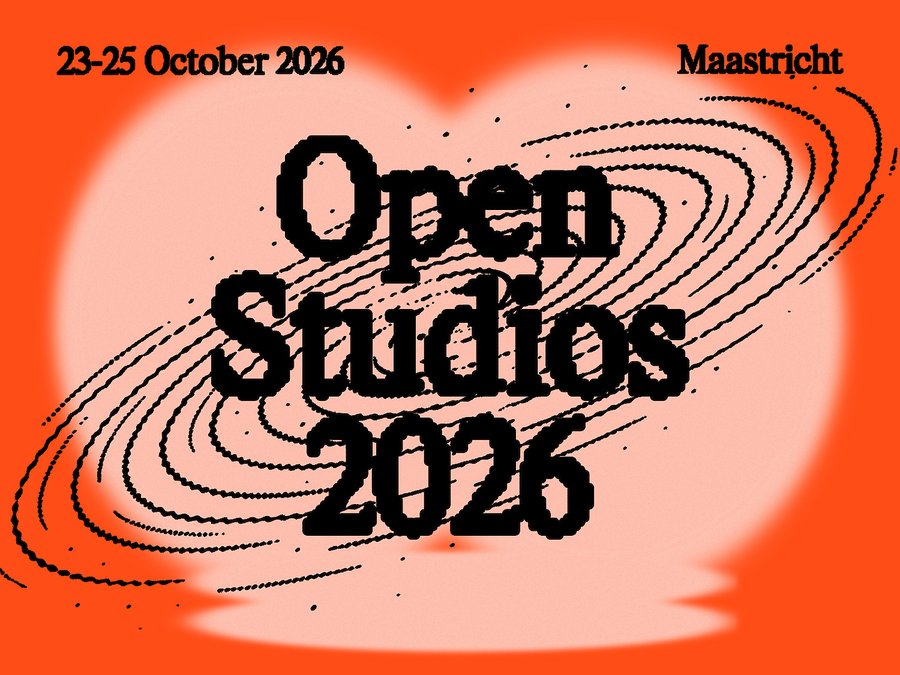
- artistic practices of the Jan van Eyck 2026 cohort – an international group of some 40 artists, including duos and collectives, designers (fashion, food, graphic, social), writers, architects, and other researchers and critical thinkers, all displaying the processes and outcomes of their residency period. Mark your calendar and join us at the Jan van Eyck Academie for a 3–day marathon of thought-provoking installations, presentations, performances, screenings, readings, tastings, and more. The public will be able to explore the academy gardens, taste various treats prepared by the Food Lab, discover a plethora of innovative materials at the Future Materials Lab, and learn all about what goes on in the vibrant Printing & Publishing Lab, and other academy spaces.Description
Open Studios 2026
Until 25 Oct 2026
Recent past exhibitions
- Throughout the four sessions, the seminar participants will explore the emerging science from the deepest layers of frozen ecosystems, the ecologies of melting glaciers and ice caps, the geopolitical reconfigurations of the arctic and antarctic regions, and artistic invitations to defend, mourn, and listen to these disappearing ice worlds. This seminar explores melting as a political condition, an atmospheric reconfiguration, and as a possibility to sense how human and more-than-human communities are capable of reaffirming life in these conditions.Description
Juan Pablo Pacheco: Water Ecologies ~ Melting
Ended 6 May 2026
- This reading group, Befriending Finitude and Impermanence, attends to endings and impermanence in our lives and artistic practices. Readings will be assembled that invite reflections on how we relate to finitude and mortality, and how these relationships shape the ways we practice, look after one another, and think about what we might leave behind. Readings may include, among others, queer perspectives on companionship for the dying (Staci Bu Shea), on reclaiming death rituals (Nina Lykke) and forming death communities (Every Ocean Hughes). The reading group is facilitated by [LINK text='Valentina Curandi' href='https://janvaneyck.nl/participants/valentina-curandi'] (she/her), an art practitioner working with performance and writing, and a death companion in training. As a PhD candidate in Artistic Research with MERIAN, her research explores how questions of death and dying intersect with the wishes and concerns of art practitioners reflecting on their own mortality. [LINK text='Maastricht Experimental Research in and through the Arts Network' href='http://www.merianmaastricht.nl/'] (MERIAN), collaboratively initiated by the Jan van Eyck Academie, Zuyd University of Applied Sciences and Maastricht University, sets out to invite established artists and academics to engage in research in between making and thinking. As a PhD trajectory, the programme provides an institutional space for the development of new norms and forms of embodied knowledge. Mobilizing the powers and fragilities of artistic and scientific practices, selected participants engage in innovative methods and styles of empirical methods. MERIAN renegotiates relationships between existing cultural and knowledge institutions and addresses urgent matters of societal concern.Description
Merian Tue 21 APR Reading Group: Befriending Finitude and Impermanence with Valentina Curandi
Ended 21 Apr 2026
- The Jan van Eyck Academie has the pleasure of hosting the annual Maastricht University's MACCH conference, this time organized collaboratively by MACCH and MERIAN. With its focus falling on emerging networks of care around contemporary artists’ estates and legacies, the 2–day programme gathers a wide array of speakers – academics, researchers, artists, and others – in exploration of cultural heritage that is left behind by artists, as interpreted, contextualized and appreciated by art history, as well as by museums, and the art market. Many contemporary artists are now leaving behind significant material and immaterial legacies. Increasingly, their estates are approached by private market actors such as gallerists, consultants, lawyers, and financial advisors, also in the context of what has become known as ‘the great wealth’ transfer of significant assets between the baby boomer generation and their heirs. At the same time, there are artists’ estates that require care despite not being considered immediately financially valuable or being in the public eye. This conference starts from the premise that to ensure the preservation of contemporary art in all its diversity we first need to understand who cares: who owns, controls and manages contemporary artists’ estates and what legacies are being cared for, how and why? We aim to investigate who speaks authoritatively and legitimately about artists’ legacies (politics), how these legacies can be effectively shared and put to common uses (technologies), and how they can critically inform effective and affective networks of care for art and cultural heritage (ethics), now and in the future. Among the questions that conference contributions addresses, we would like to engage in reflection and debate on the following: What are the institutional politics of caring and sharing in the preservation of contemporary artists’ estates and how are they publicly and privately contested? How are responsibilities assumed by and distributed among the different actors (artists, collectors, dealers, galleries, heirs, local/regional/national governments, museums, etc.) involved? What different public and private (legal) technologies of caring and sharing are employed in the making of artists’ legacies and how can contemporary artists’ estates best make use of them (copyright, last wills and testaments, etc.)? What are established ethics in the caring for and sharing of contemporary artists’ estates and how could alternative norms and forms yield relevant affects and effects for artists’ legacies?Description
MACCH/MERIAN – On Leaving: Contemporary Artists' Estates and Legacies Conference
Ended 21 Mar 2026