Bonn
Kunstmuseum Bonn
On now
- To mark the 100th anniversary of GEDOK, the Kunstmuseum Bonn is honouring the organisation’s exceptional commitment with an exhibition featuring a selection of prints that have been donated to the collection since 1988. Founded in Hamburg in 1926 by Ida Dehmel, GEDOK was the first association dedicated to promoting women artists in the German-speaking world. Its aim was to bring together women across all artistic disciplines, improve their working conditions and enhance their visibility in the public sphere.Description
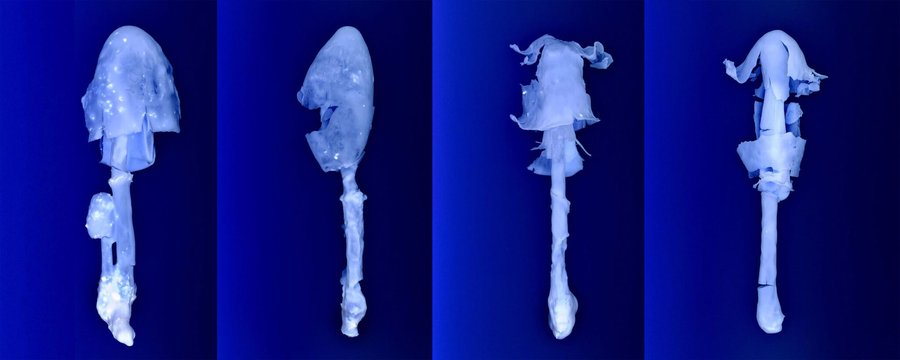
100 Years of GEDOK Donations to the Kunstmuseum
Until 25 Oct 2026
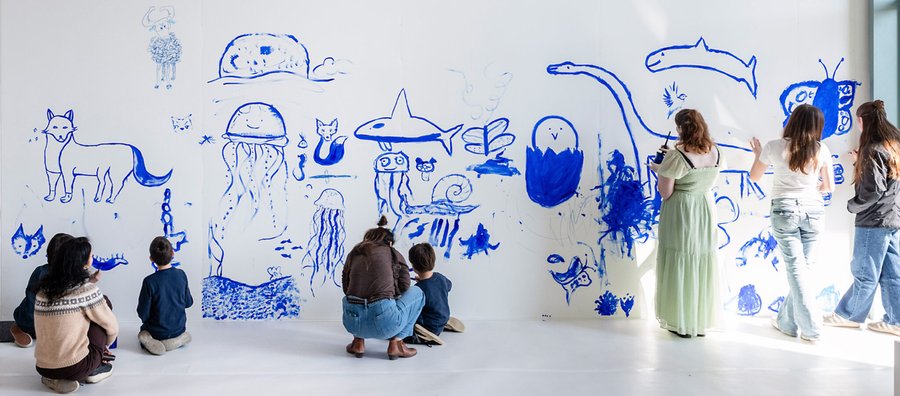
- Children and young people are invited to transform the museum space, through painting, into a wild and species-rich animal kingdom. Inspiration is provided by animals from the neighbouring Museum Alexander Koenig. Penguin, brown hare, rat, polar bear, pigeon, weevil or antelope: which animals will move into the Kunstmuseum is not yet known, as this will also be decided by the children and young people who participate collaboratively over the course of the nine months. At the heart of the museum, a painterly environment filled with animals — and with their traits, personalities and particularities — grows continuously. Their depictions speak of strength, self-efficacy, responsibility and of being embedded within a complex and multifaceted cosmos. Everyone is invited to help shape this diversity with paint and brush. The painted wall sections can be renewed; the animals may migrate out of the museum to create new places for themselves and, in turn, involve children and young people there in continuing painterly processes. The gathering of animals encourages children and young people to experience beauty, strangeness, danger and vulnerability within a participatory space shaped collectively.Description
Gathering of the Animals A Collaborative Painting Room
Until 1 Nov 2026
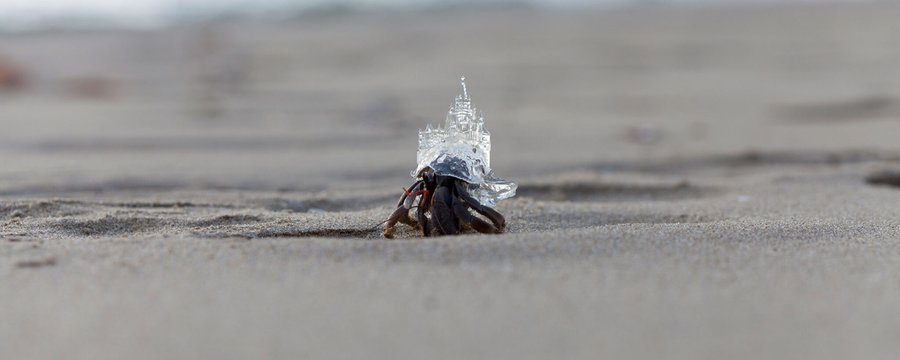
- AKI INOMATA (born 1983 in Tokyo; lives and works in Tokyo) understands her work as a bridge for becoming-with between humans and other living beings. To this end, she collaborates with a range of non-human organisms. Following exhibitions at the Museum of Modern Art (MoMA) in New York, the Musée d’arts de Nantes, and the National Museum of Modern Art in Kyoto, INOMATA’s works are now being presented in a museum in Germany for the first time. Three series from recent years are on view in a gallery at Kunstmuseum Bonn. In Why Not Hand Over a ‘Shelter’ to Hermit Crabs?, begun in 2009, INOMATA provides hermit crabs with 3D-printed shells topped with miniature buildings from cities around the world. Through this series she not only reminds us of the interconnectedness and becoming-with of humans, animals and technology, but also raises questions about environmental change, the meaning of home and nationality, and the consequences of displacement and flight. For the video work Think Evolution #1: Kiku-ishi (Ammonite) (2016–17), INOMATA reconstructed an ammonite shell based on fossil forms. Ammonites became extinct at roughly the same time as the dinosaurs and are closely related to present-day octopus. By filming the encounter between an octopus and a 3D-printed replica of the ammonite shell, the artist initiates a dialogue that spans millions of years of evolutionary development while simultaneously incorporating advanced technological processes. For Memory of Currency (2021–25), INOMATA draws on the defensive reaction of pearl oysters. When foreign objects enter their shells, the oysters coat them with layers of nacre, forming pearls. Shells were used as early forms of currency in many parts of the world. INOMATA inserts portraits of figures who have appeared on banknotes into the shells. As the shell encloses them, it evokes the paradoxical relationship between the exchange of goods, money and nature.Description
Aki Inomata Mit-Werden
Until 1 Nov 2026
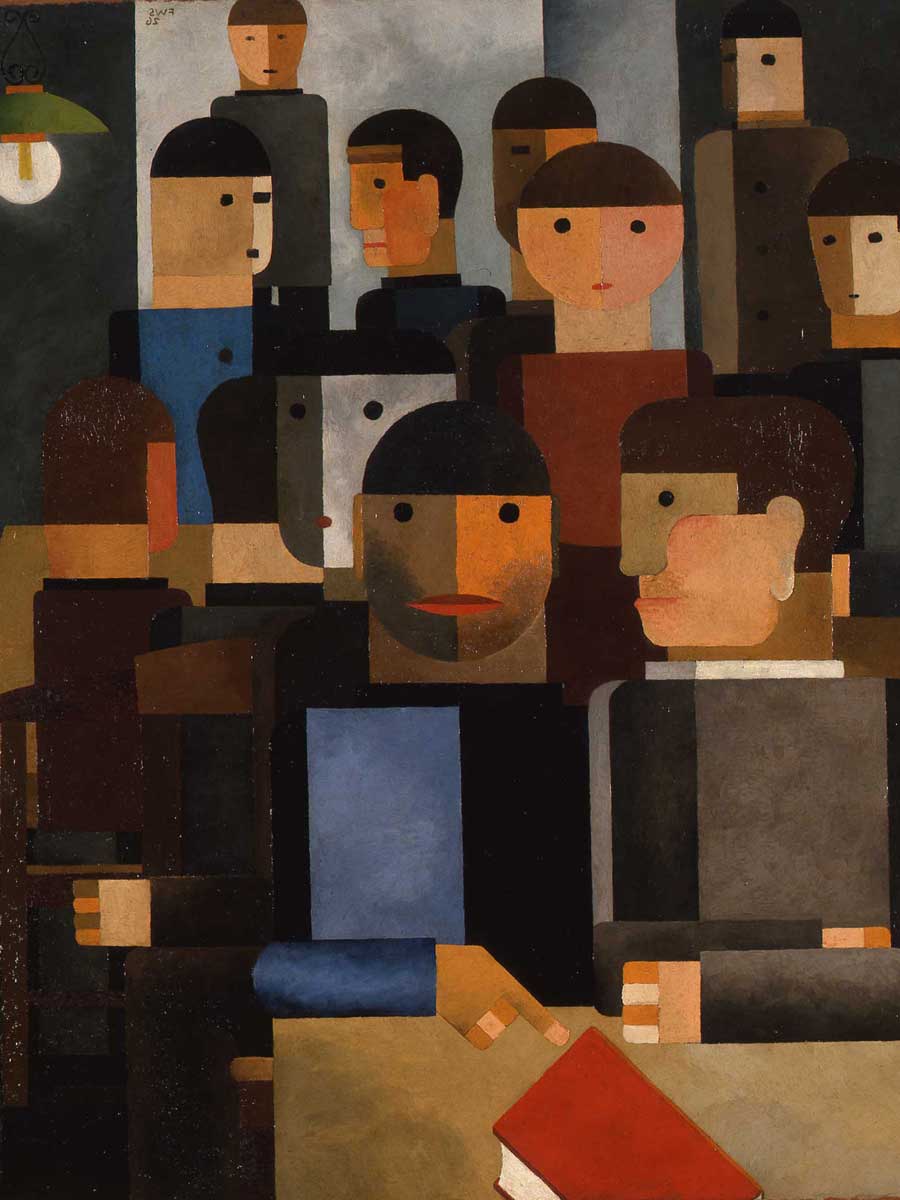
- Art is always closely linked to the lives of artists, their families and art collectors. The new collection presentation in the area of classical modernism traces these paths and stories. While the presentation of selected work provenances makes historical developments and their concrete effects on individual people and their lives comprehensible, exemplary biographies create a lively and multi-faceted picture of the period in which the artworks on display were created. In addition to popular collection highlights by the well-known Rhenish Expressionists, the new presentation shows rarely exhibited works by Marta Worringer, Käthe Kollwitz, Olga Oppenheimer and others.Description
Faces and Narratives / The Collection of Classical Modernism - August Macke and the Rhenish Expressionists
Until 19 Sept 2027
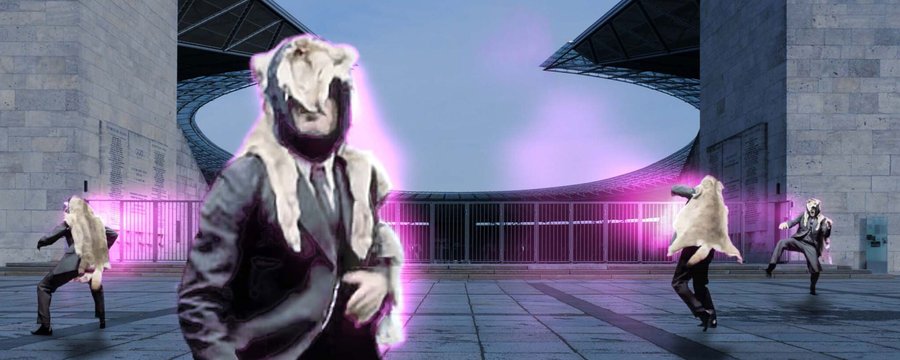
- In its ZOOM IN series, the Kunstmuseum Bonn spotlights individual artists from its collection. For each presentation, the artists occupy an entire gallery space. The displays are complemented by artist talks and events. You can find the latest information in our DigitalGuide. As an opening highlight, the museum presents Hito Steyerl’s work Animal Spirits. The immersive installation evokes a mysterious, alien planet or a cave-like environment. Projections of cave paintings adorn the walls, while illuminated glass vessels containing plants hang from the ceiling like celestial bodies. Using artificial intelligence, the artist has brought historical cave paintings to life. Nature and technology merge into a dense field of sensory impressions, composed of rhythmic sounds and animal imagery. At the centre of the installation is a film entitled Animal Spirits – a compilation of reality TV, documentary and animation. In it, the artist explores various social developments, including the rise of cryptocurrencies, the significance of culture during pandemics, and the distinctive features of different agricultural systems. The term ‘animal spirits’ was coined by the British economist John Maynard Keynes (1883–1946). In his 1936 book, he described the influence of emotions such as greed and fear on economic dynamics. Steyerl transposes this theory to the present day in her film: for instance, the shepherd and activist Nel warns of the spread of wolves, which here serve as a metaphor for the brutal competition of the free market. Hito Steyerl (born in Munich in 1966; lives and works in Berlin and Munich) is regarded as one of the most influential contemporary artists. Her reflections on media theory have provided important impetus for current debates, while her work offers a critical examination of ongoing technological advance and the power structures that shape contemporary society. The Installation is on permanent loan by KiCo Collection.Description
Zoom in Hito Steyerl: Animal Spirits
Until 31 Dec 2027
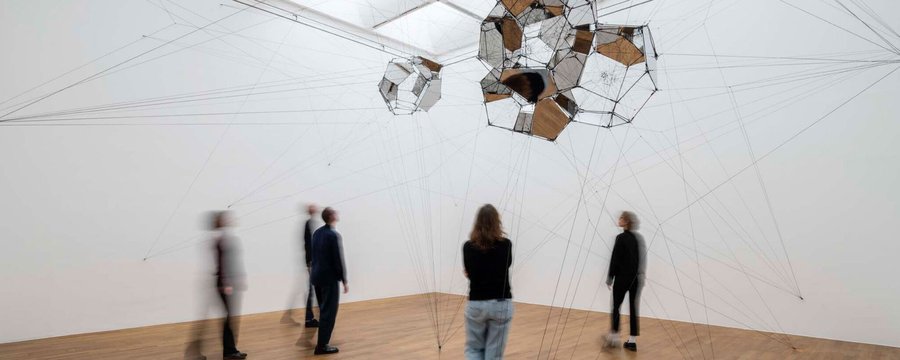
- The new collection presentation transforms the upper floor of the Kunstmuseum into a vibrant journey through the exhibits: works from the early 20th century and the post-war period resonate with examples of contemporary art. This gives rise to four thematic areas : Transparency & Concealment, Community & Division, Vulnerability & Resistance, and Micro- & Macrocosm. The term ‘force field’ occurs in both physics and sociology and describes the dynamic interplay of bodies in space and the interactions between individuals. By posing pressing questions about life, the exhibition highlights the particular social potential of the Kunstmuseum Bonn’s collection. At the same time, it aims to provide inspiration, opening up new perspectives on the future in times of multiple crises. Alongside exhibits from the museum’s own collection and permanent loans, the presentation is complemented by a new production and selected loans, such as those from the Federal Art Collection. In this way, the museum’s own collection is presented as an open structure that interconnects with other collections and continues to grow.Description
FORCE FIELDS New Perspectives from the Collection
Until 11 Jun 2028
Coming soon
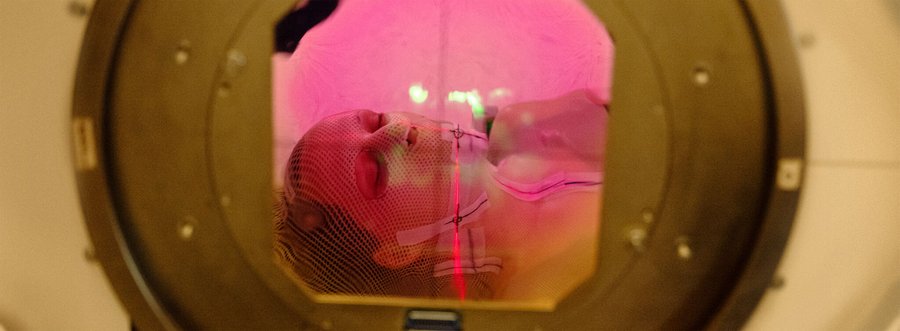
- The Kunstmuseum Bonn is presenting, for the first time, the latest series of works by the internationally renowned photographer and documentary filmmaker Herlinde Koelbl. The exhibition brings together portraits and interviews with 40 people living with cancer and focuses on one of the most common diseases of our time. With her new project, Koelbl breaks social taboos and offers a poignant artistic perspective on illness, vulnerability and hope. The starting point for the work is her own battle with cancer in 2019–20. During her treatment, she was particularly struck by the markings used in radiotherapy – the so-called radiotherapy crosshairs, which serve to precisely align the radiation beams. The artist recognised a surprising connection to her earlier project “Targets”, for which she had photographed military shooting targets and crosshairs: there, they symbolise killing; in cancer treatment, they symbolise survival. For the project, Koelbl spoke to people of different ages and backgrounds about their experiences with the disease. The resulting interview recordings, together with the striking portraits, bring to light personal stories of fear, hope, loss and renewed confidence. The result is a moving panorama of human vulnerability and strength – and a plea for a more open societal approach to cancer. Herlinde Koelbl is one of Germany’s most prominent contemporary female photographers. She has gained international recognition for her long-term projects, such as “Traces of Power”. She has received numerous awards for her work, most recently the Bavarian Maximilian Order for Science and Art.Description
Herlinde Koelbl: Crosshairs for Life
8 Nov 2026 – 16 May 2027
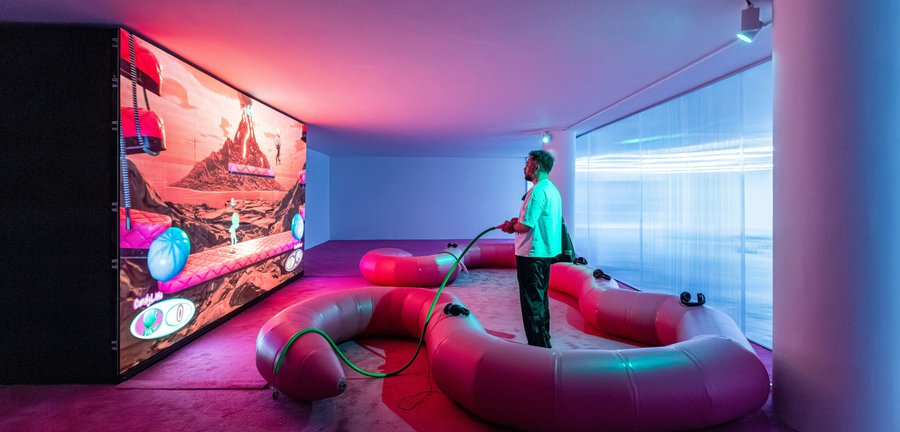
- Between Change and Resistance "Another world is not only possible, she is on her way." (Arundhati Roy, War Talk, 2003) Featuring nine international women artists of colour, the exhibition at Kunstmuseum Bonn explores spaces of freedom in thought and action that open up new perspectives on futures shaped by reconciliation. Against the backdrop of increasingly diverse societies, Kunstmuseum Bonn has invited nine international women artists of colour with personal or family histories of migration to explore very different kinds of spaces of freedom, the threats they face and their potential for resistance. They do so through immersive multimedia installations, most of which have been developed specifically for the exhibition. Reflecting on injustices that they and their families have experienced, the artists bring different perspectives to bear on the Global North and Western democracies. They create spaces in which another world – one shaped above all by reconciliation – comes into view. Visitors enter eight immersive spaces that invite them to become active participants – whether in a gaming scenario set in a shisha bar or by ritually hammering in nails. In this way, the museum creates a space in which shared narratives of mutual understanding can emerge. The works presented in the exhibition encourage shifts in perspective, promote more nuanced ways of thinking and offer new visions of the future. The exhibition highlights the vital role that spaces of freedom play in a democratic society. Artists: Tania Bruguera, Carolina Caycedo, Anna Ehrenstein (co-curator of the exhibition), Patricia Kaersenhout, Mire Lee, Sara Sadik, Cemile Sahin, Ebun Sodipo and Keiken.Description
Freiräume – Spaces of Freedom Between Change and Resistance
26 Nov 2026 – 14 Mar 2027
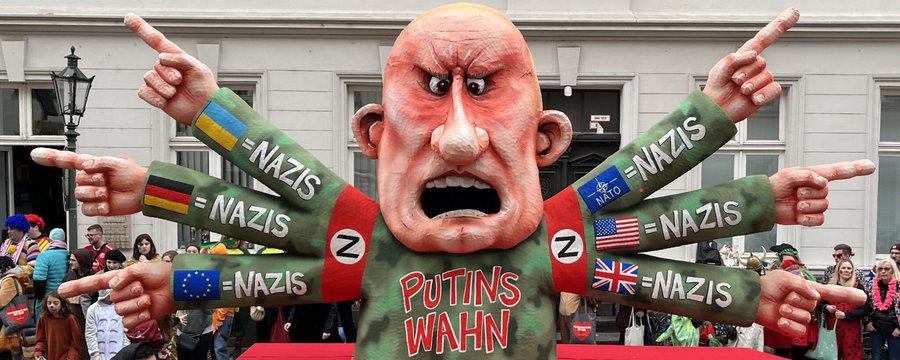
- What happens when social criticism meets artistic exaggeration? Alongside the exhibition project [LINK text='SPACES OF FREEDOM: Between change and resistance' href='https://www.kunstmuseum-bonn.de/en/ausstellungen/freiraeume/'], Kunstmuseum Bonn is presenting a special exhibition devoted to the renowned satirist and artist Jacques Tilly (born in Düsseldorf in 1963). It explores the importance of carnival as a vital sphere of social freedom within our democracy. At a time when the space for public debate is becoming increasingly restricted, the exhibition focuses on the central concern of Tilly’s work: the fight to preserve the freedom of artistic provocation and criticism. Known internationally for his uncompromising and often deliberately shocking designs for Düsseldorf Carnival, Jacques Tilly transforms the museum into a laboratory of criticism and resistance. His floats and figures take aim at political power structures, religious institutions and social injustice – pointedly, humorously and without compromise. In doing so, they spark debates that extend far beyond carnival itself and remind us of the importance of freedom of expression and the right to criticise in an open society. The exhibition features models of Tilly’s large sculptures from several decades, together with design drawings, photographs, films and press reports. It spans works dating from the period of West Germany and the country’s division to recent international responses to his work – ranging from enthusiastic acclaim to protests, attempts at censorship and foreign persecution.Description
JACQUES TILLY: Resistance on Parade
29 Nov 2026 – 14 Mar 2027
Recent past exhibitions
- In the face of wars, postcolonial debates, climate activism, questions of gender equality, as well as growing racism and political radicalisation, issues of mutual understanding, responsibility and solidarity are becoming increasingly urgent. In this context, empathy is gaining in importance. It refers to the ability to engage with the thoughts, feelings and perspectives of others. Empathy can help to recognise differences and enable understanding — between individuals as well as between groups and societies. The works in the exhibition approach the theme from a range of perspectives. They engage with social, cultural and political questions surrounding empathy and show how it is negotiated in contemporary art. The art museum understands itself as a space for exchange, participation and shifts in perspective. A key element of the exhibition is therefore collaboration with people, groups and associations from Bonn’s urban community, as well as the exploration of new formats of encounter.Description
#ifeelyou Dimensions of Empathy
Ended 11 Oct 2026
- On the occasion of her 90th birthday, the Kunstmuseum Bonn is dedicating a room in its collection presentation to the conceptual painter Rune Mields (*1935 in Münster, lives and works in Cologne). Numerous works by the artist have long been a permanent fixture in the museum’s collection. A donation from Prof. Dr Gerhard Pfennig, Bonn, has completed the collection since 2024, from which a selection of works will now be shown in a single artist room in the museum’s collection presentation. The presentation is complemented by several loans from Galerie Judith Andreae, Bonn, which represents the artist. Rune Mields has been working on a wide-ranging oeuvre for over 60 years. In it, she deals with networks of relationships between numbers and signs and fundamentally with the ambivalence between order and chaos, logic and contradiction. She develops highly complex visualisations of various mathematical-geometric systems, with questions about the magic square, Sanju prime numbers, central perspective or the mathematical foundations of Arabic ornaments. The artist is always concerned with ‘gaining clarity about the immanent structures’ of systems, which she translates into a tangible form through her painting. Her approach becomes clear not least in the work Augustinus sagt… (1981/2010), in which a complex ornamentation is linked to a quote from the famous church scholar and Bishop of Hippo (354-430): ‘Everything has forms because it has numbers in it.’ Mields thus refers to a universal organising principle behind the visible. At the same time, her differentiated repertoire of painterly and thematic shades makes it clear that there are no simple truths and that a systematic organising principle always contains its opposite. As the artist herself aptly summarises: ‘The infinite space – expands’.Description
Rune Mields
Ended 17 May 2026
- With Gregory Crewdson, the Kunstmuseum Bonn is presenting one of the most important international representatives of narrative photography. He describes his elaborately detailed shots as ‘Single Frame Movies’. Inspired by the visual language of cinema, they seem to condense the plot of an entire film into a single moment. However, the events shown remain inexplicable, the outcome unknown. The months-long production process is also comparable to that of major Hollywood films. The photographs are created with the help of over a hundred people for casting, costume and set design, lighting and technical work. This comprehensive retrospective presents excerpts from all of the artist’s important photo series from the 1980s to the present day. Over 70 works provide an insight into his fascinating visual world, from his early artistic work to his iconic series Twilight and Beneath the Roses to his more recent acclaimed series, which revolve around the decline of American society away from the big metropolises. Crewdson’s uncanny motifs are timeless and at the same time oppressively topical in the face of economic and social crises – not only in the USA.Description
GREGORY CREWDSON / Retrospective
Ended 22 Feb 2026