Bruxelles - Brussel
Mendes Wood DM
On now
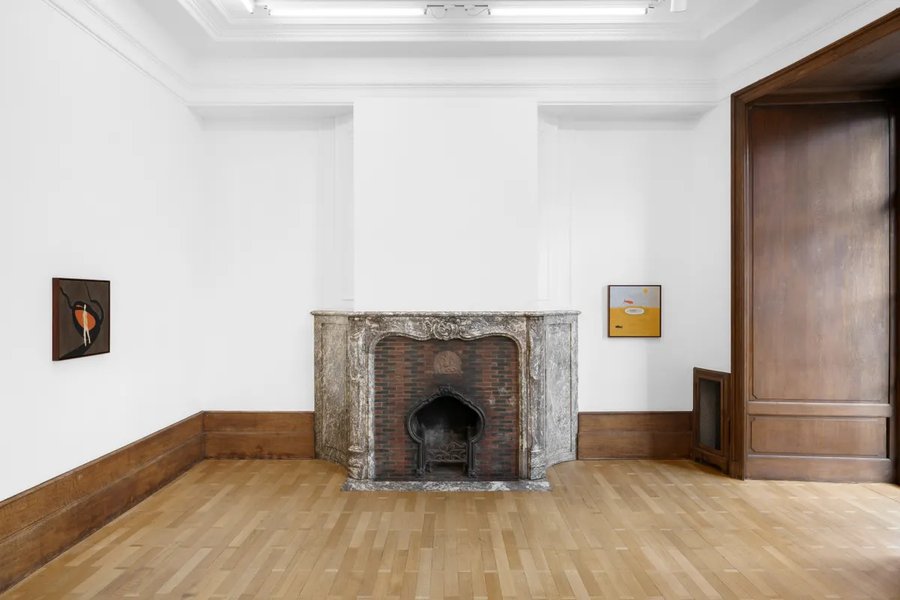
- Marcos Siqueira: Paths of Observation To observe. This is the verb that comes to mind when I think of Marcos Siqueira’s paintings. Perhaps this is because the term recurs so often in our conversations. Siqueira frequently refers to his habit of sustained looking, of close attention, that he carries into his...Description
Marcos Siqueira: Paths of Observation
Until 24 Oct 2026
Coming soon
seven lakes
30 Oct 2026 – 16 Jan 2027
Recent past exhibitions
- Patricia Leite’s gaze is contagious. When she asks her friends to send her photographs that might inspire her to paint, it’s not so much about adopting their point of view as it is about sharing with them her way of seeing the world. Ever since...Description
Travessia Patricia Leite
Ended 10 Oct 2026
- Kishio Suga is one of the most important figures of the Japanese contemporary art scene. After studying painting at the Tama Art University, from 1968 he began working with elements drawn from reality, organic or artificial. Through their manipulation, he sought to express the fundamental nature of the world around him and to make visible the relationships between that world and the individual. The works he developed then were not qualified as installations just yet, but sought nonetheless to move beyond both painting and sculpture. They existed in an unidentified zone of practice and theory, allowing Suga to approach matter outside the constraints imposed by the anthropocentric philosophy inherited from Western thought. Suga’s practice investigates the intrinsic possibilities of matter once it is no longer regarded as inert or passive, but as an interlocutor – if not a subject in its own right. His artistic investigation, alongside that of artists such as Nobuo Sekine, Lee Ufan, Susumu Koshimizu, and Kōji Enokura, was retrospectively associated with an informal movement active primarily between 1968 and 1973 known as Mono-ha, or the “School of Things.” The dual exhibition organized by Mendes Wood DM in Paris and New York City presents two directions in Suga’s work: his two-dimensional work and his installations. The first brings together two types of practice – works on paper and assemblages – each functioning as an investigation into the very notion of space. From the outset, Suga rejects the idea that the two-dimensional nature of a work should imply a conventional relationship to the image. These works are neither representations nor symbolic constructs; rather, they activate the actual dimensions and qualities of a given space. Through the interplay of fullness and emptiness, the alternation of flat, hollow, and relief surfaces, and the relationships formed between forms and the surrounding negative space – often allowing the wall itself to appear – Suga materializes what he calls kyokūse (shared space), in which every element is visibly dependent on the others. In both his two-dimensional works and his three-dimensional situations, Suga’s use of geometry, together with the irregular presence of branches and other organic elements, serves to keep the expression of his own interiority at a distance – an essential principle shared by all artists associated with Mono-ha. By diminishing what has defined the identity of the artist in Western modernity since the Renaissance, Suga opens the possibility for another form of interiority to emerge: that of the mono (the thing) itself, or of space. Rejecting the term “composition” in favor of “action,” Suga seeks to produce a jōkyō (situation): a space in which things appear in their essential condition, beyond both conceptualization and human perception. His installations, always adapted to the sites in which they unfold, highlight the immanent characteristics of space and point to the very place in which the viewer stands. Contorted Positioning (1982 – 2026), presented in New York, and Boundary of Marginal Scenery (1994 – 2026), installed in Paris, do not replicate their original configurations but instead respond to the specific conditions of the exhibition space. In Suga’s practice, the work is never confined to a fixed project; it is conceived as a situation informed by a particular space-time with which the artist actively engages. In seeking to free art from all forms of human fiction, Suga lays the groundwork for an aesthetic that moves beyond the human. Rather than expressing the turmoil of the artist’s interior life, his work restores to the things that surround us the full force of their fundamental otherness. By revealing the subjecthood of things-in-themselves and allowing their “intentionality” to emerge, Suga lets them exist as agents – as our equivalents. Initiated in 1968 and pursued without interruption ever since, Kishio Suga’s practice stands as one of the most radical transformations of our relationship to matter in recent art history.Description
Kishio Suga: [TITLE]
Ended 4 Jun 2026
Sendo Lygia Pape
Ended 20 May 2026
Uma folha translúcida no lugar dos olhos
Ended 20 May 2026
Slipway Peter Shear
Ended 18 Apr 2026
- Mendes Wood DM is pleased to announce Slipway, Indiana-based painter Peter Shear’s first European solo exhibition. Shear is best known for small-format canvases that resist classification, fixed formulae, or repetition. As a painter, he has staked out a position that uncouples abstract painting from the inheritance of established idioms, offering an exploratory approach and an alternative to dogma and orthodoxy. Working with essentials – planes of color, schematic marks, loosely defined shapes, provisional geometries – his paintings inhabit the space between abstraction and legibility, suspending recognition without resolving it. His brushwork shifts from thick to feathery to dry, while grounds may be flat, stained, built up in layers, or left exposed. "Drawing in paint" is central to the practice – as is observing works from a distance, returning over time to work through compositional tensions. Without yielding to overt "pattern seeking" or insistent "expressionism", the works draw viewers close through an economy of means. In this regard, Shear shares ground with painters like Thomas Nozkowski, Raoul de Keyser, and Ilse D’Hollander, artists who turned away from grand gestures toward quieter, more searching engagements with the medium. For Shear, a work succeeds when it escapes intention, when it surprises, unsettles, or resists. "Finished paintings" carry an element of doubt, something slightly off or lopsided. Colors muddy. Compositions tilt, occlude, or stall. Some works are kinetic, offering a breath of air or a sense of release from set compositions. Others remain unaccommodating, even sour. Each one occupies an unstable intersection of meanings without telegraphing any single reading. Reading and the mechanics of literary production are adjacent to Shear’s practice. The artist, who cites elliptical poets such as Emily Dickinson and John Ashbery as touchstones, describes a slippage between how a painting comes into being and when it is set aside. At times, the works serve as prologues or armature for something. Often, they present themselves like a minimalist poem, sometimes a short story, functioning like essays in the etymological sense of an attempt, a trial, a working through. Various, Shear’s practice aligns with what Robert Musil, the singular novelist of life as experiment, called "essayism" – a mode of thinking that embraces tentativeness, possibility, and openness. In the spirit of The Man Without Qualities (1930 – 1942), whose central character remains open to possibility through his refusal of fixed beliefs, Shear’s canvases persist as fragments – passionate, piecemeal, unresolved. Where audiences often expect closure and meaning; the paintings hold precisely because they don’t resolve. Moving in and out of harmony, the works presented in the exhibition demonstrate how range itself becomes a method. In the titular Slipway (2025), olive greens and deep browns are laid down in broad horizontal sweeps, areas scraped back to reveal underlayers, evoking erosion or tidal residue while remaining insistently planar. Valve (2025) moves differently, with thick diagonal strokes of gray establishing a mechanical rhythm as vivid ultramarine presses in from the edges like contained pressure. Bold shapes cluster near the center of a cerulean field in Scan (2025), almost pictographic, as if decocted to essential graphic components – while titles elsewhere gesture toward encounter, toy lightly with the viewer, as in Touch (2025), where organic curvatures hint at anatomy, the word lending intimacy to the forms. In Procession (2025), one of the more pared-down works in the group exhibited, violet marks cascade down a luminous ground, balancing studio discipline and happenstance. Never proprietary of his images, Shear imagines an exhibition as a contraption, a device that poses questions: which moving parts can generate an effect, with what economy of means? As visitors move through the gallery, they carry the memory of geometries, a palette, a scale, a sensation. The paintings may appear dissonant or cacophonous, familiar or strange, capable of conjuring memories numinous or disturbing. If the essais presented in Slipway arrive through this process at something like completion, it is only in the experience of those who encounter them, finishing what Shear calls "the sentence." What matters most is that in moving through fissures, dislodgings, resonances, viewers are left with fragments of a conversation.Description
Slipway
Ended 11 Apr 2026
- Working from real life has kept Kent O’Connor prone to the unpredictable yet mesmerized by its freedom. For the artist’s first gallery show in Europe, titled In Dialogue, O’Connor presents a body of work that investigates the concept of narrative paintings or “what it means to paint narration.” In landscape scenes, portraits, still lifes, and drawings that are conceptually connected, what the artist refers to as “narrative qualities” emerge through uncanny nuances. In a fitting coincidence, In Dialogue unfolds in Brussels, barely a stone’s throw away from the iconic museum dedicated to Magritte, an artist whose own work has had a lasting impact on O’Connor’s means of worldmaking. A highlight from the exhibition, the large-scale Figures and Objects in a Landscape (2025) combines elements from the artist’s creative lexicon in one captivating scene. Lying on the foreground, we witness a young man sunburned and exhausted, surrounded by a plethora of arbitrary objects. Behind him, a cyclist moves along either departing from or arriving to the scene. Finally, a reflected portrait quietly spies from the corner of the canvas. All of this takes place in what appears to be a scorching hot sandy plateau, surrounded by a lush valley from which various homes emerge. Painted outdoors, or en plein air, O’Connor responded to the environment around him while concurrently resisting a singular cohesive direction. The lying figure, painted again from live observation, is a sitter well-known to the artist yet kept unknown to the viewer. The intense colors of the skies, muted by the ochre tones of the earth, are as dystopian as they are realistic, mirroring realities and mythologies of the Californian landscape. Ideas of California have been consistently molded by culture, such as in the iconic 1970s David Hockney paintings to which the artist nods in observance alongside other enduring Hollywood images. Resistant to nostalgia, O’Connor creates his own suspended tableau, free of received romanticism, alive to the scene in front of him. Whereas, in another outdoor painting, Jet Propulsion Laboratory Altadena, California (2025), California appears deprived of figures and home to corporate buildings, parking lots, and industrial structures. Emerging discreetly is the outline of NASA’s historic Jet Propulsion Laboratory, a space founded by a man who invested as much effort into science as he did into theories of the occult. Although such elements are not noticeable at first consideration, they belong to an underlying leitmotif of tension that hovers above this and other narratives from the show. Here, the early landscape paintings of Balthus form the backdrop to dreamlike sensibilities that suffuse the artist’s unconventional choices. Another recurring theme in O’Connor’s production is revisiting still-life traditions. Objects From the Landscape on the Table (2025) is admittedly a mocking exercise of what it describes. Miscellaneous objects such as a basketball, a log, a green apple, a fork, a ruler, or a marble statue are arranged on a table not as symbols of an elegant composition or testimony to style, but as characters. According to the artist, objects become characters as they enter his studio, “transformed and gaining a life in the painting that is elevated and greater than their previous one.” It is this amalgamation of different perspectives that creates some kind of individuality in the objects, or compartmentalized authority. Many of these objects reappear in other paintings – a deflated volleyball, banal yet technically challenging to depict – as does the sitter, who lingers again in exhaustion behind the table. It is a play of perspective, both literally as in size and proportions as in figuratively, emerging through the painter’s own ever-present gaze like a Velázquez character standing in the corner, a representational schematic that O’Connor both inherits and builds from. Channeling the Spanish master’s metalinguistic exercise, O’Connor admits to the pleasure of including himself as a fixture in his paintings. In the works on view, it is both a reflection in the rearview and a photograph gazing back upon its viewers. More evident, Portrait of an Artist (2025) is a rendition of the painter himself standing tall and in stylish composure. The signifiers with and around him once again reference the artist’s own cultural baggage, such as the striped trousers attributed to the zebras he has so often depicted. Freud, an intellectual touchstone for the artist, is hard to avoid: hate-objects, love-objects, fetish-objects, and through O’Connor’s work, perhaps the provocative accommodation of irrelevant ones? In the world O’Connor creates, a table spreads like a valley, and a valley is observed from the same vantage point as a table. Across In Dialogue, objects, arbitrary, banal, and often recurring, sketch a discrete mythology in which legibility and opacity are held in equal measure. Like genre painters since the invention of the form, who composed for viewers fluent in codes as much as they painted and embedded secrets in a specific table spread or a sitter’s gaze, O’Connor’s macro and micro landscapes carry narrative qualities suspended between cultural legibility and observation.Description
In Dialogue Kent O’Connor
Ended 11 Apr 2026
- In Résurrectine, Giangiacomo Rossetti creates an atmosphere of self-enclosed, mausoleum-like entombment. Sleepwalking characterizes the intermediary state enacted onto the painter’s subjects, who gaze through windows and passageways ( The Party, all works 2025), into or out of mirrors ( Counting the Teeth, Here Comes the Child ), and other mysterious sources of illumination ( Golden Bowl ). Rossetti’s paintings operate within a system of chance and patterning that hinges on the doubleness of visual puns and the repetition and difference of form. Reworkings of Francesco Hayez’s Mary Magdalene as a Hermit (1833) and Renoir’s The Umbrellas (1880 – 1886) feature within this constellation of paintings, as do motifs from Domenico Fetti’s elaborate 1615 allegory of melancholy – a marble sculpture of a severed human bust, a skull, the spherical curve of the moon. And there is the dash of arsenic yellow which rhythmically undulates throughout the show, in the way Jacques Deray’s film La Piscine (1969) orbits around the lemon-tinted Gae Aulenti patio furniture ( Locus Solus, Poltronova, 1967); the color’s brightness belies the toxicity and instability of its material, serving as a kind of Chekhov’s gun throughout the film and this exhibition. Rossetti’s intimations of mortality and rebirth suggest an eschatological desire to bring his subjects back to life. Alongside recurrent self-portraits, there are nods to Leonardo, including one of his last pictures depicting the young St. John the Baptist. St. John was modeled after da Vinci’s pupil and lover Salaì (alias of Gian Giacomo Caprotti da Oreno). The painting, as a work of the artist’s unconscious, would remain unfinished come quasi intervene di tutte le cose sue (“as happened more or less to all his works”), as, citing a contemporary of Leonardo’s, Freud noted in his biographical study of da Vinci. “ Résurrectine ” is borrowed from Raymond Roussel’s 1914 novel Locus Solus, in which the central character and scientist Martial Canterel re-animates cadavers. Under the influence of two fluids of Canterel’s invention, “résurrectine ” and “vitalium,” these quasi-subjects are posed to re-enact the most important moments of their lives. Like Roussel’s imaginary scenes, Rossetti’s paintings infuse a dreamlike precision and hallucinatory acuity that coexist with the works’ incessant tendency to collapse back into the social and historical world it longs to lock out. Roussel was found dead from an overdose on July 14, 1933; twelve copies of Locus Solus were found near his corpse by police. He was later interred in Père Lachaise cemetery, in a thirty-two-person plot – the number of squares on a folded chessboard, a game with which Roussel became obsessed near the end of his life. The total possible variations of moves in chess are astronomically huge; the mathematician Claude Shannon estimated the number of possible chess games to be far more than the number of atoms in the universe. The limitlessness of the Shannon Number is the other side of the confining limitations of art. Here, we witness Rossetti rediscovering a child’s vision as he examines the rubble of his own associations. He thinks of the grave, in which one is indefinitely buried, an outcast from time. He grapples with the remains of lost histories and confronts something, some excess, which he cannot assimilate. – Hiji Nam Read moreDescription
Résurrectine
Ended 14 Mar 2026
- Birth is the duration of an instant Birth is never an inaugural moment – that spark that triggers the first breath – dissociating oneself from the womb to come into the light (sometimes darkness) of day. It is a journey, a reinvention. Perhaps that is why Nascimento was the title, chosen by Antonio Oba, to welcome these works. They bear the mark of self-reference, with an emphasis on human experiences, which characterizes his work and seeks to synthesize his admiration for life and the things of the world. The artist recognizes, however, that crossing it requires bravery. Thus, he begins in the company of Ogum, the lord of all war, and Iansã, the lady of movement, represented on a path lined with snake plant and variegated snake plant. Once this portal is crossed, objects appear that are made from materials that recur in his poetics: cowrie shells, which symbolize exchange and a system of divination; the head, which in the Candomblé tradition represents the choice of human beings; and nails, which symbolize defense or protection. These demarcate his confrontations for political and spiritual territoriality. In the role of a warrior, in Encantado, the artist activates the keys to the same framework of symbolic forces present in his career and returns to performative works, which had been interrupted since 2017. In the plot, a man enters almost untouched nature and is transformed by contact with the risks and beauty it offers. He carries a cross-shaped staff, the crossroads that evoke his origins. His interventions in nature continue in the installation Ka ’a Pora, a Tupi-Guarani expression that refers to Caipora, protector of forests in the mythology of the Indigenous peoples of Brazil, and to the Caipira, inhabitant of the woods. It is important to note that Antonio himself is a man from the Cerrado biome in midwestern Brazilian. Antonio wastes nothing that flourishes in his path: flowers, birds, trees, skilled hands capable of energetic shielding. The artist’s hands decolonize the twenty-two arcana of the Tarot of Marseille. The “Fool” of the original deck is now an Exu elegantly balanced at the crossroads. Obá transforms archetypes into magic. There is also dawn, dusk, the presence and teachings of his grandmother. Everything is swept away by the color palette, sometimes vigorous in blacks and reds, sometimes gentle in the colors of nature. These are simple scenes, shadows, a way of caring for his loved ones, for simplicity, for his gestures. The paintings evoke a sweep of everyday life. In all of them, the sinuosity of the lines seems to want to highlight the passing of days, hours, times. In his Sonambúlicas series, the artist engages in a nightly ritual to calm his mind and rest his eyes and body after a day of work. He draws freely, allowing the day’s and night’s events to guide his hand, creating intimate and unique pieces that serve as a meditative respite from the demands of the waking world. Birth is also a gesture of hope: surviving wars to be reborn enchanted, taking a firm step to deepen one’s roots, being attentive to cosmogony, memories, life, with the generosity of the great and the curiosity of a child. And so, conscious of his work, this Birth by Antonio Oba is a duration that articulates the fragility of beginnings – “everything that sprouts” – with the strength of continuities – “everything that prevails.” For him, being born is the very impulse of life. Everything that thrives. – Denise CamargoDescription
Nascimento - Antonio Oba
Ended 28 Feb 2026
Affirmation Room - curated by Germano Dushá
Ended 28 Feb 2026
The Art of Nature
Ended 15 Feb 2026