Essen
Museum Folkwang
On now
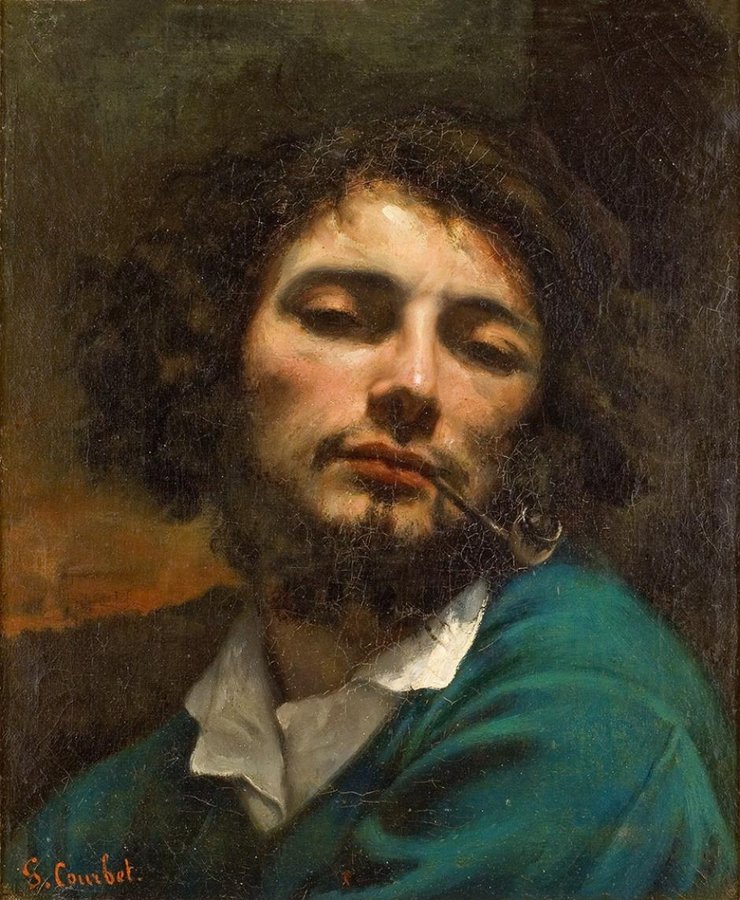
- Gustave Courbet’s radical visual language, his sociopolitical aspirations and his influence on modern art remain as powerful today as ever. He rejected the idealised aesthetics of classicism and romanticism, making the lives of ordinary people and reality the subject of his paintings instead. With his uncompromising attitude and innovative painting technique, Courbet is considered a pioneer of modernism – a boundary breaker between art, society and politics. This major retrospective is dedicated to one of the most influential artists of the 19th century, an artistic innovator with a colourful personality who was driven by the pursuit of independence. His political commitment is reflected in his art, especially in his examination of historical events and upheavals in France, which led him to leave Paris in 1873 as a political refugee and flee to Switzerland. The exhibition highlights key stages in the artist’s life and groups of works: self-image and public image, social reality, erotic representation, landscape and exile.Description
I, Gustave Courbet
Until 8 Nov 2026
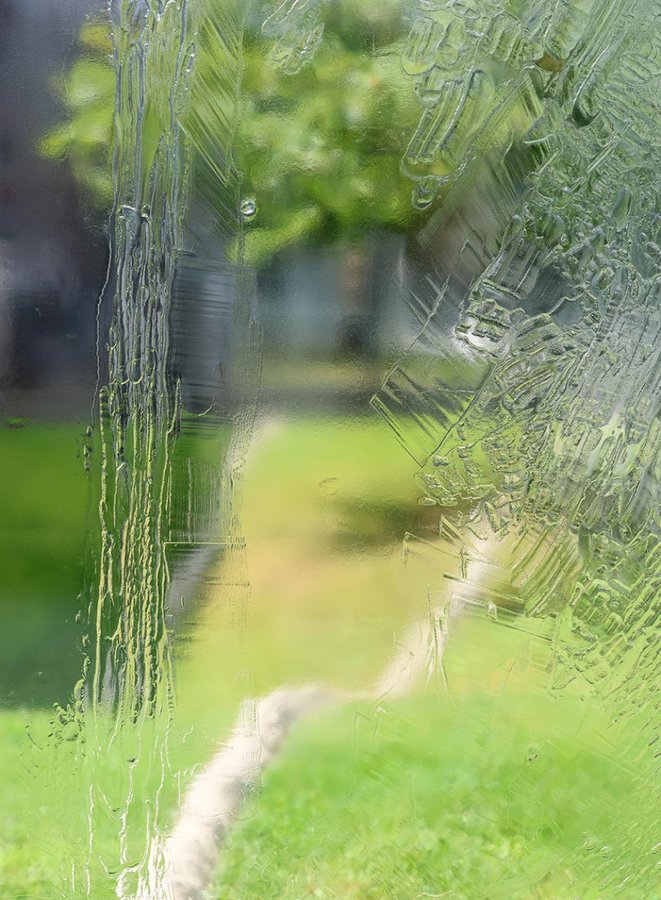
- The New Zealand artist Kate Newby (b. 1979) developed a site-specific installation for Museum Folkwang. She selected the transitional area between the museum’s original building, opened in 1960, and the extension completed in 2010. Despite their different periods of construction, both buildings share the formal language of modernist architecture, characterised by clean lines, rectangular courtyards, and expansive glass façades. Glass and concrete, two defining materials of modernism, form the starting point for Newby’s work. In her hands, however, they become fragile, responsive materials that bear the traces of their making. On two glass-pane doors facing the courtyard, the artist has fused vertical hand-drawn lines and numerous fingerprints into the surface. The three-dimensional texture of the glass work Good Sound reacts to light and movement, shifting in appearance throughout the day in response to changing conditions and the viewer’s perspective. The linear forms of the glass installation continue outdoors in the concrete work I’m Asking, situated on the lawn of the museum courtyard. Pale, textured concrete lines extend across the spaceDescription
Kate Newby – I’M ASKING
Until 18 Apr 2027
Coming soon
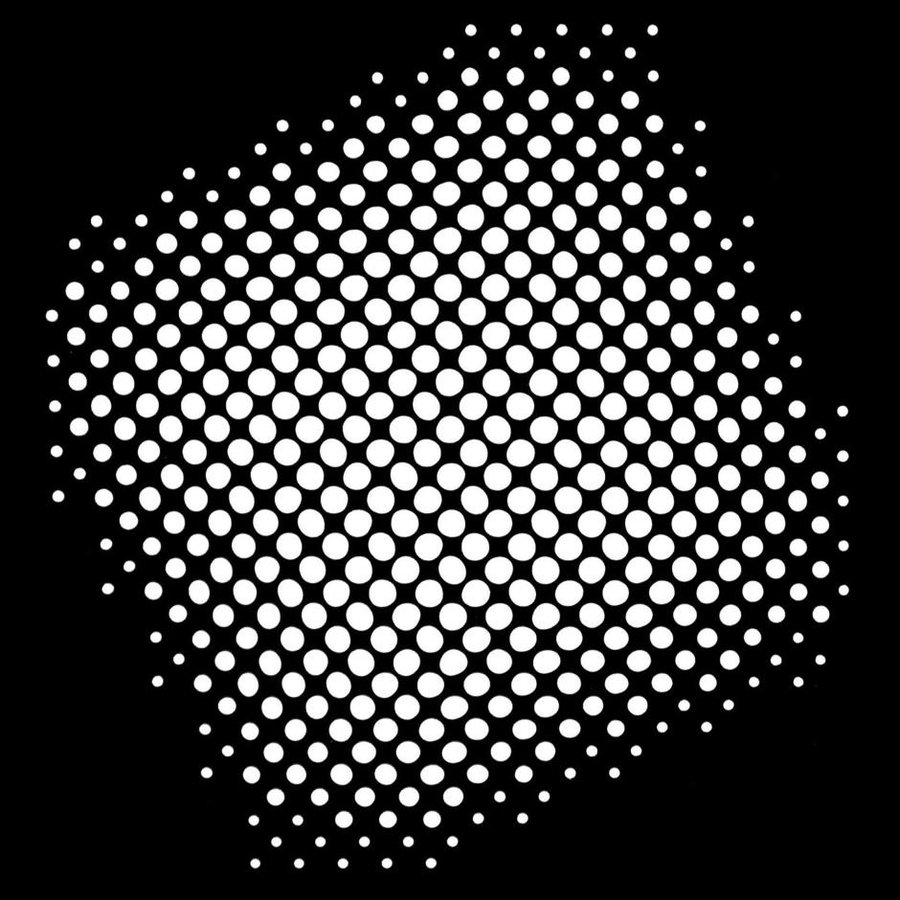
- The experimental years of non-representational photography were marked by debates and position statements articulated by a young generation. After Gottfried Jäger discovered the book Kunst und Konstruktion (Art and Construction) by computer pioneer and science fiction author Herbert W. Franke in 1958, an artistic exchange developed over the course of decades.Description
Herbert W. Franke / Gottfried Jäger
16 Oct 2026 – 10 Jan 2027
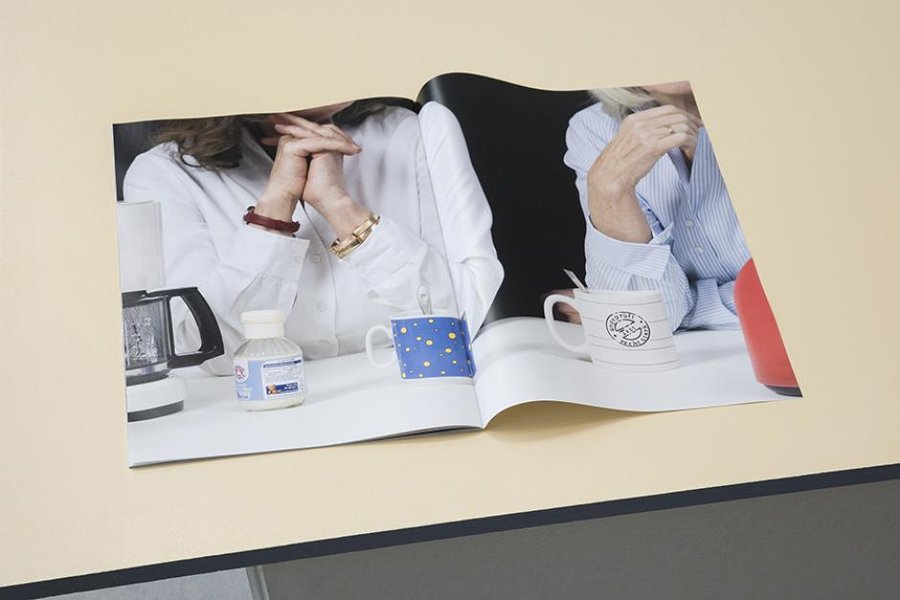
- The exhibition shows a selection of works by graduates of the master’s degree programme Photography Studies & Practice at the Folkwang University of the Arts. The two Folkwang institutions are thus continuing a collaboration that began in 2016 with the Stopover series. The exhibition features works by Florian Fäth, Mara Fischer, Patrick Lohse and Nina Mokhtarbaf.Description
Photography Masters
16 Oct 2026 – 10 Jan 2027
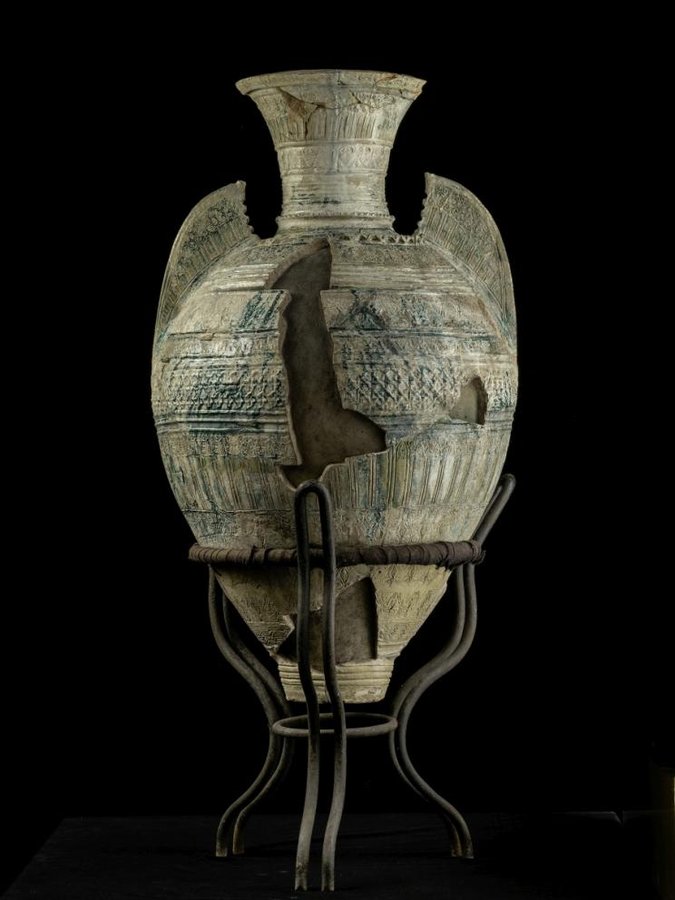
- For the first time, an exhibition is dedicated to the former “Department of Islamic Arts” at Museum Folkwang and its resonance in the modern Folkwang cosmos. Even before acquiring important paintings by Auguste Renoir and Vincent van Gogh, museum founder Karl Ernst Osthaus collected arts and crafts from North Africa and West Asia. This group of works had a decisive influence on the Folkwang concept and influenced the art, design and architecture that developed in the context of the museum. Around 300 objects provide the first representative overview of the collection of Islamic Arts at the Folkwang, which was one of the earliest museum collections of its kind in Germany – including shiny ceramics, richly decorated fabrics, a valuable Šāhnāma (Book of Kings) and an internationally significant collection of ibero-islamic tiles, which Walter Gropius himself raved about. Works of classical modernism, European design and contemporary new productions expand the historical spectrum to include current perspectives and issues.Description
Following Damascus ...
6 Nov 2026 – 21 Feb 2027
Recent past exhibitions
- Saâdane Afif creates a poster for each of his exhibitions, performances and lectures. 80 of these screen prints, produced in small editions, are being shown in the overview in Essen for the first time – together with a restaging of Afif’s first exhibition in Germany in 2004. The posters will be on display in two parts, with a change in the hanging in June 2026.Description
SAÂDANE AFIF: Affiches / Plakate
Ended 4 Oct 2026
- Kiriakos Tompolidis has set up shop in Museum Folkwang. In The Quiet Hour one steps into a kind of room long lived in; there, the artist, a native of Essen (born in 1997) toys with fragments from his memory. He has produced seven paintings specially for the exhibition, and in terms of content art history references and personal memories overlap, while formally speaking photographical elements meld with painting. Sleep without Witness shows the artist asleep. A flowery blanket or bedspread occupies a large part of the pictorial space and ends at the edges of the canvas. The painting itself becomes the bed. Tompolidis fully exploits the exciting relationship between the image as material object and the illusionary pictorial space, as the white flowers and the lines of the pattern are actually embroidered into the canvas. Tompolidis’ meta-painting is infused with autobiographical themes. He repeatedly composes self-portraits or scenes from the family photo album, and yet likewise draws onDescription
6 ½ Weeks – Kiriakos Tompolidis
Ended 4 Oct 2026
- Beschreibung der Ausstellung.Description
Titel der Ausstellung
Ended 31 Jul 2026
- 29 rooms – 29 stories of new beginnings and rediscoveries, of similarities and contrasts, of humankind and art. The Museum Folkwang collection offers new insights into developments and connections within art history, with altering displays spanning different eras and media. Recent acquisitions and rarely exhibited works engage in exciting dialogues with the collection’s masterpieces. Painting, photography, poster art …Description
NEW WORLDS
Ended 30 Jun 2026
- L is for Look invites visitors on an interactive journey of discovery through the history of children’s and young adults’ photo books – from their industrial boom in the 1930s to the present day. Although this genre continues to occupy a niche in the publishing landscape, the exhibition impressively illustrates how educational concepts and the social status of children in the Western world have changed over the past 100 years. The exhibition offers young and old alike the opportunity to discover the process of creating a photo book, from the initial photograph to the original designs. A co-production with the Institut pour la photographie of Hauts-de-France and Photo Élysée in Lausanne. Further exhibition venues include the Rencontres d’Arles festival, the Photographers Gallery in London, the Centre national de l’audiovisuel in Dudelange, Luxembourg, and FotoArsenal in Vienna.Description
L Is for Look
Ended 7 Jun 2026
- Children's FotobooksDescription
Museum Folkwang
Ended 7 Jun 2026
- The exhibition brings together video works by Ferdinand Waas from 2025 and 2026 to form a trilogy: Ode to Joy, An Apple a Day, The Border Is Still There and One Night in Ibiza. The works are being shown together for the first time; for Ode to Joy and One Night in Ibiza, this is their first presentation in an exhibition. The three works are linked by the fact that they are manifestations of found realities that challenge the prevailing norms and values of the European Union. The artist himself appears in all three videos – playing the violin, searching for British party tourists, and working as a smuggler at an open border.Description
6 ½ Weeks Ferdinand Waas
Ended 29 Mar 2026
- Museum Folkwang has housed the photographer Germaine Krull’s estate since 1995. In addition to prints, negatives and publications, it also includes an extensive journalistic oeuvre. This includes (auto) biographical and (auto) fictional texts, (photo) books and maquettes, letters and political reports or reportages. As an extended approach to Germaine Krull’s artistic legacy, this journalistic oeuvre is now becoming visible in essential parts. In view of the fact that writing accompanied all of the artist’s creative phases, this focus, in addition to the avant-garde works of the 1920s and 1930s, also brings the photographic practice of those creative phases into view, which have so far only been marginally considered by research. The exhibition and publication project also opens up a new transcultural perspective on Germaine Krull’s life and artistic work from the beginning of the Second World War after her permanent departure from Europe.Description
Germaine Krull: Chien Fou
Ended 15 Mar 2026