Salzburg
Museum der Moderne Salzburg
On now
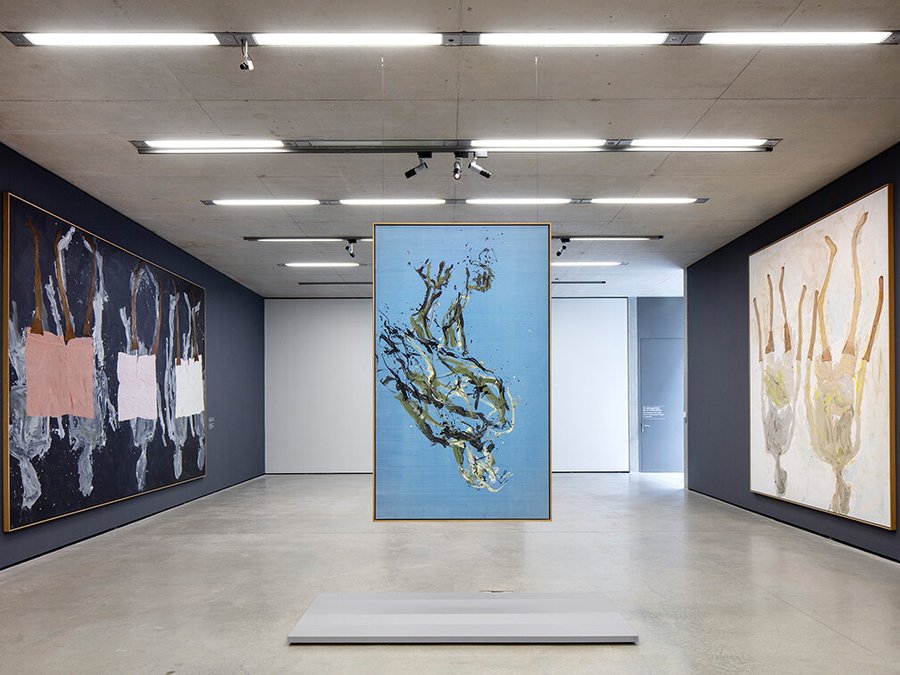
- The Museum der Moderne Salzburg is dedicating two exhibitions at its two venues to the internationally renowned artist and Salzburg-based Georg Baselitz. Together, they span the decades from his early drawings to his monumental late oeuvre. The exhibition at the Rupertinum (Old Town) opens on July 3 2026. Late oeuvre on the Mönchsberg The presentation at the Rupertinum showcases Baselitz’s graphic art, predominantly in smaller formats; the complementary display on the Mönchsberg features late and large-format paintings. The artist painted these over the last 10 years. The imposing portraits, in particular, reflect on themes such as aging and mortality—and, not least importantly, the artist’s own life and that of his wife Elke.Description
Baselitz Now
Until 18 Oct 2026
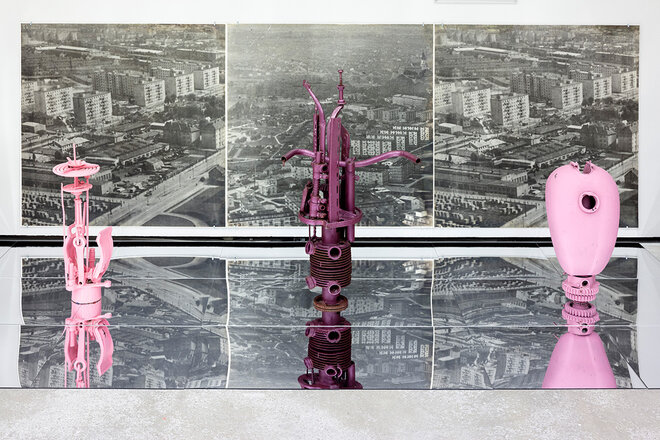
- Stano Filko was one of the most visionary and most radical protagonists of the Central European neo-avantgarde. The Generali Foundation Collection—Permanent Loan to the Museum der Moderne Salzburg dedicates a comprehensive retrospective to the artist. The exhibition showcases works from all periods of his life and oeuvre—from early paintings and conceptual experiments to immersive environments and on to assemblages combining a wealth of materials and large-format sculptures.Description
Stano Filko. 12 Chakras of Becoming
Until 7 Feb 2027
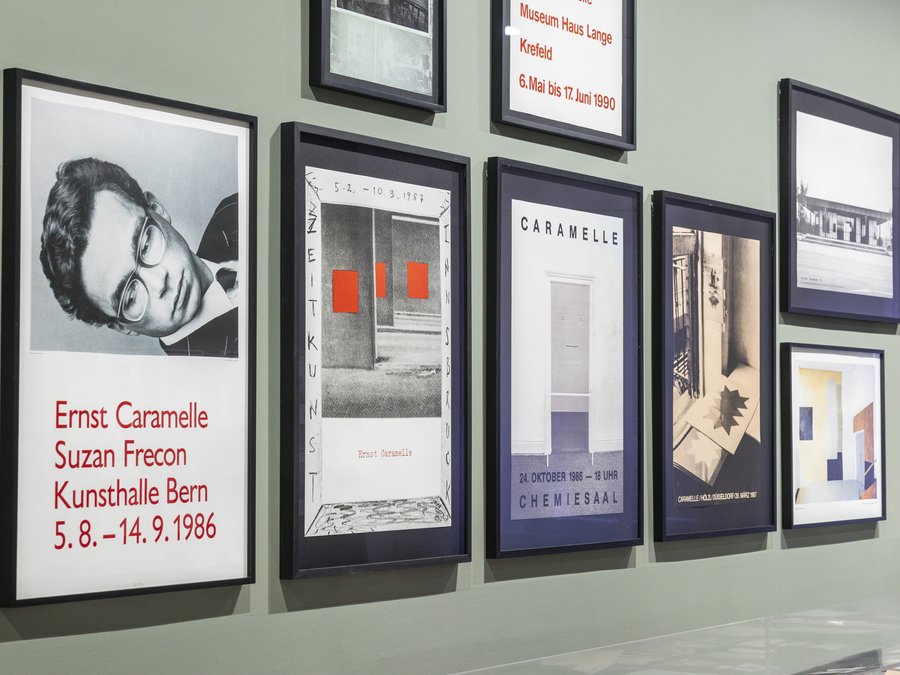
- Ernst Caramelle is one of the most prominent international exponents of Austrian conceptual art. Since the 1970s, he has probed the unstable relationship between reality and illusion, between the picture and the three-dimensional world. Combining analytical precision with subtle humor, his work inquires into how we define art, where it happens, and how we perceive it. The exhibition turns the spotlight on two central bodies of work in Caramelle’s (b. 1952) oeuvre: his decades-long preoccupation with artist’s books, posters, and invitation cards (1974–2025) and his early photographic series Video Landscapes (1974). Printed matter Like few other artists, Caramelle has conceived of ostensibly incidental print media as standalone and full-fledged artistic spaces that he has harnessed to engage his audience. Many of his early drawings already feature combinations of writing, drawings, and photographic images that visualize movements of thought. Over the decades, Caramelle has developed this register into a distinctive vocabulary of recurring forms and methods—the titular ‘figures of thought’. Illusion or reality? His photographic series Video Landscapes serves in the presentation as a conceptual counterpoint to his printed matter. It documents a number of experiments involving video, then still a young medium, for which he arranged television screens in varying constellations involving the body and the spatial situation. Each screen shows the exact image that it obscures in the real-world scene and so might be mistaken for a windowpane—an uncanny illusion that blurs the divisions between reality and medium, perception and deception. In this way, Caramelle raises central questions that have propelled his art to this day: What do we see? Where do reality and illusion, picture and space begin and end? What role can art play today, and how does it draw its audience and its surroundings into interaction? Reading, browsing, seeing Books, posters, and maps are not just on view in the exhibition but made available for hands-on study in sample copies. Visitors are encouraged to browse and compare selected publications in order to gain an understanding of their internal construction, sequencing, and use of visual and textual content.Description
Ernst Caramelle. Figures of Thought
Until 30 May 2027
Recent past exhibitions
- The Museum der Moderne Salzburg is dedicating two exhibitions at its two venues to the internationally renowned artist and Salzburg-based Georg Baselitz. Together, they span the decades from his early drawings to his monumental late oeuvre. Early works at the Rupertinum In the early 1960s, the artist made a conscious choice to produce figurative art—a decision that was seen as provocative at a time when abstract art was ascendant. His work not only broke new ground in painting, it also secured his place in art history as an innovator of postwar art. The exhibition at the Rupertinum puts the focus on his early graphic art, in which Baselitz wrestled with German history, identity, and the artistic ego, intertwining classical pictorial traditions with a forceful visual language that was often perceived as raw and disturbing. The presentation’s distinctive thematic organization takes guidance from the four manifestos the artist wrote in the 1960s. The exhibition is supported by loans from the Ludwig Forum für Internationale Kunst, Aachen, loans Peter and Irene Ludwig Foundation, as well as additional private lenders. Both exhibitions and the publication on Georg Baselitz are supported by a special grant from the State of Salzburg and a private loan.Description
Baselitz Manifestos
Ended 4 Oct 2026
- Georgia Gardner Gray (1988, New York, NY, US) is one of the most exciting painters of our time. She transforms our everyday into keenly observed and surprisingly disconcerting compositions using cultural symbols ranging from the prehistoric to the digital realm. Taking cues from pop culture and art history, Gray exposes the contradictions of the contemporary world through the absurdist staging of her pictures. With subtle wit and accurate detail, she highlights how our perceptions of history, art and authenticity can differ so widely. In her exhibition, she presents a series of new works set in prehistoric stone circles, exploring the concept of human and artistic heritage on a grand scale. What we recognize in cultural artifacts often reveals just as much about the present as it says about the objects’ past. Gray expands her exhibition with works from the collections – by Iris Andraschek, Lovis Corinth, and Leo Zogmayer –, selecting them for their mimetic qualities as one may source images using a search engine today. The encounter sparks a lively conversation about the interpretation of art and the caprice of artists’ inspiration.Description
GENERATOR #5: Georgia Gardner Gray. Stones
Ended 4 Oct 2026
- With Charlotte Perriand. Living Modernism: Design, Photography, Architecture the Museum der Moderne Salzburg dedicates the first major retrospective in Austria to the French architect and designer Charlotte Perriand. The exhibition covers both her work in architecture and design and her output as a photographer. In the Shadow of Le Corbusier After ten years the up-and-coming young architect and furniture designer Perriand left Le Corbusier’s studio. She had been responsible for numerous furniture and interior design projects, many of which are now considered icons of modern design and highly sought after by collectors. Around the same time, she branched out into photography; photographs both served her as a source of inspiration and became an element in their own right in selected furniture designs. A Pioneer of Modernism From the outset, Perriand’s thinking was holistic: she fused architecture, design, and photography in a comprehensive vision of lived-environments. Her works were never intended as autonomous objects, but rather as integral components of larger ensembles. This makes Perriand one of the most influential figures in the history of twentieth-century architecture and design. The exhibition is accompanied by an audio format in which Charlotte Perriand offers insights into her thinking on architecture, design, and the future through a fictional interview. The audio can be accessed via QR code at the stations marked with a circle throughout the exhibition. Exhibition organized by Kunstmuseen Krefeld in collaboration with Museum der Moderne Salzburg and Fundació Joan Miró, Barcelona. In close consultation with Pernette Perriand-Barsac and Jacques Barsac of the Archives Charlotte Perriand. Sponsored by: Salzburger Tourismus Förderungs Fonds and Institut français d’Autriche. Cassina is the museum’s premium partner for the exhibition. A publication will be released in conjunction with the exhibition.Description
Charlotte Perriand. Living Modernism: Design, Photography, Architecture
Ended 13 Sept 2026
- Július Koller posited everyday life as art—and art as a token of resistance. With wit and irony, the artist challenged the rules of Czechoslovakia’s authoritarian communist regime. Absurd actions, simple gestures, powerful effect The exhibition gathers central works by Koller from the Generali Foundation Collection—Permanent Loan to the Museum der Moderne Salzburg, including the legendary long-term series U.F.O.-naut J.K. (U.F.O.). Spanning over thirty-five years, the work is composed of one symbolic self-portrait per year. Koller also garnered attention with his unusual artistic actions—what he called Anti-Happenings. Held both in private and in public settings, they were typically entertaining and often laced with irony. Július Koller was born in Piešťany, in today’s Slovakia, in 1939. He died in Bratislava in 2007. In the 1970s, he started using the abbreviation “U.F.O.” One of its meanings is universal-cultural futurological operations, a reference to the artist’s effort to signal resistance to the general paralysis of society during the period of communist “normalization.” Koller ranks among the most prominent voices of the dissident Slovakian arts scene of the 1960s.Description
Julius Koller. U.F.O.-naut J.K.
Ended 14 Jun 2026
- What do bodies say about us and about the society in which we live? That is the question the exhibition EveryBody! probes. With works by VALIE EXPORT, Cindy Sherman, Nobuyoshi Araki, and many more. Between self-determination, expectations, and social standards Our bodies are constantly communicating—not only with words, but also through gestures, facial expressions, and other forms of physical articulation. Consciously and unconsciously, they transmit a steady stream of messages that are embedded in social and political contexts: they show what we wish to share with others and allow for unconstrained and individual self-expression. Meanwhile, however, our bodies are also being perceived and assessed by others. The exhibition gathers artists who subject the standards and ideals of our society to critical scrutiny. The works on view frame bodies as reflections and central scenes of social dialogue and conflict. In a wide range of ways, the artists seek to generate visibility for the desire for and right to freedom and physical self-determination. EveryBody! invites audiences to take a closer look at the body and the role that society plays in these interactions.Description
EveryBody! The Stories Bodies Tell. Photography and Media Art from 1945 to the Present
Ended 14 Jun 2026
- Mozarts world-famous opera The Magic Flute continues to inspire artists in various ways to this day. On the occasion of Mozart's 270th birthday, the exhibition Under the Spell of the Magic Flute focuses on four of them: Oskar Kokoschka, Max Slevogt, Stephan von Huehne, and Wolfgang Hutter. Opera meets visual art The Magic Flute is one of the most popular and frequently performed works in musical theater worldwide. Mozart’s stage work not only challenges musicians, but also provides important inspiration for visual artists. Max Slevogt, for example, created his masterful illustrations for The Magic Flute out of deep admiration for Mozart. Oskar Kokoschka also engaged intensively with the opera: he designed colorful stage visions and expressive costumes for the Salzburg Festival. With a preference for colorful landscapes, Wolfgang Hutter contributed the visual design for the Singspiel at the Graz Opera. His designs transport viewers into a magical world full of exotic plants and creatures. Where is the magic? That's what Stephan von Huene asked himself after seeing the Salzburg production. In response, he developed a sound sculpture that activates visitors' visual, acoustic, and physical perceptions in a surprising and magical way. Together, these four artists and their works show how vibrant and multifaceted The Magic Flute remains today—as a visual, acoustic, and emotional experience.Description
Under the Spell of Mozart’s Magic Flute
Ended 14 Jun 2026
- With works by Isa Genzken, Maria Bartuszová, Heinz Frank, and more In Cascade, the British artist Nika Neelova transports us to a world in which time seems out of joint: her works poetically blend past, present, and future. In the exhibition, Neelova combines her works with additional objects from the collection and loans from eminent artists to weave a singular narrative. An artist unearthing traces Nika Neelova was born in Moscow in 1987 and has lived in London since 2008. Working exclusively with found objects and materials, she has a remarkable gift for scrutinizing perfectly ordinary things from a wide variety of perspectives and presenting them in novel ways. In conducting a kind of archaeology, she digs up not just finds but, more importantly, their stories. Rethinking time Neelova wants her art to convey an experience of the idea of time. To this end, her works playfully stimulate visitors’ inquisitiveness and curiosity. Time, she believes, is nonlinear, and her works are like artifacts that exert a powerful pull, carrying the beholders along. History here seems to move in recurring loops. Additional artists and loans in the exhibition In Cascade, Neelova interweaves her own works with archaeological finds and works of art from the collections, which become integral parts of her utopian vision. The display features works by other eminent artists including Isa Genzken, Maria Bartuszová, Marisa Merz, Heinz Frank, and many more. Also part of the exhibition are prehistoric and ancient artifacts as well as ritual objects from the cultural history collections of the Salzburg Museum and the Museum of Mining and Gothic Art Leogang. In this way, the show picks up on Salzburg’s material heritage, and in particular on its history of salt mining.Description
Nika Neelova. Cascade
Ended 6 Apr 2026
- Five rooms, five works, five international artists. The Museum der Moderne Salzburg presents Visual Echoes, an exhibition at its Mönchsberg venue with expansive installations by Susan Hiller, Luis Jacob, Arthur Jafa, Mathias Poledna / Karthik Pandian, and Ana Torfs. In videos, films, photographs, and slides, they scrutinize the streams of pictures circulating in our world and respond with forceful counter-images. The presentation revolves around a twofold question: How does the ubiquitous profusion of images—from television, cinema, the internet, advertising, fashion, or art—influence our perceptions, our emotions, and our collective recollection? And how can art help us understand the ideologies and histories implicit in it and perhaps even help us read them in new ways? To make their works, the artists tap into the visual repertoire of our time. They work with found footage as well as fictional imagery created for the purpose that ties in with our collective visual memory. By arranging their material in new ways, subjecting it to radical reduction, or iterating or superimposing it, they create alternative visual orders—with their own rhythms, poetic discontinuities, and trenchant political overtones. What emerge are forceful counter-images: critical visual echoes that defy conventional habits of seeing. The works pinpoint and expose the various mechanisms underlying the deluge of media imagery. Meanwhile, they deliberately also speak to our emotions and physical sensations. Visual Echoes invites us to take a closer look: Which pictures shape us—and how do we want to see?Description
Visual Echoes: Counter-Images in the Stream of Pictures. Video, Film, Photography
Ended 15 Mar 2026
- The exhibition The Art of the Everyday presents a selection of works from the collection of the Museum der Moderne Salzburg that explore the relationship between art and everyday life. The show features a diverse range of objects, including paintings, sculptures, photographs, and installations, that reflect the ways in which artists have engaged with the mundane and the extraordinary in their work. Through their use of everyday materials and subjects, these artists challenge traditional notions of what constitutes high art and offer alternative perspectives on the world around us.Description
The Art of the Everyday
Ended 8 Mar 2026
Encounters with art and people: exibition opening "Breaking Down Walls!"
Ended 23 Feb 2026
- Modern and contemporary art raises questions. We have asked various people for answers - and there are always more to come Modern and contemporary art raises questions. They can express astonishment, be the start of a thought process, be provocative or show interest. We have listed some questions to which there is not one universally valid answer. It is therefore not about answering a question correctly or incorrectly, but about exchanging opinions and playing with different attitudes. We have invited various people to give their answers to the questions and new answers are constantly being added! Do I need to understand art? “No, I don't think you have to understand art. I like to make up my own mind about the artworks at exhibitions. Nevertheless, I also read the descriptions in the exhibition. I think it's good that more and more museums are offering descriptions in easy language.” - Sandra Stangassinger (works in the inclusive library / Lebenshilfe Salzburg, trained volunteer librarian, intern in the archive of the Museum der Moderne Salzburg) What makes a work of art a work of art? “At best, a work of art makes me wonder, it irritates me, it makes me marvel, it fascinates me, it makes me laugh or cry - it does something to me! It stimulates conversations, discussions and exchanges with others - regardless of whether I could do the same, regardless of the material or medium, regardless of whether it is large or small, fragile or solid. It touches me emotionally.” - Lisa Überbacher (Head of Exhibition Management at the Museum der Moderne Salzburg) What is modern art for you? “Modern art is an extension of our reality. It can build bridges between the past, present and future. Modern art stands on the pillars of theme, inspiration and aesthetics, but is not afraid to burst the last pillar if it serves the idea. Aesthetics invites viewers inside, theme triggers thoughts and creates dialogs and inspiration brings about change.” - Sasa Asceric (Visitor Service at the Museum der Moderne Salzburg) Would you like to submit an answer yourself? Send us your comment with photo and name to: kunstvermittlung(at)mdmsalzburg.atDescription
Talking about art in ping-pong
Ended 23 Feb 2026