Brussel
La Patinoire Royale / Galerie Valerie Bach
On now
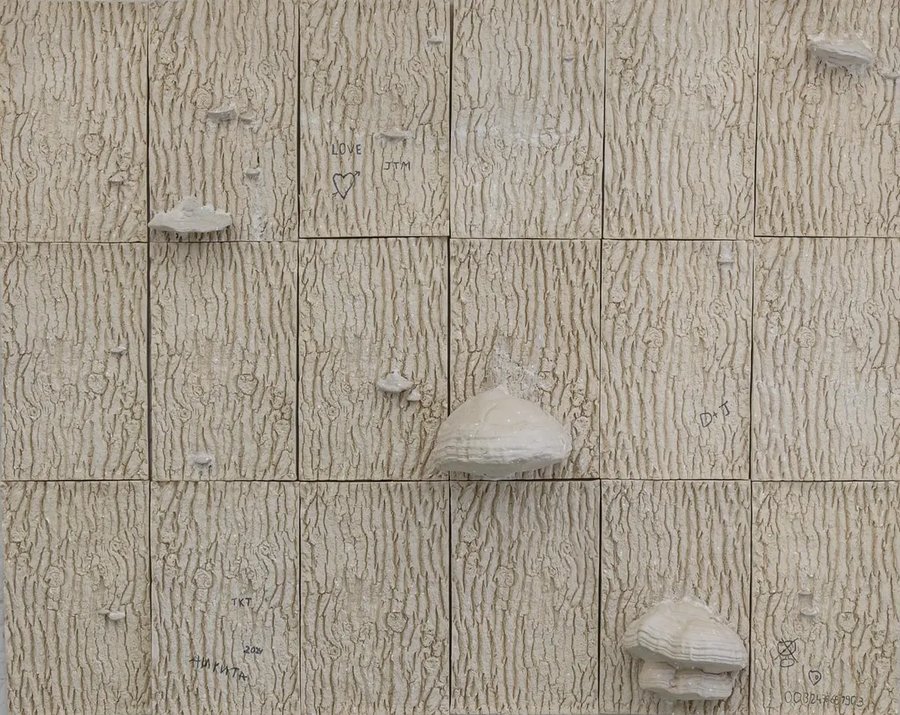
- In Europe, the majority of the population lives in cities, with only a quarter living in rural areas. The contrast is even more striking in Belgium, where 98% of the population is urban and just 2% rural. Yet in terms of the distribution of space, the countryside and its arable...Description
Au-Delà De La Ville
Until 28 Nov 2026
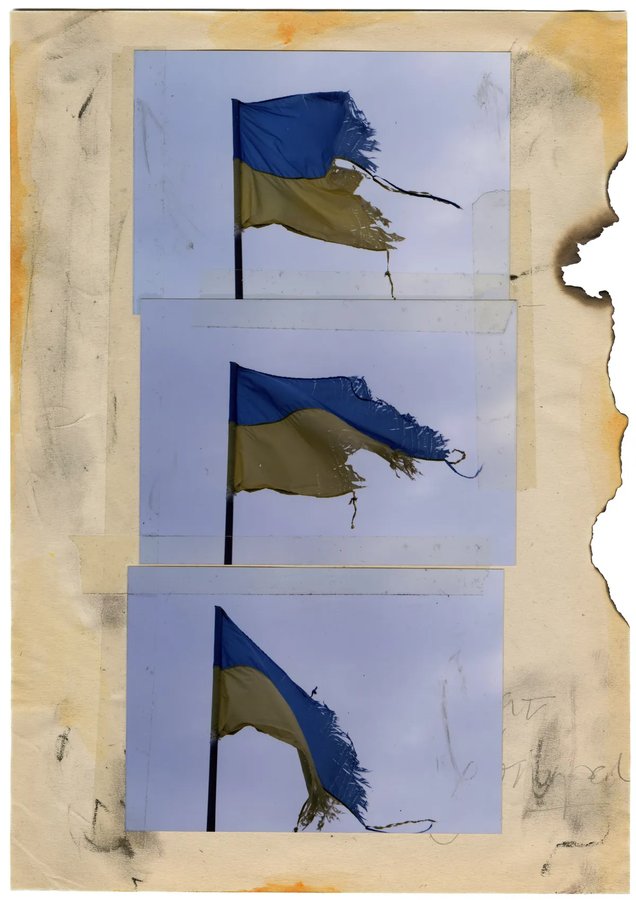
- Liturgie des jours brings together the work of Sasha Kurmaz and Danylo Halkin, two Ukrainian contemporary artists, in the gallery’s central nave. Each offers a witness to the conflict that has engulfed their daily realities, Kurmaz through a daily practice rooted in found photography and collage, and Halkin through a...Description
Liturgie des jours SASHA KURMAZ | DANYLO HALKIN
Until 19 Dec 2026
Recent past exhibitions
- Lita Albuquerque, a pioneering figure in the American Land Art and Light and Space movements, is known for introducing raw pigment powder into her large-scale interventions in the landscape. Through works in the deserts of California, Egypt and Antarctica, among others, she interrogates the architectural and alchemical connections between us,... Read moreDescription
Pigments Et Présence Lita Albuquerque
Ended 24 Sept 2026
- Conceived as a set of vast landscapes, these new colorful paintings place the viewer at the center of a circulatory, even enveloping, logic. Derived from the German fügen (to join or assemble), Antoine Carbonne’s FUGUE can be read as the need to adjust to a world in motion. If, in the work of the artist and writer Édouard Levé, each sentence advances by undoing the previous one, Antoine Carbonne’s narrative unfolds in the instant of looking, according to different speeds and successive planes. Because everything is a matter of relativity, the viewer will allow themselves to perceive the small caterpillar moving at the same speed as the distant car, and should expect to develop main character syndrome, leaving them with the persistent impression that things—or even the world—are revolving around them. * “Were you afraid?” the journalist asked me. “No, I wouldn't say that. It was so fast that I let myself be traversed by the fury of the car. It was slow and piercing, sharp and striking, unprecedented.” “Can you tell us what happened?” An ordinary morning, luminous, soft, and washed-out. In the morning, I had my usual routine. I sat on a chair facing a landscape larger than myself, I opened my arms like this, and I took deep breaths. I did this before drinking a coffee — quick, the coffee, because I was expected at my opening. During that time, three cats were drawing waves between my legs. The smallest one meowed from deep in the throat, a voice that I was trying to imitate. It must be said that I had an aptitude for imitation that allowed me to communicate with them. I managed to imitate all the variations of their meows. It was as if I became a slightly distorting mirror, an accomplice soul, not feline but friendly. Through practice, I had come to tell myself that the closer I adhered to reality, the more I became reality. I was a kind of transitory avatar that evaporated into nature as soon as the imitation was interrupted. Around me, a dominant and vast valley. I remained for a long time watching the sun cross the landscape. I began to imitate a tree and I became as aligned as a trunk with its branches. I was living with a girlfriend whom I admired for her kindness and her power of attraction, I could imitate her to the point of making love to myself. I was late. I wanted to imitate a concept for a change: the void. It came to me while reading in Vazquez the story of Montaigne’s magpie found in Plutarch. In order to imitate certain trumpet sounds, the magpie must renounce what it already knows in order to learn something new. Through concentration, silence, and time, it can finally produce a more complex and ample form. But becoming the void terrified me terribly, so I usually returned to more trivial subjects such as a caterpillar, a piece of fruit on the ground, an oak leaf. I was heading downtown, en route to the opening. My car was in automatic, animated by a vengeful eye, almost devouring. Leaves from trees, sometimes golden, fell slowly following its passage. With all my back and forth with the void, it seemed that I had become the void. I even wondered whether I might have become the Ma, that unoccupied interval revealing harmony and balance. Had I become the spectator of my own driving? I felt more fluid than ever, at once this and that; I was the world all by myself. I was that snow falling on nineteenth century trees, and contemporary Swiss mountains. I was receiving, deep within myself, all the surrounding movements, including that of the Earth. There were vivid and hallucinatory colors in these landscapes, I became entirely vibrating and magnetic. I was accompanied by everything I had been able to become before. I stuck to the succulents, and the succulents followed my tonal transitions. What worries me is that, from having become the void, I had difficulty returning to life, simple life. I was ahead of my car, so I waited for it down below where an entire world had just opened itself to me. The world below was a normal world, a world where a cat is a cat, a tree a tree, and where I could not become my girlfriend and make love to myself. It was at that moment that the car passed through me, while it was in the process of parking in the gallery lot. It was sharp. I came here, finally, with the intention of imitating myself. - Text by Pauline AlliéDescription
Fugue : Antoine Carbonne
Ended 28 Mar 2026
- La Fin du Monde, the first exhibition by Chilean artist Alfredo Jaar at the gallery, focuses on extractive industries and the global supply chains of critical minerals — the natural resources required for the tools and technologies essential to our daily life, from our phones to computers to electric cars. The exhibition centers on a single work The End of the World (2023-2024) composed of ten of the most precious minerals in the world: cobalt, rare earths, copper, tin, nickel, lithium, manganese, coltan, germanium, and platinum. As resource wars loom throughout the world, from the devastation of lithium mining in the Atacama desert in the artist’s native Chile to the explicit imperialism of US President Trump’s threats to annex Greenland and public negotiations around access to Ukraine’s natural resources, La Fin du Monde brings the artist’s capacity to make us feel the injustice of the world to the capital of Europe. To prepare the work, the artist spent five years researching in collaboration with political geologist Adam Bobette. "Critical minerals are ‘critical’ not by nature but by politics," Bobette writes in the introduction to his series of ten essays, one on each of the minerals in the work. While tracing the complex trajectories and the human consequences of the extraction and trade of these resources, Bobette also calls for a new ontology, to shift our relationship with nature from a supposed divide between humans with agency and raw materials which are conceived of as dead matter, to an ecological community with the earth itself. "Imagining new forms of mining which are non-violent towards humans and nature requires a profoundly creative act: a novel ontology of geology which acknowledges that it is social through and through, that it makes demands upon us, that we are in debt to it for our very being. To mine, then, should not be about taking dead matter from the earth but to request permission to participate in an earthly process and enter a collaboration with a planetary capacity for transformation, to reconfigure what it means to be human through the modification of geologic materials." The grandiose nave of the gallery is a space with the capacity to showcase the work’s dramatic play of scale and light. The surrounding emptiness is an essential part of the experience of the work, an attempt to give the object, and all it represents, the gravitas it merits. "I am trying to reduce the complexity of this problem of this collapsing planet into something concrete," Jaar said.Description
La Fin Du Monde / Alfredo Jaar
Ended 14 Feb 2026