Paris
Thaddaeus Ropac
On now
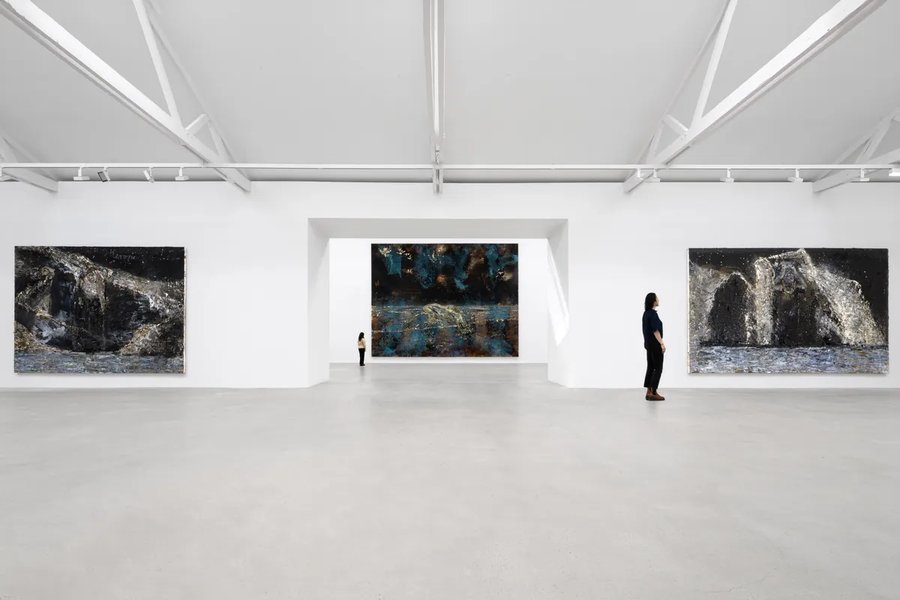
Anselm Kiefer Nymphäum
Until 25 Oct 2026
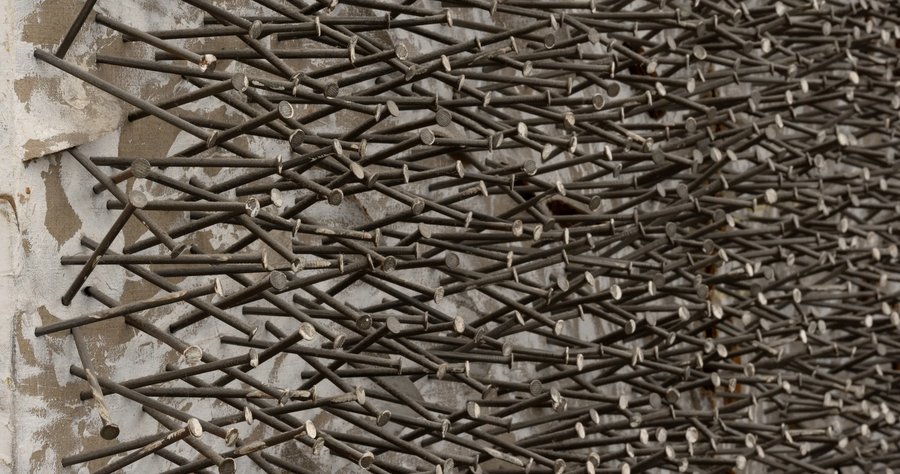
- In the beginning was the nail, a simple and humble object that has become one of the most powerful symbols in Günther Uecker's artistic vocabulary. For over six decades, the German artist has explored the expressive potential of this everyday material, transforming it into a means to investigate themes such as light, space, and perception. "Verletztes Feld" (Wounded Field), Uecker's upcoming exhibition at Galerie Richard in Paris, will present a selection of his nail works from the 1960s to the present day, offering visitors a unique opportunity to trace the evolution of this iconic motif throughout the artist's career.Description
Günther Uecker Verletztes Feld
Until 31 Oct 2026
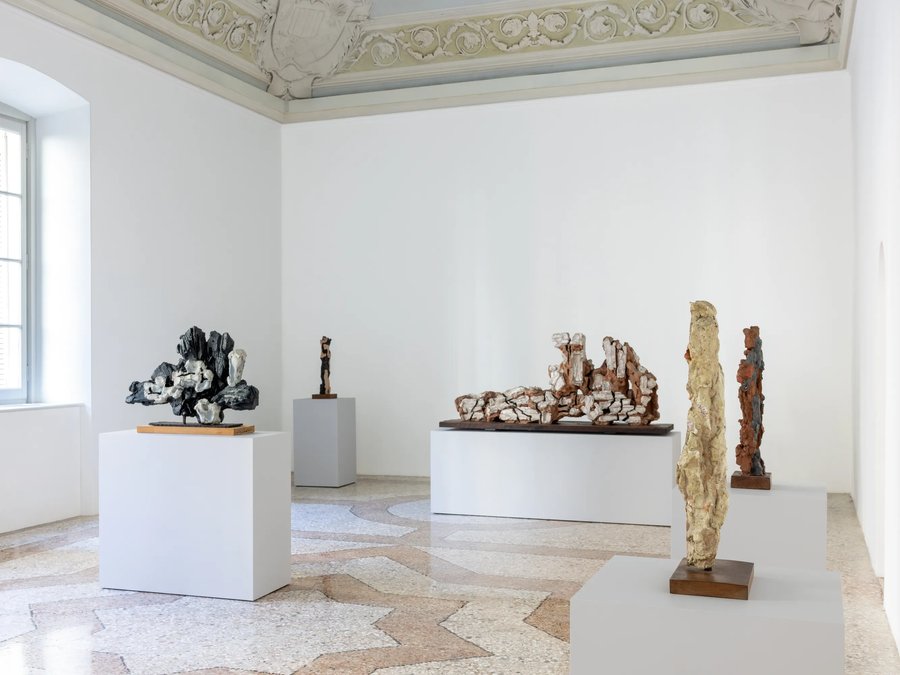
- Because with [clay] a new organicity is possible. The organicity of what grows and is alive [...] Because ceramics, precisely, can give more than any other material those visible, almost tactile conditions through which a state of mind is expressed |. — Leoncillo | Thaddaeus Ropac Milan presents | Leoncillo. Perché più bruci | – the Italian sculptor’s first solo exhibition with the gallery and the first chapter of a trilogy dedicated to his work, developed in collaboration with the Leoncillo Foundation and curated by Lorenzo Fiorucci, Alberto Salvadori and Azalea Seratoni. | Tracing Leoncillo’s sustained engagement with clay as a vital vehicle for the expressive ambitions of modern art, the exhibition brings together sculptures and works on paper which traverse the four decades of his career.Description
Leoncillo Perché più bruci
Until 14 Nov 2026
Coming soon
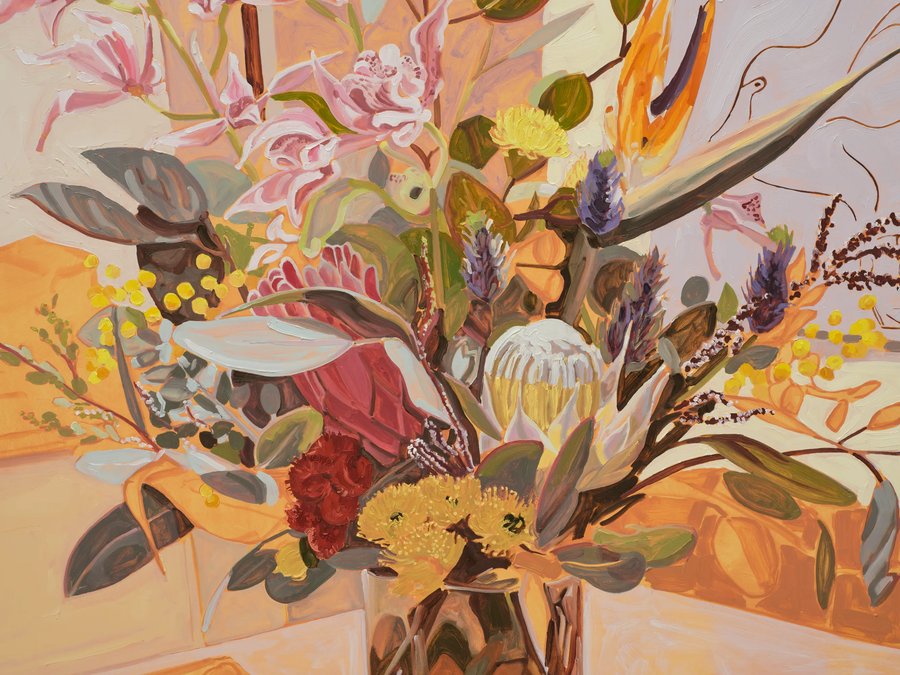
- Thaddaeus Ropac Paris Marais presents Winter Sun, an exhibition of new paintings by American artist Jordan Casteel, marking her first exhibition in France, as well as the most significant showing of her work in Europe to date. Created in the first half of 2026, the artist situates her paintings in a cool, earthy palette inspired by the light in the depths of winter. Winter Sun reflects on a period of dormancy and renewal, hope and grief, love and loss, and of light and darkness. Figurative portraits, landscapes and botanical works deepen Casteel’s ongoing observation of kinship, place and transition.Description
Jordan Casteel Winter Sun
19 Oct 2026 – 23 Dec 2026
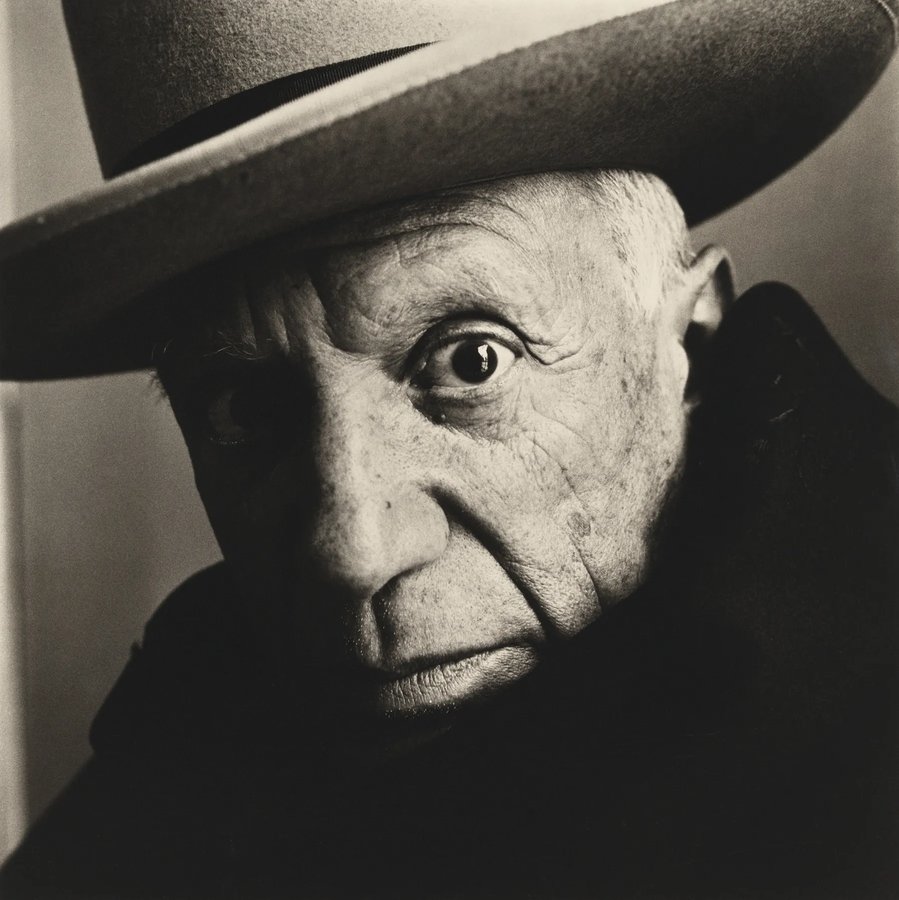
- Thaddaeus Ropac Paris Marais presents Irving Penn, an exhibition that sheds light on the artist’s mastery of photographic portraiture, from his early existential portrait of Marcel Duchamp to his photograph of an exultant Elizabeth Peyton in the final decade of his life. Penn decisively contributed to elevating photography to the status ofDescription
Irving Penn
7 Nov 2026 – 30 Jan 2027
Recent past exhibitions
- Thaddaeus Ropac Paris Marais presents | plains/portals |, an exhibition of new paintings by Austrian artist Nick Oberthaler. The large-scale works on view form a continuation of his exploration of the canvas as a threshold or window, offsetting geometric abstraction with the alluring depths of implied illusionistic space. Alongside them, a group of smaller works reveals a more gestural aspect of the artist’s practice.Description
Nick Oberthaler plains/portals
Ended 10 Oct 2026
- Tomorrow: Yes is an exhibition of works by Austrian artist Erwin Wurm, and his first solo presentation to occupy the entirety of the extensive Thaddaeus Ropac Paris Pantin space. The exhibition unfolds around two monumental sculptural installations: a compressed schoolhouse, and a 6-metre-tall bent sailing boat. The works on view, the majority of which are exhibited here for the first time, encompass materials from marble to bronze to aluminium and span some of the artist’s most celebrated series, including his iconic participative One Minute Sculptures. Brought together, they form a sculptural vocabulary for the abstract and the intangible, testifying to Wurm’s radical disruption of the limitations of sculpture. Visitors are invited to step inside School (2024), which distorts the 19th-century silhouette of Wurm’s local village schoolhouse. In its narrow, low-ceilinged interior, the walls are plastered with vintage posters retracing some of the lessons once taught in French schools now considered outdated. The school’s cramped interior, complete with compacted chairs and a small blackboard, creates a sense of claustrophobia in the visitor who enters, mimicking the restrictiveness of teachings of the past, while encouraging us to reexamine the unquestioning beliefs we hold today. ‘ School is about the sculptural mass of knowledge, and how it changes over the decades’, Wurm explains. ‘My intention is to suggest that if we cannot recognise our current distortions, perhaps we will see them clearly in 50 or 100 years’ time.’ The French version of School, made specially for Thaddaeus Ropac Paris Pantin, follows Austrian and Japanese versions presented in the artist’s retrospective at Albertina, Vienna (2024), Marmorschlössl Bad Ischl (2025), and Towada Art Center (2025). Star (2025), Wurm’s full-size sailing boat, is inspired by the Salzkammergut resort area in Austria, whose many lakes are popular with pleasure boaters. Curved in the middle, the fully-functioning vessel is designed for ‘going round corners’. Perfectly adapted to sailing in aimless circles around a lake, it epitomises the absurdities and futilities of modern life. As Max Hollein, art historian and director of the Metropolitan Museum of Art in New York, has said, Wurm ‘has succeeded in conveying to a large audience, in a hugely suggestive way, the tragedy of its own social condition.’ By giving it material form, Wurm positions Tomorrow: Yes as an investigation into how the philosophies we live by are built and bent, and an invitation to the visitor to question the ideas they take for granted. Wurm finds in the shifting nature of ideas, perceptions and thoughts a sculptural plasticity. Just as School accords sculptural form to the received knowledge of an era, across the exhibition, Wurm gives shape to the immaterial. The Blurred Memories sculptures are anthropomorphisations of Wurm’s own school-age memories, beliefs and experiences. Commenced in 2024, his Mind Bubbles, meanwhile, place ovular forms atop cartoon-like legs in anthropomorphic reimaginings of the thought bubbles found in comic strips or graphic novels. Oscillating between figuration and abstraction, the gravity-defying sculptures’ spindly legs are weighed down by the rounded, organic shapes in a play of proportions that reevaluates the balance between body and mind in making us who we are. As Wurm says: ‘Everything is perception’. Across the exhibition, the visitor encounters sculptures that, as Wurm put it, are ‘about human beings, but without human beings’. The Box People (2009–present) – cubic forms dressed in formal attire but lacking heads – interrogate the human condition and the role of the individual in the social, political and environmental conditions of the contemporary world. The theme of clothing, which played an important role early in Wurm’s career, is once again at the heart of his recent work. In new works from his Substitutes series (2022–present), clothing appears in the form of unworn, empty shells – as if suddenly vacated by their wearers – from which sculptural forms are cast. Most of the Substitutes on view are cast in aluminium coated with one or two vibrant tones of acrylic paint. Others are made in bronze or in marble: strong materials that contrast with the flimsiness of the ghostly garments. ‘As a sculptor, I’m interested in this idea of skin as a boundary,’ Wurm explained. ‘Clothes are our second skin, a shell that separates our bodies from the outside world’. The deflated outfits – collars and hoods gaping open, stockings that pool on the floor – are a reminder that clothes are a sculptural material in their own right, altering how we perceive what is within and even articulating new volumes. Wurm’s investigation of skin and clothes as sculptural surfaces is rooted in art-historical tradition. Observing that classical sculptures in bronze are hollow, consisting only of a thin outer membrane of clothes and skin, in the Substitutes, Wurm takes this surface as his subject. Shadow (2024), one of the Substitutes on view, nods to this art-historical connection with the verdigris patina that coats its bronze surface, giving it a time-worn aspect. Standing at over three metres in height, the majestic Balzac (2023), meanwhile, responds to Auguste Rodin’s canonical Monument to Balzac (1891–97). An ‘idea of a person’ emerges from a pile of draped clothing, evoking the semi-abstract monolith of Rodin’s homage to the French novelist Honoré de Balzac. Wurm was inspired by the myth that the French sculptor soaked the writer’s dressing gown in plaster to dress his monumental form. The Balzac on view in the exhibition follows a first edition, unveiled as part of Wurm’s 2023–24 exhibition at Yorkshire Sculpture Park, where it is now part of the permanent collection. With its paradoxical and playful approaches to surface and material – solidity and fragility, volume and emptiness, history and ephemerality – Wurm’s work draws on the conventions and parameters of sculpture itself: what he calls ‘sculptural issues’. He is interested in the buildings we inhabit as a further skin we wear. His scaled-down School is also a self-referential look at how sculpture works. Gesturing to the casting process, he refers to it as a ‘negative cast’: the negative imprint of an education system, a pool of knowledge, and of the minds it forms. As philosopher and essayist Konrad Paul Liessmann has written of Wurm’s work: ‘The absurdities of the aesthetic point to the reality of absurdities. It is not the work that is paradoxical, but the reality that it consistently takes at its word.’ The exhibition will also feature a selection of Wurm’s One Minute Sculptures, whose time-based, participatory angle epitomises the artist’s provocative, questioning approach to sculpture. Begun in 1996, they incorporate everyday objects, which they invite the visitor into brief but thought-provoking interactions with: hats, a bottle and a shot glass, or even an Issey Miyake pullover that visitors can put on to activate, following the One Minute Sculptures that featured on the runway in the presentation of Miyake’s Wurm-inspired Autumn/Winter 2025–26 collection at the Carrousel du Louvre, Paris in March 2025. Inheriting from Joseph Beuys’s concept of social sculpture, this series transforms the visitor from spectator into participant, destabilising traditional modes of engaging with art.Description
Erwin Wurm Tomorrow: Yes
Ended 11 Apr 2026
Thaddaeus Ropac II
Ended 28 Mar 2026
- Thaddaeus Ropac London is pleased to present Bathtub for a Heroine,the first exhibition to bring to focus the decades-long evolution of Joseph Beuys’s monumental Bathtub (1961–87), a pivotal late work now on view in the United Kingdom for the first time. The exhibition brings together the sculpture’s key precursors, including Bathtub for a Heroine (1961–84), Mammoth Tooth, Framed (1961) and Lead Woman (1949). Presented alongside other closely related sculptures and a selection of drawings, these works illuminate the central motifs and ideas that shaped Beuys’s revolutionary concept of social sculpture – the vision that art is a vehicle of individual and collective transformation, a creative potential not contained by a single object but inseparable from life itself. Emerging as an artist in post-war Germany, Beuys occupies a unique position among the conceptual and participatory art movements of that era. With the proposition that an artwork’s material could be an active agent, rather than merely an aesthetic surface, and by exploring immaterial forces such as heat, energy and imagination, Beuys profoundly expanded the idea of what sculpture can be – dissolving the boundaries between art, science, social theory and politics. Marked by the experience of war and in response to a post-war society of repression, he attributed an essential function to art in the renewal of society: capable of healing collective wounds, unleashing creative potential and catalysing real political change. What the future needs is the creation of the ‘social warmth sculpture’. — Joseph Beuys Beuys coined the term ‘evolutionary warmth’ – often interchanged with ‘revolutionary warmth’ – to describe a principle that lies at the heart of his practice. Beyond being a poetic metaphor, the notion of evolutionary warmth functions as a material philosophy. By activating circulation, exchange and imagination, warmth counteracts rigid systems and renders them malleable. For Beuys, warmth became the most fundamental medium of sculpture – an energetic, thermic force that enables transformation in matter, thought and social processes alike. It is the very motor of sculptural processes towards ‘possible future forms,’ as he once said: ‘I consider temperature to be the most important aspect of sculpture.’ My sculpture is not fixed and finished. Processes continue in most of them: chemical reactions, fermentations, colour changes, decay, drying up. Everything is in a state of change. — Joseph Beuys The bathtubs explore warmth as a sculptural material – an inherently paradoxical pursuit given its formless nature. The first, 28cm-long bronze iteration, Mammoth Tooth, Framed (1961), would later be recast to form part of the ensemble Bathtub for a Heroine (1984). Here, it is combined with an electric immersion heater, whose cables protrude outwards into space as though to evoke the necessity of connection, as well as a vertical element – part figure, part chimney – representing the heroine. In this dense sculptural constellation, the mammoth tooth becomes the sculptural core, anchoring the work in deep evolutionary time, while the heroine embodies transformative human agency. Beuys later reimagined the bathtub on a monumental scale – ten times larger – replacing the visible immersion heater with an internal heating circuit concealed within the tub’s double walls. Designed to be connected to a conventional household heating system, he even played with the idea of patenting the object. The heroine-chimney figure is omitted, the bathtub instead acquires a double capacity: it could heat both the water it contained and the surrounding space, suggesting use in domestic or communal settings. Its imposing, almost mammoth-like physicality lends the bathtub an anthropomorphic quality, while its functionality seems to expand beyond pure utility: here, warmth has the potential to generate communication and connectivity. My intention was not to create or depict symbols, but to express the powers that exist in the world: the real powers,’ he said. ‘The old way of doing this was through mythology. The new way is more through the understanding of art and science: what I call exact science — the result of direct observation. The bathtubs are hybrid objects that merge multiple temporal layers, combining prehistoric relic with modern everyday object. In this context, Beuys often spoke of ‘organic machines.’ The early sculpture Bed (1950), also on view in the exhibition, is another work that stages the tension between mechanical pressure and organic form. In it, a female torso closely resembling the heroine is suspended in a mechanical screw clamp. Rather than being simply trapped between two pressure blocks, she becomes situated within a field of energetic polarity. Beuys himself emphasised that the work is not about suffering per se, but about levitation and spatial force. The levitating effect – an anti-gravitational pull, a rise despite pressure – suggests a kind of energetic thrust. Likewise, the female figure is anything but passive: she becomes a conductive medium that not only resists the opposing forces but absorbs and reconciles them. A selection of drawings further develops the motif of the heroine and her connection to the principle of evolutionary warmth. The female figure appears throughout Beuys’ entire oeuvre, and his drawings in particular. For Beuys, women embody the capacity for intuitive action, change and transformation, as well as the ability to cross thresholds and inhabit marginal space. He treats paper as a sculptural space – in which the margin becomes a literal threshold – and, whether depicted as Female Diver, Little Fool, Animal Woman, Mother, Girl or Amazone, his female figures are adventurous, playful and combative. Moreover, he equips them with a distinct spatial agency. They actively traverse realms – whether temporal, geological, social or material – while their gestures convey an energetic sensibility of motion and suspension, rather than any narrative representation. ‘The heroic position in my works is generally the female one,’ he once explained: ‘the cold, hard, crystallised, burnt-out old clinker that I would call the male intellect, [is] the cause of much of our suffering […] Taken to extremes, this means man has his head buried in the ground, while woman gazes at the spheres.’Description
Joseph Beuys: Bathtub for a Heroine
Ended 28 Mar 2026
- There's an inherent optimism in these works. In these uncertain times, I wanted to create paintings that were joyful, playful and about coming together. — Alvaro Barrington Thaddaeus Ropac Salzburg presents a new series of works by Alvaro Barrington, titled Cutout Painting s, in the artist’s second solo exhibition in Austria. The exhibition’s title, On the Road (TMS), evokes a wide range of references that run through the exhibition, including motifs from Barrington’s personal and cultural history. The title also refers literally to the works themselves: first exhibited in Barrington’s 2024 solo exhibition Grace at Tate Britain, they were subsequently expanded for the Notting Hill Carnival in 2025, installed on the Mangrove Sound Truck. Now, for the third iteration in Salzburg, the Cutout Paintings unfold as a body of collaged and appliqued works. Depending on the audience, the phrase ‘On the Road’ may invoke Jack Kerouac’s 1957 eponymous post-war classic. The largely autobiographical novel, which tells the story of a group of friends travelling across the United States in search of freedom and identity, came to define the Beat Generation and a countercultural milieu shaped by jazz, poetry and drug-inflected experimentation. ‘I remember Kerouac’s book from when I was in college, in a time where a lot of my friends, including myself, were at an age that we thought, oh, we need to find ourselves, and maybe, we need to travel. For me, I travelled through South America,’ says the artist. For Barrington, who has family roots in Grenada and Haiti, ‘On the Road’ echoes a familiar phrase about meeting someone on the streets during Carnival. Caribbean Carnival traditions are vibrant celebrations of cultural fusion and were expanded geographically by diasporic communities. Today, all over the world, carnivals are hubs for various forms of cultural production. ‘The energy is high, the streets full of people. The sound is soca and reggae played on sound systems, the smell is of truck engine, grass and marijuana,’ the artist describes. The Cutout Paintings in the exhibition show a variety of Carnival masquerade characters originating from Grenada and Trinidad and Tobago. The depictions include Moko Jumbie, a stilt walker derived from West African protective figures; Pretty Mas, featuring costumes with feathers, sequins and head pieces; and Jab Jab, where masqueraders, often covered in black oil or paint and chains, embody the devil to symbolize post-emancipation resistance. For Barrington, identity – or a sense of belonging and community – is today less defined by nationality than by shared culture and interests. ‘It doesn’t matter where you are, if you’re a K-pop fan, if you’re in Mexico, Australia, or in the middle of Nebraska, you will recognise other K-pop fans. You are probably on an online forum talking about your love of K-pop. I think Carnival culture is just one of those spaces in which millions of millions of people, including myself, meet. I’m really interested in exploring that as a space,’ he explains. These tapestry-like canvases have borders of silkscreened portraits of Buju Banton, one of the most significant and well-regarded Jamaican dancehall musicians. Banton is depicted at turntables, in delicate, graphic strokes set against bright square backgrounds that were inspired by Barrington’s admiration for the works of Josef Albers. The compositions are appliqued with textile cutouts that draw from the elaborate vocabulary of Kuba cloth patterns and hark back to traditionally gendered craft traditions passed down by the women in his family, as well as the Caribbean history of artistic expression in fabric and sewing. Kuba cloths are woven from palm leaf fibres and decorated with geometric shapes, stitched or embroidered onto long cloths. They have served as ceremonial attire and currency in the Kuba Kingdom of Central Africa since the seventeenth century and have a long history of reception in Western art, notably in the work of Henri Matisse, who, after travelling to Africa, collected and hung the textiles in his studio, and whose colourful cut-outs and collages – specifically his 1947 Jazz series – also strongly resonate within Barrington’s works. For Barrington, the patterns have a musical connotation and resemble dancing bodies and energetic movement. ‘They testify to the enduring cultural exchanges among artists and the historic roots of trade,’ explains the artist. Barrington chose burlap rather than canvas as his painting surface, a decision consistent with his characteristic multimedia approach. The material is primarily used to make sacks for transporting cocoa and coffee beans, but also favoured by artists including Paul Gauguin and Alberto Burri. ‘I feel every material. I try to be very careful with the choices,’ explains the artist. The coarse fabric lends the works a tactile weight and recalls the medium of tapestry. Historically of great value, tapestries were used to convey power, status or family history, traditionally carried from home to home, and passed down from generation to generation. ‘I really love this idea of tapestries being about travel. After the Tate and the truck at Notting Hill, for this exhibition, I tried to make the works feel like they had weight and belonged on a wall.’ I have this belief that we live fuller lives as human beings through trade, through the ability of trading stories, trading gifts, trading ideas. That was the overall vision. This show is a celebration of the people and places that make us feel like we belong. — Alvaro BarringtonDescription
Alvaro Barrington: On the Road (TMS)
Ended 21 Mar 2026
Thaddaeus Ropac
Ended 28 Feb 2026
- Thaddaeus Ropac Paris Marais presents an exhibition of works by Austrian artist Martha Jungwirth. The exhibition centres around a remarkable large-scale 131-part installation of drawings and paintings on paper interspersed with pages cut from newspapers – described by Bernard Blistène as a ‘great frieze of unruly images’ – created over the course of five years between 1987 and 1992. This monumental work will be accompanied by a group of the artist’s recent paintings, as well as a selection of watercolours, the earliest of which date from the 1980s. As Jungwirth has described, ‘My art is like a diary, seismographic. That is the method of my work. Drawing and painting are a movement that runs through me.’ The monumental work at the heart of the exhibition exemplifies the artist’s diaristic approach to abstraction. She made its component drawings half-looking at the paper in an instinctive process resembling automatic writing, and they are hung on the wall page-by-page like an unbound, unravelling journal, stacked four high. In some, thoughts seethe across the page in the form of furtive notes and annotations in the artist’s hand. There is a striking sense of confidentiality in Jungwirth’s work; a sense that we are privy to a secret. The title of the exhibition, Geh nicht aus dem Zimmer ( Don’t leave your room), manifests this diaristic introspection. It refers to a poem by Russian-American poet Joseph Brodsky that bears no title but is known by these opening words. Impassioned yet obstinate, it implores the reader: ‘Don’t leave your room. Pretend a cold in the head. / What could be more exciting than wallpaper, chair and bed?’ It relates directly to the private and deeply personal painting process behind the 131 intimate works on paper, many of which Jungwirth made at twilight in front of the television. More than 30 years after their creation, Jungwirth has assembled them into a single composite artwork in order to confront herself once again with the transient impulses that generated them. Jungwirth works intuitively, making works that convey a palpable sense of self, yet are far from absolute introspection. Though created in a context of sublime solitude, the narrative that unfolds on the wall is grounded in the real world, as testified to by the pages Jungwirth has cut out from the culture sections of newspapers to intersperse with her own drawings and paintings. They start art-historical conversations within the frieze itself – with the sewn-up scars of a fabric Louise Bourgeois head, or Rogier van der Weyden’s sorrowful The Descent from the Cross – but also invite the viewer to imagine Jungwirth flicking through the newspaper as she works. Current affairs are among her key inspirations. In this multipart work, across a variety of media – ink, charcoal, watercolour, oil paint – figuration appears from amidst abstraction, before being concealed again. Faces, torsos, limbs and the digits of hands and feet surface from within flurries of lines: ‘insistent lines – a combination of erasures and crossings-out [...] which scar the surface of the paper as figures emerge’, as curator Blistène describes in the catalogue accompanying the exhibition. Among the proliferation of drawings we find small paintings in which pools of colour are ‘magmas, impastos that muddy the surface, interrupt the narrative and come to obliterate it.’ Jungwirth’s watercolours are just as elusive. Watercolour, the medium with which the artist commenced her painting career, is represented in the exhibition with a small group of works from the 1980s and 1990s. It is possible to understand Jungwirth’s watercolours from this period, as curator and critic Thomas Mießgang has written, ‘as a phenomenological approximation of those things which remain fleeting and evasive in their time-bound lack of contour.’ Shapes and lines cluster together at the centre of the paper as if constructing something that never quite solidifies. They are both evasive and evasions: as Blistène writes, ‘Jungwirth says that her paintings invite an escape: ‘ Malfluchten ’. Listen to the sound of the word, don’t look for a literal meaning. ‘ Flüchten ’ means ‘to flee’ in English.’ ‘There are frugal artists who make do with five cans of paint’, Jungwirth says. ‘That’s not my way. I’m all about the nuance of color.’ Her most recent paintings in oil testify to this, diving ever deeper into the subtleties of her signature palette of vivid pinks and bruised magentas while also investigating other tonal registers: cooler lilacs and blues; earthy greens, browns and oranges. ‘I want to create out of abundance’, Jungwirth explains, a position that aligns her approach to colour with her distinctive markmaking, where accumulating gestures remain like an index of her process. That same impulse finds its fullest expression in the central frieze, whose richness arises from acts of gathering, amassing and assembling. A catalogue illustrating the installation and featuring an essay by Bernard Blistène will accompany the exhibition at Thaddaeus Ropac Paris Marais.Description
Martha Jungwirth Geh nicht aus dem Zimmer
Ended 28 Feb 2026
- Thaddaeus Ropac Paris Marais presents “A Good Shelf” (Volume II), an exhibition by Tom Sachs that marries his signature bricolage sculpture techniques with the ceramic practice he began in 2012. The exhibition is conceived as a continuation of the show held at Thaddaeus Ropac London in autumn 2025. Featuring a selection of the New York-based artist’s hand-formed ceramics, displayed on singular shelves built from found materials, the exhibition continues Sachs’s exploration of themes of ritual and process. The ceramics on view can be used as mezcal copitas or cortado cups, cereal or soup bowls, but their ancient, versatile form originates from the East Asian tea bowl, or chawan. Sachs first started sculpting NASA-logo chawans after his 2012 Space Program: Mars mission, when he created a bricolage version of the traditional Japanese tea ceremony to be conducted on Mars. Over the course of more than a decade, Sachs has continued and deepened his study of ceramics. His chawans are sculptures in their own right, and the exhibitions at Thaddaeus Ropac London and Paris Marais are the first European exhibitions dedicated to them. Sachs is drawn to the Japanese tea ceremony for the same reason he is drawn to space travel – and the same reason people do anything at all – a desire for spirituality, sensuality and stuff. ‘Spirituality,’ Sachs says, ‘is about pursuing the big existential questions. Where do we come from? Are we alone? Sensuality is about going where no man has gone before: exploring space, the exhilaration of g-force, the awe of the cathedral, the feel of the kimono, the taste of matcha. Stuff is the hardware: a spaceship, a tea bowl, a chair. Our priority is sculpture. But sculpture doesn’t mean shit without that trinity and without its rituals.’ The tea bowl itself is emblematic of Sachs’s ongoing existential and material investigations. With a small number of exceptions made in stoneware – a strong, vitrified ceramic that tends towards earthy tones of red and brown – Sachs mostly works in white English porcelain: its bright, industrial sheen making it the perfect blank slate. His handmade sensibility, too, finds a corresponding expression in the medium: the artist explains that he uses porcelain ‘because it shows the fingerprints.’ Hand-shaped rather than wheel-thrown, each ceramic work betrays traces of its creation: puckered, pinched, pleasingly crooked. By the nature of the process, each vessel is one of a kind, countering today’s world of flawless, soulless machine-made objects. Evidence of labour is the point. Sachs has a deep admiration for ceramicists’ ‘dedication to doing the same thing over and over again’, and he bases all of his ceramic cups and bowls on the same signature silhouette originated by the 16th-century ceramicist Chōjirō, with each one made following the same set of instructions. Though ceramic has long been considered a decorative or domestic art form, Sachs underpins his ceramic sculptures with the rigour and rules of Conceptual art, bringing to mind longtime influences like Sol LeWitt. Sachs identifies repetition and adherence to a self-imposed set of rules as a way of ‘bringing you to another dimension’; of going deeper in the execution of an idea. These sculptures amplify the artist’s studio practice of committing to the exploration of serialisation, repetition and progression. He treats each bowl as a meditation on process itself, and as a unit in a larger ritual – stamped, serial numbered and catalogued – where the act of making is as meaningful as the object itself, and where the deeply personal act of repetition becomes conceptual. Though Sachs is a prolific ceramicist – ‘one of my daily rituals is to make a new one every morning before I check my phone’, he says – most of his pieces never leave the studio. From among them, he selects a small number of what he calls ‘heroes’: chosen for a sense of perfection in their handmade imperfection. This could take the form of a visual balance between lip and foot; a well-placed NASA logo; a nicely done crack repair in resin. With the culture that birthed the chawan in mind, these ‘hero’ bowls embody the concept in traditional Japanese aesthetics of wabi-sabi, where just the right amount of imperfection becomes the key to beauty. It is only the ‘heroes’ that appear in the exhibition, where they are each displayed on their own unique, hand-sculpted shelf. These shelves serve as pedestals, presenting Sachs’s handmade cups and bowls in the same reverent sculptural context in which one might find a Brancusi. Each shelf is made from studio offcuts, or what Sachs calls ‘sacred scrap’. Most are constructed around the plywood and hardware combination that the artist has long been known for, and which has earned him a position at the forefront of contemporary sculpture. Some also include intact found objects: a paint can, a battery, a broom. Some of the shelves hold their ceramic vessels at their centres like jewels: protectively enclosed, often backed with mirrors that reflect them to the viewer. Other shelves lift their ceramic vessels high atop suspended handmade pedestals, riffing on the visual codes of importance and value. Throughout his career, Sachs has employed his characteristic bricolage approach to reverse the modernist drive towards ever-sleeker objects. In “A Good Shelf” (Volume II), he brings his pragmatic tenderness towards scraps too good to be thrown away together with the meditative tactility of ceramics, treating the two media as profoundly equal.Description
Tom Sachs “A Good Shelf” (Volume II)
Ended 28 Feb 2026
- It is in sculpture that I will create a truly phantasmagoric world of living monsters. — Joan Miró In the wake of Joan Miró’s retrospectives at Sejong Center for the Performing Arts (2016) and My Art Museum (2022) in Korea, Thaddaeus Ropac Seoul presents an exhibition of the Catalan artist’s late bronze works, which have rarely been seen in Korea. Finding its roots in surrealist assemblage, his sculptural work evolved into an essential facet of his practice, crystallising his unrelenting spirit of experimentation. The sculptures shed light on Miró’s avant-garde use of found objects which he masterfully metamorphosed into uniquely poetic sculpted constellations. Conceived in his Majorcan studio, the works incorporate elements Miró scavenged on the Balearic island, from folk art and craftwork to coastal flora and minerals. The exhibition is accompanied by an important early gouache, as well as two photographs by Irving Penn that portray Joan Miró alongside his sculptures, translating the symbiotic relationship between the artist and his works. Joan Miró began experimenting with the medium of sculpture as early as 1922, inspired by the formal wealth of the plants and stones he collected in the Catalan countryside around his family farm in Mont-roig. During the early 1930s, the artist made further incursions into the tri-dimensional realm through the creation of surrealist Constructions and subsequent Objets poétiques incorporating found objects such as a taxidermied parrot. In 1944, he embarked upon an artistic partnership with the master ceramist Josep Llorens Artigas, which they renewed in 1953: a crucial collaboration from which Miró emerged as a true sculptor. From the 1960s onwards, sculpture became paramount for the artist, who notably built a site-specific labyrinth of statuary at the Fondation Maeght in Saint-Paul de Vence between 1961 and 1981. The works on display, which were created in the final years of his life, distil the ever-inventive nature of Miró’s sculptural practice. Irving Penn’s photographs of 1948, also on view in the exhibition, capture Joan Miró in all his sculptural splendour. In one shot, Miró non-chalantly leans on the roof of his Catalan home in Tarragona, his cosmic sculptures brushing the sky, while in the other, the artist cradles his biomorphic sculpted creatures as he pierces Penn’s lens with his gaze. These masterful photographs reveal the ingenuity of Miró’s sculptural production of the 1940s: small bronze figures distinguished by primordial volumes that he modelled directly with his hands, like a ceramist. Demonstrating the striking development of the artist’s sculptural work, the exhibition at Thaddaeus Ropac Seoul focuses on Miró’s later ‘assemblage sculptures’ created from found everyday objects, wherein, as art critic and poet Jacques Dupin has set forth, ‘the real, almost unique inventiveness of Miró the sculptor lay.’ Created in his Sert atelier in Majorca, the sculptures on view reflect Miró’s avowed hypnotisation by the inexhaustible natural elements and bric-a-brac he harvested on the island, ranging from twigs and pebbles to siurells, folkloric ceramic whistles. As the artist confided in his grandson, Joan Punyet Miró: ‘When I go for a walk I don’t hunt for objects as if I were looking for mushrooms. There’s a sudden force, bang! like a magnetic force that makes me look down at a certain moment.’ Miró would scatter the foraged objects on the floor of his studio, before instinctively arranging them into configurations that sparked a ‘poetic shock’ that he ultimately immortalised in bronze. Drawing on the surrealist logic of oneiric automatism, Miró’s alchemical sculptures transmute the simplest, most humble bits and pieces into supreme works of art. As his close friend Joan Prats quipped, ‘When I take a stone, it is just a stone. When Miró grabs a stone, it is a Miró.’ The exhibition at Thaddaeus Ropac Seoul kindles ‘the tremendous feeling of entering a new world’ that Miró sought to conjure up with his corpus of sculptures. In one work, Miró morphs a clothes hanger, bamboo sticks and fragments of plastic into a spirited gymnast on the brink of performing, while in another, a totemic embracing couple emerges from a palm tree stump piled with synthetic foam rubber and a deformed bottle. Harnessing the ‘spiritual’ energy he divined in each object, Miró transformed the seemingly disparate array of elements into unique sculptures imbued with his childlike whimsy, Catalan humour and inimitable poetry. In the gallery’s outdoor courtyard stands Miró’s three-metre-tall Femme et oiseau (1982): first conceived in 1962 as a ceramic, this iconic bronze is a precursor to his monumental Dona i Ocell sculpture of 22 metres, which was inaugurated in the Parc de Joan Miró park in Barcelona in 1983. The imposing, abstracted female figure – whose primitive forms and incised hypertrophied sex hark back to Paleolithic mother-goddess statues – is crowned by a moon-shaped bird that symbolises the potent connection between the earthly and celestial realms that runs through Miró’s artistic practice. Not only does the exhibition provide a unique opportunity to experience Miró’s sculpted dreamscape in Korea, but the space at Thaddaeus Ropac Seoul was specially designed to embed his works in the Korean aesthetics and literati philosophy of the Joseon Dynasty (1392–1897). Though he never had the opportunity to visit Korea, Miró’s sensitivity to his surroundings resonates with the profound appreciation of nature that pervades traditional Korean art. In his own words, ‘May my sculptures be confused with the elements of nature, trees, rocks, roots, mountains, plants, flowers.’ To reflect this, the viewer encounters each sculpture through the opening of a rice paper construction rooted in chagyeong – a key concept of traditional Hanok architecture signifying ‘borrowed scenery’, whereby an aperture subtly draws the natural world into one’s space. The structure’s intricate design simultaneously nods to the artist’s seminal Labyrinthe Miró erected at the Fondation Maeght, as well as the surrealist fascination with mazes as a metaphor for the mind. The expressive bronze sculptures come in and out of view like jagged landscapes framed by windows or open doors. Weaving the Catalan artist’s animistic sensibility with a Korean aesthetic consciousness, the exhibition heightens the spiritual essence of Miró’s radical assemblage sculptures.Description
Joan Miró Sculptures
Ended 7 Feb 2026
- Thaddaeus Ropac Seoul presents Heemin Chung’s second solo exhibition with the gallery, following UMBRA at Thaddaeus Ropac London in 2024. Bringing together a new body of paintings and bronze sculptures, the exhibition explores the sensory experience of a world that is increasingly mediated by technology. In her artworks, Chung examines the material potential of digital imagery to reimagine the virtual landscape in painterly and sculptural terms. Images of the natural world, including seashells, stones, waves, flowers and tree bark, form the basis of Chung’s compositions. Retrieved from online databases and manipulated using 3D digital modelling software, these motifs are transferred directly onto canvas or transparent sheets of gel medium. Since 2017, she has worked with gel medium – a clear, viscous substance used to bind pigments in acrylic paint – to create multi-layered reliefs. While wet, the material is shaped into creases and folds that gather across the picture plane like a skin. In doing so, she brings virtual imagery back into the physical realms of painting and sculpture, and turns a conventional painting material into a tool for rendering real, rather than illusory, volume. Chung describes her paintings as ‘landscapes’: composites in which layers of handcrafted and digital matter accrete without ever fully integrating. Their tactile, alluring surfaces shift between organic and artificial registers, evoking synthetic plastics as much as geological formations or bodily terrains. Through these contoured topographies, she seeks to restore physical autonomy to images that, in the virtual realm, are flattened and estranged from their material origins. As art critic Moon Hyejin observes of Chung’s paintings, ‘the pictorial surface, an incomplete illusion in which painterly images of differing textures are pieced together with gel medium, is akin to a mixed reality in which the virtual and the actual are inextricably entwined.’ The artist frequently uses photogrammetry, a process that reconstructs three-dimensional models of physical objects and environments by combining images captured from multiple angles. Rather than functioning merely as a digital tool, photogrammetry becomes for Chung a sculptural act – a way in which immaterial form can, once again, acquire volume, tactility and density. ‘By rematerializing objects that have become data through techniques such as transferring and casting,’ she explains, ‘I open up an imaginary space of replication and proliferation.’ The inherent shapes of the motifs she selects – scalloped shells, cresting waves or grooved bark – also contradict the conditions of her chosen medium. Through them, she highlights the paradox of representing three-dimensionality on a flat surface, whether digital or pictorial. As curator Kim Jinju notes, her paintings ‘enter the three-dimensional world with a surface intended for two dimensions’. The exhibition’s title Garden of Turmoil reflects the anxieties of the digital age and a world perceived through screens. Like the garden, Chung conceives of the virtual domain as a human-made ecology: a simulacrum in which images – like living organisms – propagate. ‘I do not see the artificial and natural worlds as separate entities,’ she says. ‘What we experience as “nature” is merely nature within the artificial world.’ Two bronze sculptures, There She was Found Pulled and Folded 1 and There She was Found Pulled and Folded 2 (2025), resemble tangled tree branches or helical strands of DNA. Their hybrid forms, like those encrusted in her paintings, emerge through processes of digital distortion. Evoking glitches, variations and mutations, they capture the tension between order and entropy that defines both natural and digital systems. Chung first explored the garden as an artificial environment in Elsewhere, Rhema, Open Torso, her two-person installation with sound artist Joyul at Maison Margiela’s Hannam Flagship in Seoul this year. Combining sound, video and sculpture, the installation of cascading bronze and copper forms conjured the sensory experience of an untamed jungle. While invested in the contemporary technological experience, Chung’s work also draws on 19th-century Romanticism and the concept of the sublime. Defined by British philosopher Edmund Burke as the simultaneous awe and terror evoked by something too vast or powerful to be fully comprehended, the sublime became central to the Romantic imagination, shaping both painted and literary depictions of the natural world. Inspired by J. M. W. Turner’s vertiginous seascapes, in which humankind appears defenceless before nature’s overwhelming force, Chung translates this Romantic sensibility into the present through her engagement with the digital landscape – a similarly boundless realm that is apprehended through the sensate, visceral body. In Garden of Turmoil, Chung brings digital, painted and sculptural forms into coexistence. She explores ‘nature’ and the ‘artificial’ as dialectical constructs – each defined and perceived through the other – and how, whether through the technologies of 3D modelling or painting itself, nature can be continually redefined as a material reality.Description
Heemin Chung: Garden of Turmoil
Ended 7 Feb 2026