Basel
Museum Tinguely
On now
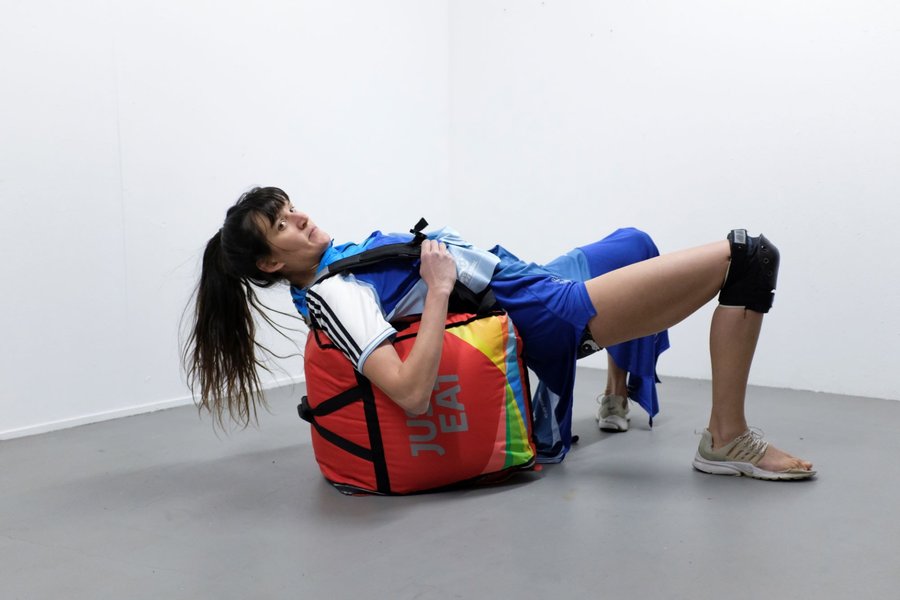
- Labouring Bodies explores the relationship between the body, labour and technology from a feminist perspective. The extensive group exhibition shows how the human body – especially the feminised and marginalised human body – has been shaped and controlled by machines since the dawn of the modern age, and how it has also been understood as a site of resistance. With its focus on working with machines, the technologisation of production and reproduction, and women’s contribution to technological progress, the show invites us to rethink our notions of the body, labour and care. Spanning the period from the early twentieth century to the present, the works in the exhibition reveal parallels and underscore the ongoing relevance and topicality of the subject matter.Description
Labouring Bodies
Until 8 Nov 2026
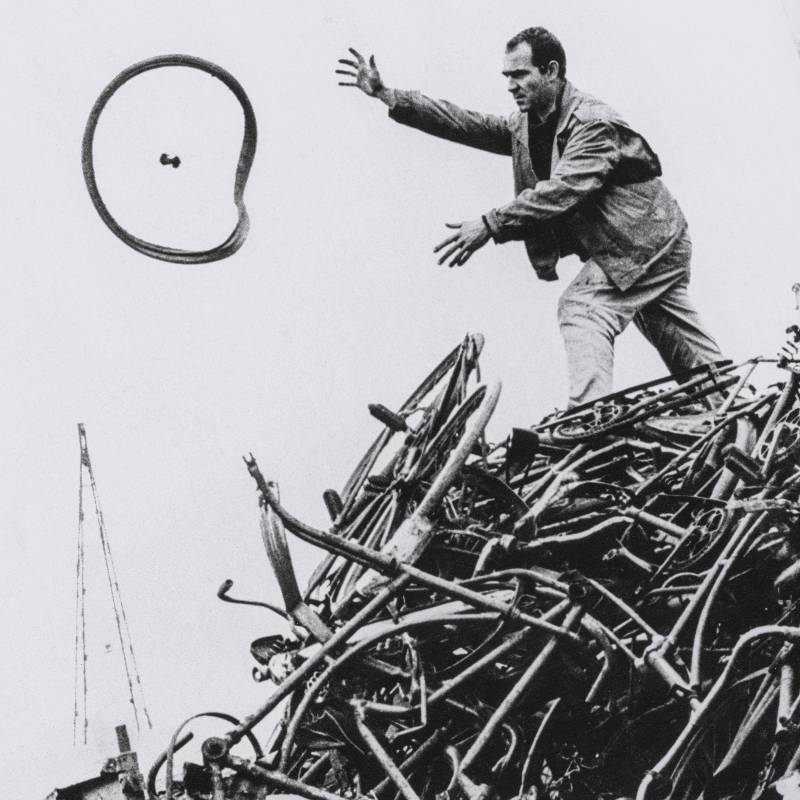
- According to Tinguely, 'we live in a wheeled civilisation'. Even today, our lives are shaped largely by the relationship between man and machine and the resulting dependencies that Tinguely deconstructed with such relish. Now, for the first time since the museum was founded, its enlarged collection of Tinguely’s own works is to return to the great hall. There visitors will be able to discover the intricate and poetic early works, the explosive happenings and collaborations of the 1960s, and the musical, monumental and sombre works of Tinguely’s late period, all presented in an entertaining and eventful tour with many opportunities for hands-on participation. For the first time since the Museum’s founding in 1996, a new permanent exhibition has been created on the basis of its own ever-growing collection. Supplemented by loans of key works, it offers a comprehensive overview of Tinguely’s oeuvre that takes his claim «La roue = c’est tout» as its leitmotif: as well as being a recurring theme throughout his career, the wheel also stands for his belief that changing times should find expression in art.Description
La roue = c'est tout Permanent exhibition
Until 3 Jan 2027
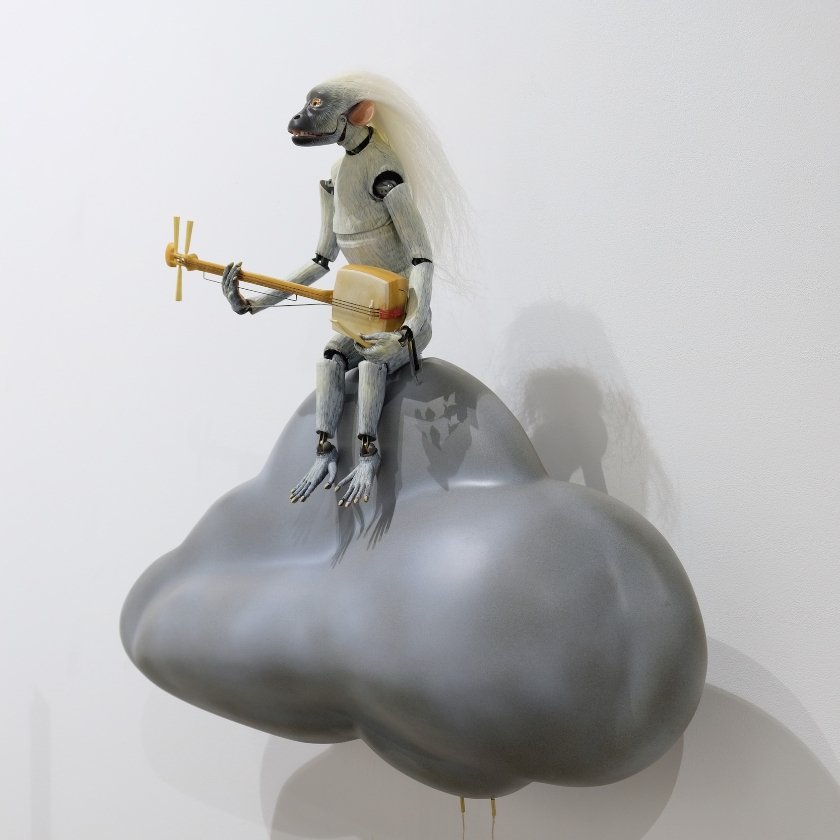
- Fuzzy logic, a type of artificial intelligence that allows computers to deal with 'fuzzy' concepts, mimics human reasoning. It doesn't just have the strictly binary 1 (yes, true) or 0 (no, false), but works with gradations to describe states like warm or cool linguistically rather than strictly mathematically. Nicolas Darrot's Fuzzy Logic characters are full of insecurities and mood swings; their dancing is spontaneous, their acting is complex, their talent imperfect.Description
Nicolas Darrot. Fuzzy Logic
Until 7 Mar 2027
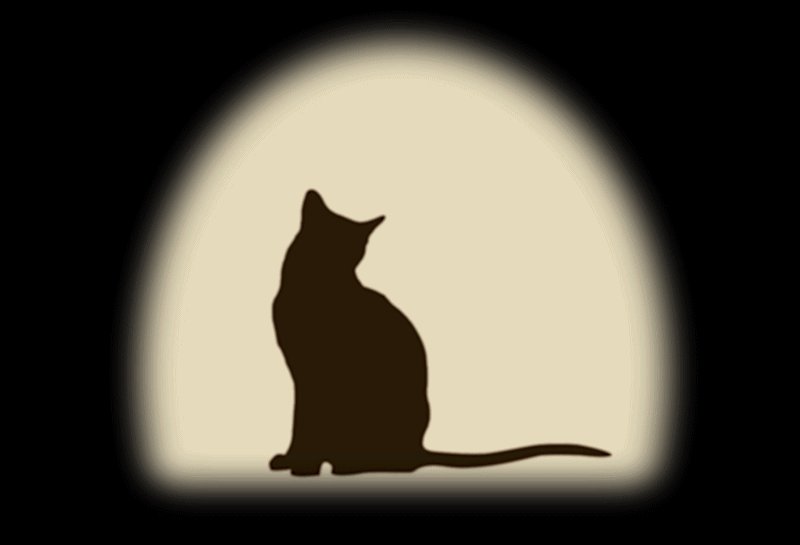
- In the exhibition Spaces Between Zilla Leutenegger presents ten of her multimedia installations and a number of monotypes, offering glances of mysteriously inhabited architecture and faint outlines of a life. It is as if someone had moved into the building, leaving occasional traces and shadows of their existence. As well as telling short, poetic stories, these moments invite visitors to rediscover the museum – and to see it with different eyes.Description
Zilla Leutenegger. SPACES BETWEEN
Until 7 Mar 2027
Coming soon
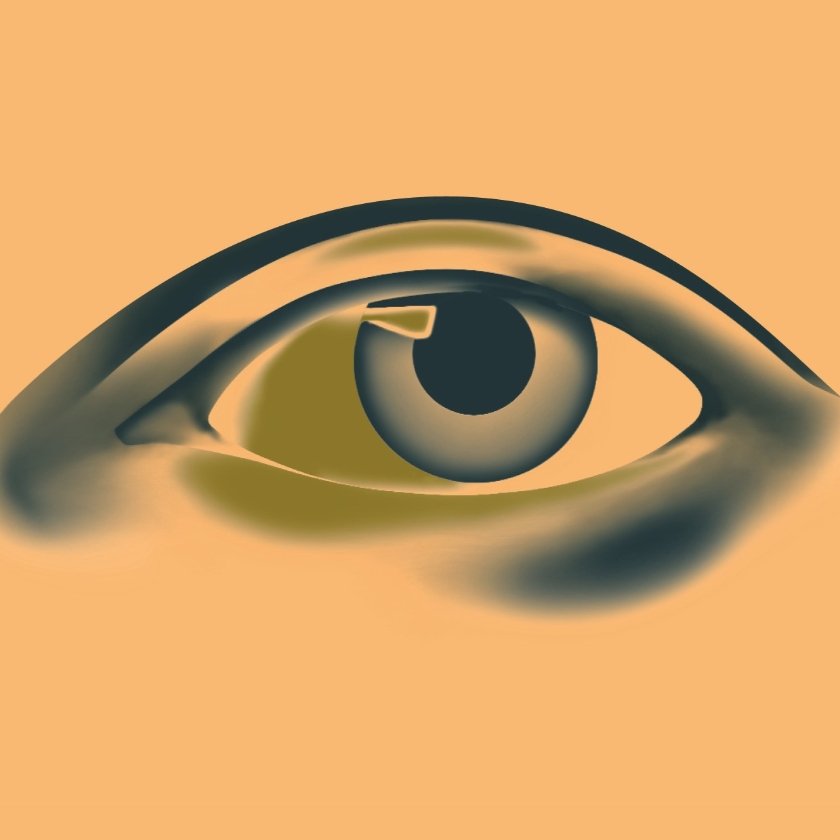
- The Museum Tinguely continues its series on the senses in fine art. The group show on the sense of sight presents artworks in various media from the Baroque to the present day that offer a range of surprising visual experiences. When looking at art, we are inevitably confronted with the basic facts of visual perception: the interplay of light, darkness, colour, movement and space. For centuries, artists have been experimenting with techniques, mechanisms and devices with which to question and reinvent the cultural conditions under which we see our surroundings and their representation in art. In many cases, they deliberately trouble our everyday view of reality by including disturbances and illusions in their works, such as distortion, inversion or mirroring.Description
Les témoins oculistes. The sense of sight in art
2 Dec 2026 – 9 May 2027
Recent past exhibitions
- Following his travels throughout Asia in the 1970s, Cheng shifted his focus from exhibiting stand-alone objects within conventional art galleries to creating large-scale, kinetic installations and competing for Percent-for-Art public art commissions. In the 1960s, many cities across the US adopted a Percent-for-Art program where one percent of every development project’s budget was allocated towards public art projects, in effect creating a new need for and emphasis on art in public spaces across the country. In 1979, soon after Cheng staged his self-initiated Natural Museum of Modern Art, he was awarded his first official public art commission for Seattle Underwater. Cheng’s background in industrial design provided the skills he needed to create compelling and practical proposals, and his experimental approach to artmaking enhanced his ability to engage with a variety of environmental factors and materials. Cheng views his public art projects as opportunities to work on a larger scale and reach a wider audience. He also sees them as an expanded investigation into what he terms 'human erosion'. For Cheng, the eventual deterioration of many of his public projects due to vandalism or lack of maintenance, as well as the ephemerality of artworks made from organic or natural materials, become metaphors for the precarity of a climate and landscape irrevocably changed by humans and their built environment. In his Pico Boulevard studio, Cheng developed the first prototype of a S and Rake Art Tool, which, in its earliest iteration, scored lines of sand in crude linear patterns. In 1979, he created another prototype on the second floor of his Santa Monica Pier studio above the Natural Museum of Modern Art. With this new device Cheng operated an expanded XY plotter retrofitted with droppers, scrapers, brushes, and drawing tools made from his collected organic specimens to carve into, shape, and smooth over the surface of a bed of sand. The resulting installation was titled Drawing at the Beach. Over the years, Cheng has continued to refine this Art Tool, integrating parts of the original sand rake art tools into newer incarnations that have created increasingly sophisticated installations for venues such as: Artec ‘93, in Nagoya, Japan in 1993; the Sculpture Center in New York in 2000; and REDCAT in Los Angeles in 2022, the latter of which was co-restored by the organizers of this exhibition in preparation for its current presentation. Fundamentally, the rakes are Art Tools to be used to create increasingly complex sand drawings. To make the installation Cheng works alone at the site over the course of up to two weeks. Using a controller, he instructs his tool to drag different patterns, drop sand, blow air, and drip water to produce a layered intuitive drawing that is erased at the conclusion of the exhibition. A behind-the-scenes look at Cheng’s process can be seen in the related video on view in this gallery. The Sand Rake Art Tool raises methodological questions about the status of the artwork (for example, should the tool also be considered an artwork unto itself?) as well as a profound conundrum around preservation given the sand drawings’ ephemeral nature and dependence on the artist himself.Description
Carl Cheng: Nature Never Loses
Ended 10 May 2026
- Oliver Ressler is an artist and filmmaker who produces installations, projects in public space, and films on issues such as economics, democracy, migration, the climate crisis, forms of resistance and social alternatives. Ressler has had solo exhibitions at Berkeley Art Museum, USA; Museum of Contemporary Art, Belgrade; Centro Cultural Conde Duque, Madrid; Alexandria Contemporary Arts Forum, Egypt; The Cube Project Space, Taipei; Kunsthaus Graz, Graz and comprehensive solo exhibitions at Wyspa Institute of Art, Gdansk; Lentos Kunstmuseum, Linz; Centro Andaluz de Arte Contemporaneo – CAAC, Seville; SALT Galata, Istanbul; MNAC – National Museum of Contemporary Art, Bucharest; Cultural Centre of Belgrade; Belvedere 21, Vienna. Ressler has participated in more than 400 group exhibitions, including Museo Reina Sofía, Madrid; Van Abbe Museum, Eindhoven; MASSMoCA, North Adams, USA; Centre Pompidou, Paris; the biennials in Prague (2005), Seville (2006), Moscow (2007), Taipei (2008), Lyon (2009), Gyumri (2012), Venice (2013, 2024), Athens (2013, 2015), Quebec (2014), Helsinki (2014), Jeju (2017), Kyiv (2017), Gothenburg (2019) and Stavanger (2019), and at Documenta 14, Kassel, 2017 (exhibition organized by EMST). Ressler has completed forty-two films that have been screened in thousands of events of social movements, art institutions and film festivals. A retrospective of his films took place at Centre d’Art Contemporain Genève in 2013. In 2002, Ressler won the first prize at the International Media Art Award of the ZKM in Karlsruhe and he is the first prize winner of the Prix Thun for Art and Ethics Award in 2016. For the Taipei Biennale 2008, Ressler curated an exhibition on the counter-globalization movement, A World Where Many Worlds Fit. A travelling show on the financial crisis, It’s the Political Economy, Stupid, co-curated with Gregory Sholette, has been presented at nine venues (2011-2016). 2019–2023 Ressler has directed Barricading the Ice Sheets, a research project on the climate justice movement, funded by the Austrian Science Fund. Configurations of the project were solo exhibitions at Camera Austria, Graz (2021); Museum of Contemporary Art, Zagreb (2022); Neuer Berliner Kunstverein (n.b.k.), Berlin (2022); Tallinn Art Hall, Tallinn (2022); LABoral Centro de Arte y Creación Industrial, Gijón (2023); The Showroom, London (2023).Description
Oliver Ressler
Ended 1 Mar 2026