Den Haag
WEST DEN HAAG
On now
- Textura is an international transdisciplinary project by West Den Haag that approaches art from a philosophical and theoretical perspective. Philosophy is not used as an explanation of art, but as a method for questioning existing concepts, shifting boundaries and inviting new insights. The starting point for Textura 2026 is the concept of ‘worlding’, with a particular focus on the work of philosopher Gayatri Chakravorty Spivak. From this perspective, Textura brings together artists, writers, thinkers andDescription
Textura (Lange Voorhout 102)
Until 25 Oct 2026
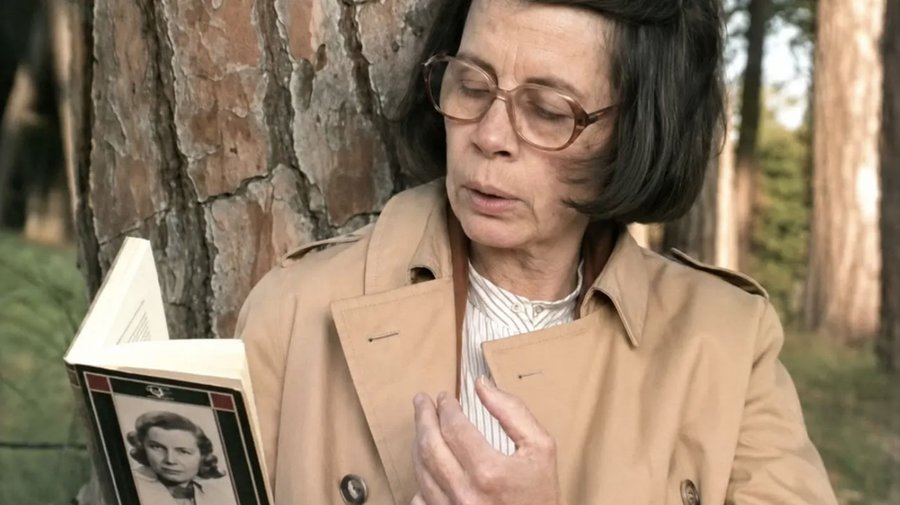
- 'In the / babbler / that lives I ask to be inscribed’ (‘Nel / parolaio / che vive domando d'sser iscritta’). With this oblique line from her 1953 collection Variazioni belliche, Amelia Rosselli imagines inscription not as the fixing of language, but as the desire to enter a living, unstable field of voices. To be inscribed is not simply to write: it is to inhabit language and history, to transform them from within while submitting oneself to the rhythms, memories, and forms that belong to a historical unconscious. The exhibition explores inscription as a material and medial practice across Rosselli’s work, through manuscripts, typescripts, annotated books, sound recordings, and printed pages. Every passage – between stages of writing, speech and text, typescript and print, ‘muscular movements and mental forms’ – produces not a faithful copy but a new inscriptionDescription
'In the / babbler / that lives I ask to be inscribed’ The work of Amelia Rosselli
Until 26 Dec 2026
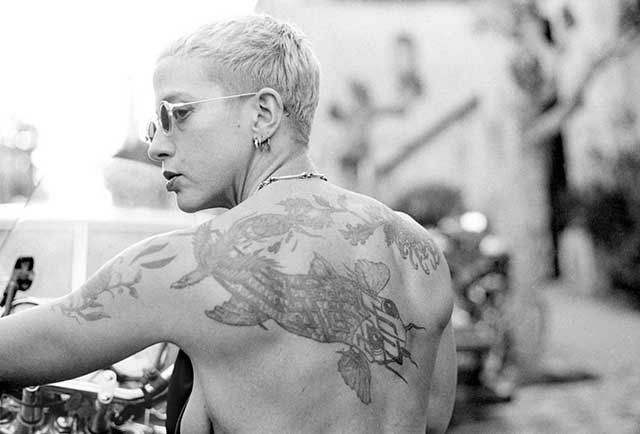
- The work of the American avant-garde writer Kathy Acker was radical, experimental, and progressive. This year-long exhibition shows how Acker created a new, feminist literary language. She was ahead of her time in addressing topics such as gender and identity, opposed patriarchy and capitalism, and engaged with philosophical questions about meaning and insatiable desire. At the same time, her raw work, full of sex and violence, is unmistakably the product of another era. How does Acker’s feminism resonate in 2026? As a post-punk critical thinker, Acker was celebrated, vilified, and because of the explicit sexuality in her writing, often misunderstood. In the Netherlands she performed at literary festivals such as One World Poetry and Crossing Border. In Canada, New Zealand, and West Germany her work was censored. Acker was not interested in ‘literary sentences’ of celebrated American authors. Instead, she chose to plunder and deconstruct the male-dominated literary canon. Plagiarism and transgression were her most important tools. By writing from bodily experience, she undermined the idea of the author as an inspired genius. Gender is fluid in her work; identity ambiguous. Blood, Guts, and Anarchy: The Work of Kathy Acker is a compact overview of Acker’s work, presented in the ‘corner offices’ of the former American embassy. The exhibition addresses her roots in the raw New York underground of the 1970s and avant-garde performance art, and explores the body as a theme of her work, her use of cut-up techniques, and her political ideas. It is the first presentation of Kathy Acker’s work in the Netherlands. Kathy Acker (1947–1997) was an American avant-garde writer and critical thinker. She divided her time between New York, London, and San Francisco and wrote thirteen novels, many essays and poems, two plays, and a film script. She first gained recognition with ‘The Childlike Life of the Black Tarantula by the Black Tarantula’ (1973), a work in six parts that she sent out as mail art. In the 1980s, the publication of ‘Blood and Guts in High School’ (1984) made her a post-punk celebrity. She aligned herself with postmodern thinkers and further developed her interest in deconstruction in ‘In Memoriam to Identity’ (1990). Her final novel was ‘Pussy, King of the Pirates’ (1996). The exhibition is curated by historian, writer, artist and curator Leonor Jonker. In her work, she explores cultural memory, counterculture, and material history.Description
Blood, Guts, and Anarchy The Work of Kathy Acker
Until 28 Feb 2027
Recent past exhibitions
Ꜵccident GROTESQUE Cevdet Erek
Ended 26 Jul 2026
- In the spring of 2026, West Den Haag presents ‘This Morning, This Evening, So Soon – Turkey Saved My Life’, an exhibition on the influence of writer and activist James Baldwin. Guided by Baldwin’s moral compass, various artists explore the in-between space of themes such as exile, queerness, and new forms of resistance. Through his radical honesty about race, sexuality, and identity, Baldwin serves as a mirror for our time. His voice resonates today, in a society once again grappling with freedom, identity, and cultural uprooting. James Baldwin fled the United States for Europe in 1948 to escape suffocating racism and homophobia. Although Baldwin’s years in Turkey (1961–1971) are hardly known in the Netherlands, they were crucial for his literary development. Here he found rest, love, collaboration, and freedom. In this exhibition, exile is therefore not seen as loss, but rather as a radical position for new forms of humanity and community. In the tension between exile and homecoming, the artists find their starting point to explore themes such as identity and queerness, using the in-between space as a starting point for resistance. The presentation at West Den Haag invites visitors to reflect through art, photography, performance, and literature on themes such as freedom, exile, love, identity, and queer resistance. For Baldwin, identity is never a final destination but a struggle, a movement, a negotiation. Baldwin’s queerness is not separated from his thinking but placed at the center as a source of moral clarity. The participating artists demonstrate how queer imagination recalibrates our current struggle for freedom and humanity, with the pursuit of human dignity forming the backbone of this exhibition.Description
James Baldwin: A Journey Home
Ended 31 May 2026
- In the spring of 2026, West Den Haag presents ‘This Morning, This Evening, So Soon – Turkey Saved My Life’, an exhibition on the influence of writer and activist James Baldwin. Guided by Baldwin’s moral compass, various artists explore the in-between space of themes such as exile, queerness, and new forms of resistance. Through his radical honesty about race, sexuality, and identity, Baldwin serves as a mirror for our time. His voice resonates today, in a society once again grappling with freedom, identity, and cultural uprooting. James Baldwin fled the United States for Europe in 1948 to escape suffocating racism and homophobia. Although Baldwin’s years in Turkey (1961–1971) are hardly known in the Netherlands, they were crucial for his literary development. Here he found rest, love, collaboration, and freedom. In this exhibtion, exile is therefore not seen as loss, but rather as a radical position for new forms of humanity and community. In the tension between exile and homecoming, the artists find their starting point to explore themes such as identity and queerness, using the in-between space as a starting point for resistance. The presentation at West Den Haag invites visitors to reflect through art, photography, performance, and literature on themes such as freedom, exile, love, identity, and queer resistance. For Baldwin, identity is never a final destination but a struggle, a movement, a negotiation. Baldwin’s queerness is not separated from his thinking but placed at the center as a source of moral clarity. The participating artists demonstrate how queer imagination recalibrates our current struggle for freedom and humanity, with the pursuit of human dignity forming the backbone of this exhibition.Description
This Morning, This Evening, So Soon – Turkey Saved My Life James Baldwin and the Voices of Resistance
Ended 31 May 2026
- Cultuurhaven We are the Museumkwartier! Here in the Hague, everybody should be able to show themselves, also in the Museumkwartier. That’s why we are looking for enthusiastic people that love creative and cultural events. Do you partake in dancing, making music, knitting, rapping, painting, woodworking, theatre, or any other creative activity? Do you want to develop a cultural event? Then let’s see whether we can make something special together! This could be anything from a small performance to a large community project. Do you have a good idea? Then reach out to our community coach, Frank van den Boom, at [LINK text='frank@westdenhaag.nl' href='mailto:frank@westdenhaag.nl'].. Or are you just curious to see what others are making within Cultuurhaven? Take a look at our program below! Cultuurhaven is a new platform aimed at promoting the connection between creators in the city. Through collaboration and exchange, we can all contribute to a more inclusive, accessible and dynamic cultural circuit in The Hague’s Museumkwartier.Description
Cultuurhaven Bridging city life and culture
Ended 16 Apr 2026
- The Academy of Creative and Performing Arts (ACPA) of Leiden University and Art Institute West Den Haag are pleased to announce their close collaboration in the third season of the public series In the Making. This series, dedicated to the practice of research in the arts, will consist of four public sessions taking place on a monthly basis.... (rest of the description)Description
In the Making Thursday night sessions on research in art
Ended 16 Apr 2026
Tentoonstelling: De Vergeten Tijd
Ended 15 Apr 2026
- The internationally renowned curator Hans Ulrich Obrist presents an archival exhibition dedicated to the Martinican philosopher and poet Édouard Glissant (1928–2011). Glissant is one of the most influential thinkers of the 20th century, whose concepts such as ‘Relation’, creolization, and ‘Mondialité’ offer a powerful lens through which to understand the complex dynamics of globalization, cultural diversity, and identity in the 21st century. His philosophy advocates for a global dialogue centered on diversity and exchange. In a world where globalization threatens cultural diversity and populism and nationalism are on the rise, Glissant emphasizes the importance of connection and mutual enrichment without homogenization. He envisions a ‘One-World’ where cultural exchange does not lead to the loss of identity but rather to its enrichment. Glissant’s ideas continue to inspire artists, writers, and thinkers to work more inclusively, offering guidance and perspective in the world of today. This long-term exhibition highlights the intellectual and artistic collaboration between Glissant and Obrist. Over six hours of video recordings, including public and private interviews where Glissant recites his poetry and further develops his philosophy, provide profound insights into the thinker’s ideas. Additionally, archival materials, such as books, and a series of posters by contemporary artists influenced by Glissant’s thought, are presented and expanded upon throughout the exhibition. Édouard Glissant (21 September 1928, Martinique – 3 February 2011, Paris) was a celebrated novelist, poet, and philosopher whose work explored cultural diversity, identity, and global interconnectedness. Glissant's work is rooted in the Caribbean experience, addressing themes of cultural diversity and identity. Glissant also founded cultural institutions in Martinique and Paris, leaving a legacy that continues to inspire discussions on globalization and cultural solidarity. For Obrist, Glissant was not only a mentor but also a guiding figure in his curatorial practice. His projects are directly inspired by Glissant’s vision of global connectedness as a process where cultural identity is celebrated and enriched. Throughout this year-long project at West Den Haag, a series of activities will be organized, including lectures, workshops, and panel discussions, to further explore and make Glissant's ideas accessible to a broader audience.Description
Édouard Glissant Hans-Ulrich Obrist’s archive
Ended 1 Mar 2026
- The Maroons are the descendants of enslaved Africans who managed to escape into the jungles of Suriname, where they formed self-governing communities beyond colonial control. Many decades later, Moengo became the country’s bauxite mining center, constructed in the rainforest by the American company Suralco under Dutch administration. Although the town had schools, churches, a theater, and a public swimming pool, life there remained strictly segregated. Maroons, who carried out most of the manual labor, were required to leave Moengo every day at 5:00 p.m. and return to their villages along the Cottica River. Casa Blanca, the executive villa symbolized Suralco’s wealth and authority. From 2009 onward, the Kibii Foundation used the building as a cultural center. In 2015, the mines closed. During the pandemic, the aluminum roofing sheets were stolen. Heavy tropical rains and the rapidly advancing jungle caused the building to be reclaimed by nature at an accelerated pace. During a three-month residency at Tembe Art Studio, Yiyi and Edwin filmed in Casa Blanca almost daily, allowing the building to ‘speak’ through light, sound, and atmosphere. The title De let’en! - Da it’en! — a traditional Maroon call and response that initiates a storytelling ritual — provided the framework for their final presentation: a film, a performance with local artist Seraven Pinas, and a concrete replica of the villa’s billiard table. Yiyi Chen (1989, China), asks the question ‘what is it for us to be?’ through her paintings. Due to her inborn nature, she feels deeply connected to the spontaneous and insignificant moments in life, where her sense of ‘being’ is rooted. The world is revealed as how it is in her distant view, unembellished and un-staged. The artist is graduated from the Gerrit Rietveld Academy in Amsterdam, was a finalist of the Royal Award For Modern Painting in the Netherlands and is currently represented by the Josilda da conceição Gallery in Amsterdam. Edwin Zwakman (1969, Netherlands) is a visual artist whose photography and site-specific sculptural scale-play explore the interaction between reality and fabrication, to subtly uncover uncomfortable truths on power and authorities that are deeply engraved in our collective memory. Zwakman exhibited in the Stedelijk Museum, Amsterdam; the European Museum for Photography, Paris; the Museum of Modern Art Kyoto, Taipei/Venice Biennials. He currently has a fellowship at the University of Derby, UK, where he teaches photography.Description
De let’en! – Da it’en! Casa Blanca tells its story
Ended 8 Feb 2026