Porto
GALERIA MUNICIPAL DO PORTO
À voir actuellement
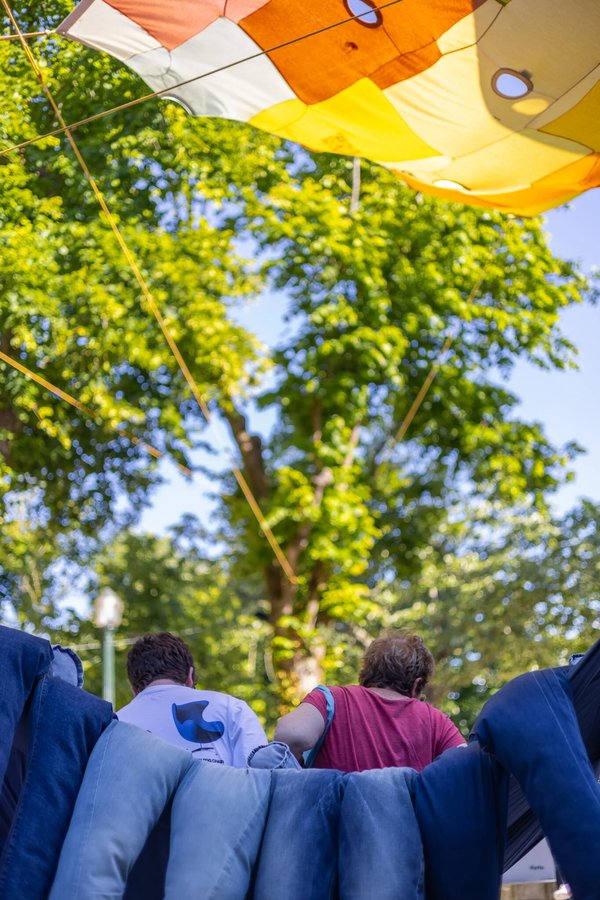
- From mid-May to mid-October, the outdoor courtyard of Galeria Municipal hosts a new work by Mexican artist Pia Camil, renown for large-scale works developed in collaboration with local communities. Created from second-hand clothing collected with Porto residents, Sharing designs a place the public can observe and inhabit. Reflecting Pia Camil’s research into collaborative practices, the installation “Sharing” sits at the crossroads between artwork and playful space. It addresses themes such as the world of the textile industry and how it functions as a repository of cultural information and a portrait of collective consciousness. Pia Camil’s multidisciplinary work, unfolding across painting, sculpture, performance, and large-scale installations, develops between Acatitlán and Mexico City. It explores how art can create alternative spaces for reflection and shared experience. Informed by feminist and anti-capitalist perspectives, her practice frequently incorporates audience participation and community-building activities, as well as the repurposing of materials, to address the contradictions inherent in patriarchal and capitalist legacies.Description
Sharing
Jusqu’au 18 oct. 2026
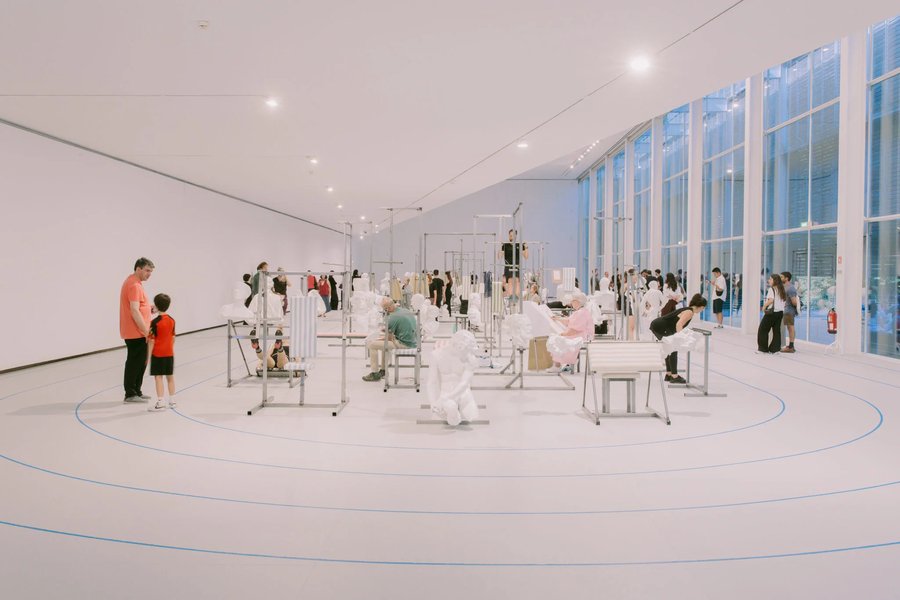
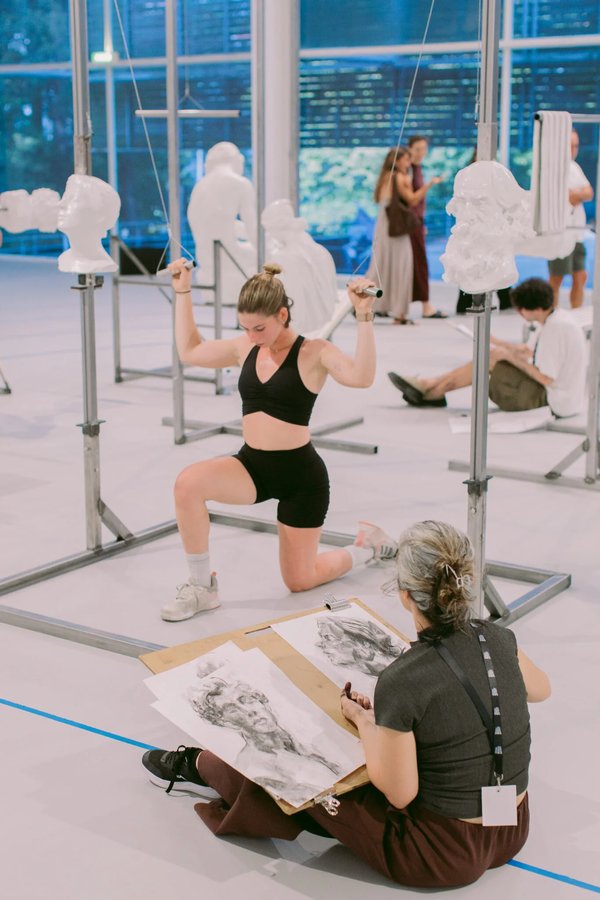
- Galeria Municipal do Porto presents the work of Lithuanian artist Augustas Serapinas (1990, Vilnius) for the first time in Portugal. Physical Culture: Porto Edition explores a range of intersections between the history of art and the history of the representation of the body. It pays particular attention to repetition as a discipline and methodology, both for producing the classical forms of western art and for shaping the body through physical exercise. The exhibition is activated by its use as a space for both academic training — traditionally centred around drawing from classical sculpture — and physical training, as when visitors interact with the installation as a gym. At various points during the exhibition, there will be moments when local groups and visitors are invited to take part in bodybuilding and fitness activities or in drawing classes. The Porto edition is the first time that Physical Culture focusses exclusively on the place it is being shown. It features more than sixty replicas from the sculpture collection at Museu Nacional Soares dos Reis, including the iconic work The Exiled, which here take the place of the counterweights on bodybuilding machines.Description
Physical Culture: Porto Edition
Jusqu’au 18 oct. 2026
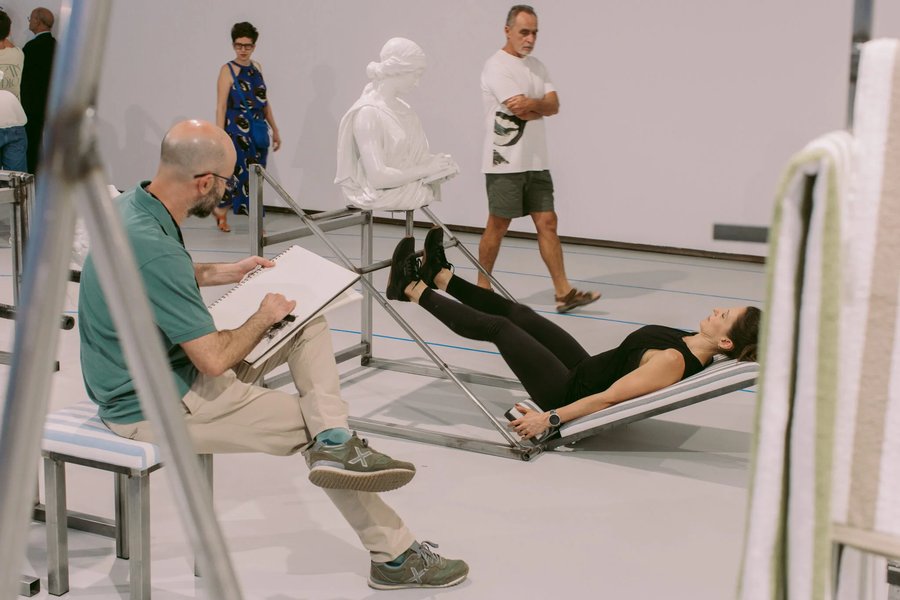
- The exhibition Physical Culture: Porto edition, by Augustas Serapinas, is activated by its use for both academic training — traditionally centred around drawing from classical sculpture — and physical training — as when visitors interact with the installation as a gym. At various points during the exhibition, local groups and visitors will be invited to take part in bodybuilding and fitness activities or in drawing classes. To allow visitors to participate, there are a few activation rules in place: Target Audiences Independent visitors (general public) Organised groups (by prior Booking) General Principle Participation in the exhibition activation implies knowledge and tacit acceptance of these rules: any participant engaging in physical exercise or drawing within the exhibition acknowledges that they are subject to the provisions set out herein. Cautions and Guidelines Participants in the exhibition activation must be previously informed of, and are deemed to tacitly accept, the terms, conditions and rules governing the use of the equipment. Participants assume full responsibility for their own safety and for safeguarding their physical integrity, ensuring that neither the artwork, the exhibition space nor third parties are put at risk. Participants undertake to take part in the activation consciously and not merely experimentally (without “trial runs” or inappropriate attempts to use the equipment). For the practice of drawing Participants must use only their own drawing materials. The use of graphite sticks and pencils, charcoal, chalk, pastel and other drawing accessories on the available support is permitted. The use of paints, sprays, permanent markers, glues or any other material that may stain, damage or alter the artwork or the exhibition space is prohibited. All drawings produced during the activation will be handed over to Porto Municipal Gallery. A selection will be displayed within the exhibition space.Description
Do you want to draw at the Gallery?
Jusqu’au 18 oct. 2026
- The exhibition Physical Culture: Porto edition, by Augustas Serapinas, is activated by its use for both academic training — traditionally centred around drawing from classical sculpture — and physical training — as when visitors interact with the installation as a gym. At various points during the exhibition, local groups and visitors will be invited to take part in bodybuilding and fitness activities or in drawing classes...Description
Do you want to train at the Gallery?
Jusqu’au 18 oct. 2026
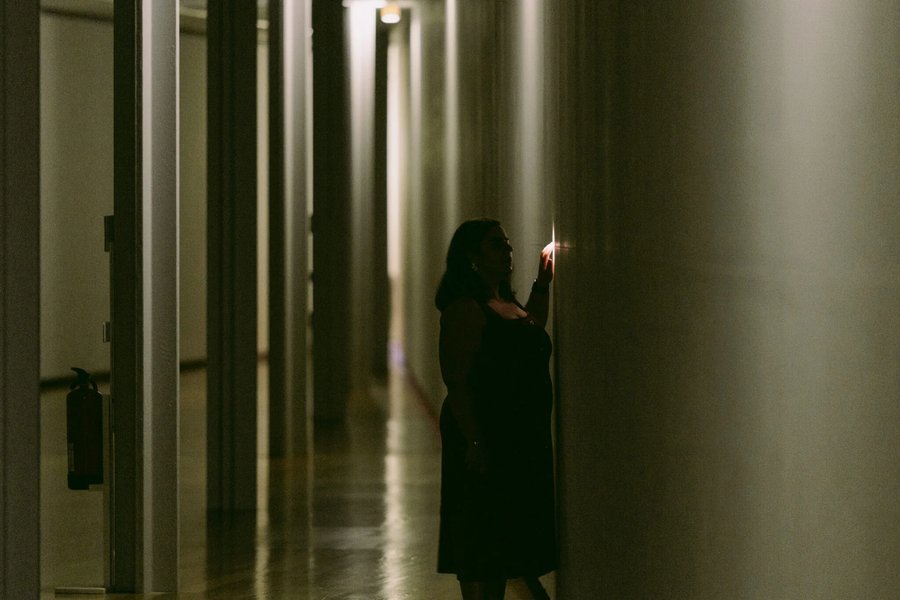
- For Voice by artist Lydia Ourahmane (1992, Saïda, Algeria) was created in collaboration with her sister, composer and musician Sarah Ourahmane. Written for two visually impaired female singers, the composition unfolds across the triangular gallery space of the Galeria Municipal do Porto. Barely visible yet perceptible to touch, the score is embedded directly into the gallery walls. The piece responds to and studies the architecture: its structure is entirely determined by the gallery’s dimensions. When activated, each singer traces the Braille score along the walls, moving through the space as the composition unfolds. In Braille musical notation, the six-dot cell conveys both pitch and rhythm, alongside the key and octave in which the composition is written. The score appears as a continuous line in which notes, durations, octave registers, ligatures, pauses, and interpretive instructions follow one another sequentially. By reducing ornamental markings and instructions, the piece invites each singer to bring her own interpretive logic to the phrasing. They must therefore memorize the distinct elements of the score and reconstruct them via performance, introducing an expanded potential for variation and entropy, as each performer’s method shapes the spatial choreography of the work. Following the performance, a kinetic audio system installed on a linear rail replays a recording through two speakers. In the darkened space, the illuminated speakersDescription
For Voice
Jusqu’au 25 oct. 2026