Paris
Galerie C
À voir actuellement
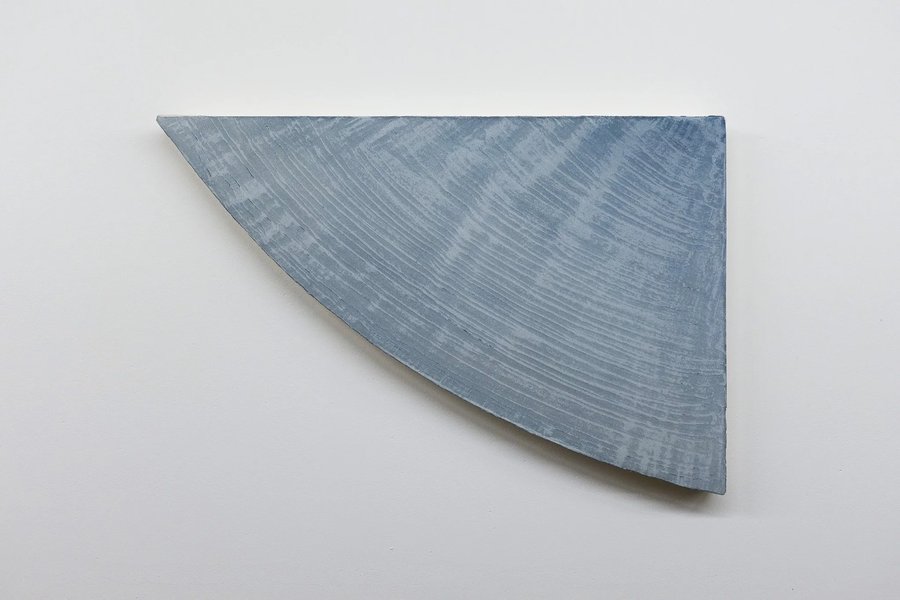
- Malik Jeannet’s exhibition, featuring Ali Cherri, takes the figure of the bird as its starting point, and more specifically, the various ways in which it is observed, preserved, represented, or welcomed. Sometimes present in the form of an image or a feather, sometimes evoked by a nest, a message, or a space set aside for it, the bird appears less as a subject than as a presence around which various ways of making room are organized. Furniture, containers, and architectural elements thus compose an environment where the question of the body shifts to that of the structures that surround it and, in part, determine what it can become. One of the starting points for this reflection lies in the storage rooms of natural history museums. The bird specimens preserved there for scientific study are gutted, prepared, and then arranged horizontally in cabinets designed for this purpose. A precise correspondence is established between the body and its container: the drawer imposes a position, allows for alignment, and makes comparison possible. Even before becoming an object of knowledge, the animal is thus subjected to a material organization that makes it available for that purpose. Through Ali Cherri’s watercolors brought together in An Inventory of Flight (2021–2026), and the cabinet that Jeannet builds to house them, this infrastructure, usually relegated to the background, becomes an integral part of the exhibition itself. This focus on the material conditions that precede and enable the emergence of things runs more broadly through Jeannet’s practice. After working primarily with painting, his interest has gradually shifted from representation toward what makes it possible: the provenance of a pigment, the origin of a piece of wood, the techniques required for its transformation, but also the spaces in which an artistic practice can take place. The reconstruction, between 2021 and 2024, of a small building in La Chaux-de-Fonds serving both as a studio and a residence—accompanies this shift. The workplace ceases to be a mere context and becomes a question in itself: what does a space need to be habitable, and what material, technical, and social relationships are necessary to sustain it? The forms presented in the exhibition extend this reflection to a scale that lies between furniture and architecture. They draw inspiration from storage units, pedestals, shelves, frames, and braces without being entirely reduced to their functions. Their apparent utility, however, always implies a body, even when that body is absent: something must be able to be placed, supported, stored, consulted, sheltered, or received. In this sense, these structures are not merely objects but proposals for use. They often precede those for whom they seem intended. This relationship to use introduces a sense of anticipation into the exhibition. A mailbox presupposes the possible arrival of a message; a carrier pigeon’s cage exists only in relation to a recipient located elsewhere. Even the movable parts of a piece of furniture imply a gesture yet to come. Jeannet does not necessarily depict these encounters; rather, he constructs the conditions under which they might take place. Usage remains potential, and with it, the identity of the user. Humans, animals, images, objects, or messages successively occupy structures that seem less to assign them a definitive place than to remain available for their arrival. This availability also distinguishes Jeannet’s construction methods from the conservation techniques evoked by Cherri’s birds. In scientific collections, conservation means intervening on a specimen to slow down or even halt its transformation. Jeannet, on the other hand, conceives of duration through the possibility of change. His wooden assemblages are designed so that they can be disassembled, repaired, or replaced; a damaged element does not necessarily render the entire structure unusable. Conservation and repair thus offer two almost opposite ways of caring for objects: one seeks to maintain a state, the other to allow a form to persist precisely because it can be transformed. Between these two approaches, the exhibition constantly revisits the ambiguity of actions such as holding, protecting, sheltering, or preserving. All involve a form of care, but also the establishment of boundaries. The preserved body is protected from disappearing by being immobilized; shelter protects by delineating an interior and an exterior; a piece of furniture makes an object accessible by determining how it can be stored and viewed. Even the exhibition setting, with its own conventions, shapes the relationship between the visitor and the objects they encounter. What welcomes us is therefore also what organizes us. The bird makes this ambiguity particularly visible because it introduces, in contrast to these structures, the idea of movement. Flight defies the fixed position required by inventory, classification, or conservation. Yet, in the exhibition, the bird is almost never presented as a living, immediate presence. It persists through its traces, its representations, or the infrastructures that anticipate its passage: a feather poking out of a pillow, an image tucked away in a piece of furniture, a small container meant to carry a message. Its absence, therefore, does not quite signify its disappearance. It can also signify a space kept open. The exhibition thus focuses less on the birds themselves than on the infrastructures through which bodies become legible to one another. The museum drawer turns the animal into a specimen; the carrier pigeon’s case turns it into a messenger. Furniture, architecture, and display devices do more than simply frame these identities: they contribute to their creation. The birds depicted by Cherri and Jeannet’s structures converge in this space between body and apparatus, where preservation can be as much a matter of care as of control, and where offering shelter also means defining its boundaries. These installations, however, share the common trait of never being entirely autonomous. Their raison d’être lies in what they contain, support, or make possible, but also in what they may still lack. A piece of furniture awaits being opened, a shelter awaits being occupied, a message awaits being received. This anticipation, however, determines neither the identity of the one who will come nor the manner in which the encounter will take place. Rather, it keeps the structures in a state of readiness, suspended between function and possibility. Building, preserving, or exhibiting thus amounts less to assigning a definitive place to things than to organizing the conditions of their presence—even when that presence has yet to come. - Text by Mohamed AlmusibliDescription
For Those Who Might Arrive
Jusqu’au 6 nov. 2026
Expositions récentes terminées
Allamouni
Terminée le 26 sept. 2026
- Hannah Becquante & Félix Taburet, Nolwenn BrodDescription
Ne nous demande pas la parole
Terminée le 25 avr. 2026
Si les silences ne parlaient pas
Terminée le 18 avr. 2026
Galerie C
Terminée le 28 févr. 2026
Between Lunch and Something Else
Terminée le 28 févr. 2026