Paris
Galerie Richard
À voir actuellement
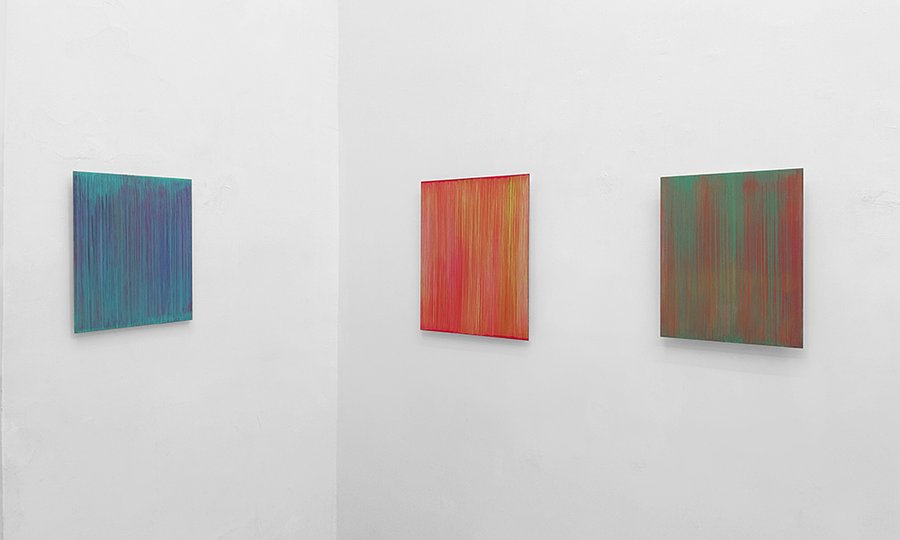
- La peintre et artiste d’installation basée à Cologne Claudia DESGRANGES présente un aperçu fascinant de son pauvre aux multiples facettes dans sa prochaine exposition « Sound of memory » à Galerie Richard; influencée par l’expressionnisme abstrait, la peinture Color Field est le minimalisme américain, Claudia DESGRANGES place de la couleur elle-même au-delà de tout motif figuratif, au centre de son travail comme un phénomène qui crée l’espace et le temps.Description
Sound of Memory
Jusqu’au 7 nov. 2026
Expositions récentes terminées
- GALERIE RICHARD est heureuse d’annoncer la tenue prochaine de Double fond, deuxième exposition personnelle de Frédéric PRAT, après Square en 2025. Double fond présentera un ensemble d’oeuvres récentes, inédites, poursuivant les recherches de l’artiste. Face à la surabondance d’images, Frédéric PRAT utilise la peinture et la couleur pour créer un espace abstrait et sans figures où la pensée peut se libérer. Le titre de l’exposition, en forme de clin d’oeil aux escrocs et aux magiciens, souligne l’humour mais aussi le caractère jubilatoire des oeuvres de l’artiste. Il rappelle que les tableaux de Frédéric PRAT ne cherchent pas le sens, mais endossent un rôle : celui de nous doubler et, ce faisant, de nous mettre en mouvement.Description
Frédéric PRAT Double fond
Terminée le 26 sept. 2026
- Press release Le Bateau ivre (The Drunken Boat) is an exhibition of Joseph Nechvatal’s recent artificial life-assisted paintings on velvet. The AI virus-based software used in the creation of these paintings was first developed in 2001 by Nechvatal with the assistance of C++ software programmer Stéphane Sikora. These computer-robotic assisted paintings articulate Nechvatal’s ambivalence around the cataclysmic narratives now circulating concerning artificial general intelligence (AGI) (a technology with the potential for vast economic and ecological disruption) as interpreted through Arthur Rimbaud’s 1871 poem Le Bateau ivre. In the poem, an unmanned boat narrates its own existence as it floats loose out to sea after the human crew has perished. These men are suggested by the shredded human shapes in the bottom of the diptych paintings. Their degeneration allows the missing boat to be free and no longer consider the demands placed upon it by human society. The aimless “drunken” boat is no longer bound by the constraints of the humans who once guided it. This poetic image struck Nechvatal as an apt metaphor for artificial general intelligence that could surpass human intelligence and act in ways that are misaligned with human values, thus leading to irreversible negative outcomes. This Bateau ivre series of paintings marks a return to a crucial period in the artist’s practice during the late-1970s when he embraced a minimal aesthetic that he now revisits but penetrates with the complexification of artificial life (a subdivision of artificial intelligence). The minimal aesthetic used in this series of AI-assisted paintings on velvet was chosen by Nechvatal to float above the sea of AI ‘slop’ imagery, now drowning the eyes of the world with the rapid integration of large language models: a theme Nechvatal explores in his 2025 novella Venus Voluptuous in the Loins of The Last God. These paintings, however, do not illustrate artificial general intelligence theory or the Rimbaud poem. No black box or boat is depicted. Rather, the drunken boat expresses the artist’s declaration of an artistic freedom that praises individual artistic risk, independence and liberty.Description
Joseph NECHVATAL Le Bateau ivre
Terminée le 28 févr. 2026